Affiliate Disclosure: This post may contain affiliate links. If you purchase through links on our site, we may earn an affiliate commission at no extra cost to you.
Feeling strong and vibrant doesn’t have to be a distant memory just because you’ve hit the big 5-0. Building muscle mass over 50 is not only possible, it’s essential for maintaining a healthy and active lifestyle.
You might be wondering if it’s too late to start, or whether you have the energy to make a difference. The good news is that you can absolutely achieve your fitness goals, and it might be easier than you think.
By following the right strategies, you can boost your strength, improve your health, and feel more confident in your own skin. You’ll discover simple yet effective ways to build muscle mass at any age. Stick around to learn how a few changes in your routine can lead to impressive results. Your future self will thank you!
Importance Of Building Muscle After 50
Building muscle after 50 is crucial for maintaining health and vitality. As we age, muscle mass naturally decreases. This can lead to weakness and a higher risk of falls. Strength training helps counteract these effects. It boosts metabolism, improves bone density, and enhances quality of life.
Why Muscle Matters More Than Ever
Muscles support our daily activities. They help us walk, lift, and carry. Strong muscles can make these tasks easier. They also help keep our joints healthy and pain-free. This is important for staying active and independent.
Combatting Muscle Loss
Muscle loss, or sarcopenia, starts around age 30. By 50, it’s more noticeable. Regular exercise can slow this process. Strength training is especially effective. It helps rebuild lost muscle and maintain strength. This can improve mobility and endurance.
Boosting Metabolism And Weight Management
More muscle means a higher metabolism. This helps with weight management. Muscle burns more calories than fat. Even at rest. So, building muscle can aid in weight control. It also improves body composition, creating a leaner appearance.
Enhancing Bone Health
Strong muscles support strong bones. Weight-bearing exercises stimulate bone growth. This reduces the risk of osteoporosis. Keeping bones strong is crucial for preventing fractures.
Improving Mental Health
Exercise releases endorphins, boosting mood and reducing stress. Strength training can also enhance cognitive function. It improves focus and memory. This contributes to better mental well-being.
Staying Independent Longer
Maintaining muscle mass supports independent living. It helps with everyday tasks, like climbing stairs or carrying groceries. Strong muscles improve balance and coordination. This decreases the risk of falls.
Credit: myorthoct.com
Nutrition For Muscle Growth
Building muscle mass over 50 requires a balanced diet rich in protein, healthy fats, and complex carbohydrates. Focus on lean meats, fish, nuts, and whole grains to support muscle growth and repair. Staying hydrated and incorporating resistance training can enhance results.
As you embrace the journey of building muscle mass after 50, nutrition plays a pivotal role in sculpting your physique. Proper diet can enhance your strength and support muscle growth. It’s not just about what you eat, but how it complements your workouts. Let’s explore how you can tailor your nutrition for optimal muscle development.
Protein-rich Diet
Protein is the building block of muscles. Including protein-rich foods in your meals can accelerate muscle repair and growth. Think lean meats like chicken and turkey, fish, eggs, and dairy products. Plant-based options like beans, lentils, and tofu are excellent too. Aim for a balanced mix, and consider your daily protein needs based on your activity level. How much protein do you consume daily?
Essential Vitamins And Minerals
Your body needs a variety of vitamins and minerals to function optimally. These nutrients support muscle health and recovery. Vitamin D, calcium, and magnesium are vital for muscle function and bone health. Include leafy greens, nuts, and seeds in your diet. They are packed with micronutrients that boost your energy and muscle growth. Have you checked if your meals include these powerhouses?
Hydration And Muscle Health
Water isn’t just essential for survival; it’s crucial for muscle function. Proper hydration aids in nutrient transport and muscle recovery. Dehydration can lead to muscle cramps and fatigue. Keep a water bottle handy, and make it a habit to drink regularly. Add electrolytes if needed, especially after intense workouts. Are you drinking enough water to support your muscle goals? A balanced diet tailored to your needs can transform your fitness journey after 50. Adjust your nutritional choices to complement your workouts, and watch your muscles grow stronger.
Effective Exercise Routines
Building muscle mass over 50 involves focusing on strength training and balanced nutrition. Consistency in workouts helps maintain muscle growth. Choose exercises like weightlifting and resistance bands to support muscle health. Eating protein-rich foods also aids muscle recovery and growth.
As you step into your 50s, building muscle mass might seem daunting, but it’s entirely achievable with effective exercise routines. These routines not only boost your physical health but also enhance mental well-being. By embracing strength training, resistance bands, and cardiovascular exercises, you can create a balanced workout plan tailored to your needs. Are you ready to transform your fitness journey and build muscle mass that defies age?
Strength Training Basics
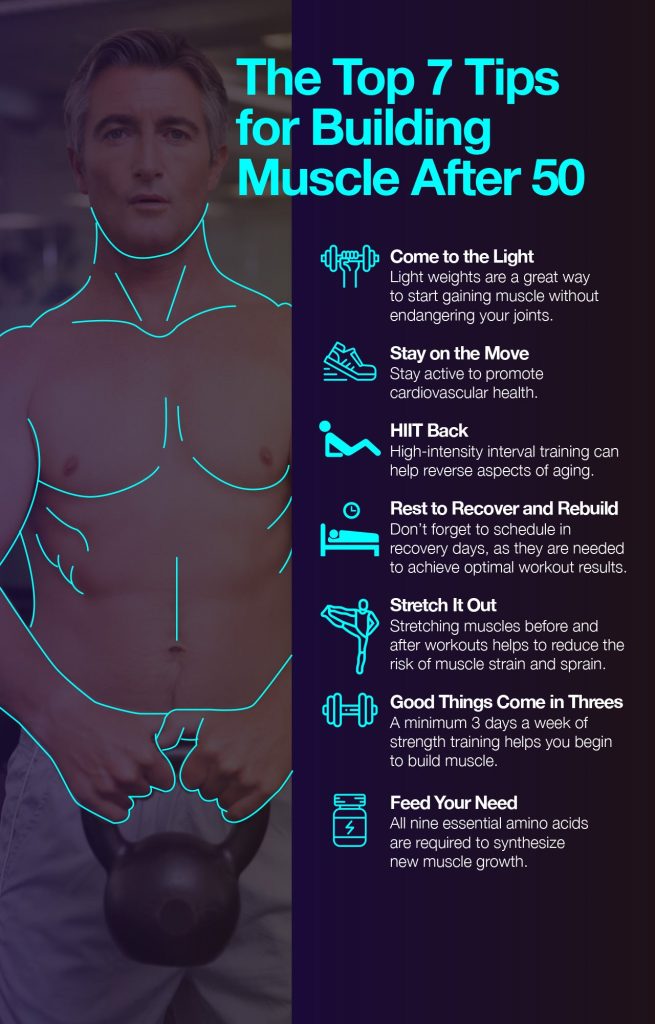
Strength training is the cornerstone of muscle building. Start with basic exercises such as squats, lunges, and push-ups. These compound movements engage multiple muscle groups, offering better results in less time. You might wonder, “How heavy should my weights be?” Begin with weights that challenge you but allow proper form. Gradually increase the weight as your strength improves. The key is consistency, not overexertion. Consider setting a schedule, like three times a week, to maintain momentum. This routine helps in building muscle mass while reducing the risk of injury.
Incorporating Resistance Bands
Resistance bands are a versatile tool for muscle building. They offer varying levels of resistance, ideal for those who prefer low-impact workouts. Imagine the convenience of carrying them anywhere for a quick session! Try exercises like band chest presses and seated rows. These target your upper body effectively without straining your joints. Resistance bands are perfect for home workouts, allowing you to exercise even with limited space. Ever thought about mixing it up? Add resistance bands to your strength routine for extra challenge. This combination keeps your muscles guessing, leading to improved growth.
Cardiovascular Exercises
Cardiovascular exercises complement your muscle-building efforts. They improve heart health and increase endurance, vital for sustaining longer workout sessions. Think brisk walking, cycling, or swimming. How often should you engage in these activities? Aim for at least 150 minutes of moderate cardio per week. This not only burns calories but also supports your muscle-building goals. Consider activities you enjoy; it’s easier to stay committed when you’re having fun. Have you ever tried a dance class? It’s a fantastic way to keep your heart pumping and muscles active. — Each exercise routine contributes uniquely to your muscle-building journey. By combining these elements, you create a balanced and sustainable approach. Are you ready to redefine your fitness and embrace a healthier, stronger version of yourself?
Recovery And Rest Strategies
Building muscle mass over 50 requires effective recovery and rest strategies. Prioritize sleep and relaxation to support muscle repair. Incorporate stretching and regular hydration to aid recovery, ensuring consistent progress in muscle building efforts.
Building muscle mass over 50 might seem challenging, but with the right recovery and rest strategies, it’s entirely achievable. Understanding how to effectively rest and rejuvenate your body is crucial. After all, muscles grow not during workouts, but when you give them time to recover. Let’s dive into some practical tips to enhance your recovery phase and maximize muscle gains.
Importance Of Sleep
Your muscles need sleep to repair and grow. Aim for 7-9 hours of quality sleep each night. This is when your body releases growth hormones essential for muscle repair. Think about your sleep environment. Is your room cool, dark, and quiet? These factors can significantly impact your sleep quality. If you struggle with sleep, consider a routine that winds you down an hour before bed. You could read, listen to calming music, or practice deep breathing.
Stretching And Flexibility
Flexibility can boost muscle recovery. Incorporate stretching into your daily routine. It helps reduce soreness and improves blood circulation to your muscles. Dynamic stretches before workouts prepare your muscles. Post-workout, try static stretches to aid recovery. Even a simple morning stretch can increase your flexibility over time. Feel the difference it makes as your range of motion expands.
Managing Stress Levels
Stress can hinder your muscle growth. High stress levels increase cortisol, a hormone that breaks down muscle tissue. Identify stress triggers in your life. Is it work, family, or something else? Addressing these can make a big difference. Consider stress-relief techniques like meditation or yoga. Or take a few minutes each day to breathe deeply and clear your mind. It’s an investment in both your mental and physical health. Are you giving your body the rest it deserves? Recovery is not just about doing less; it’s about doing what’s necessary for growth. How can you improve your recovery strategy today?
Adapting To Physical Limitations
Building muscle over 50 requires adapting to physical limitations. As we age, our bodies change. These changes affect strength and flexibility. Understanding these limitations is crucial. It helps prevent injuries and promotes muscle growth. Adapting exercises to meet your body’s needs can be empowering. It’s a journey of rediscovery and resilience. Embrace this phase with patience and awareness. Below are key strategies for adapting to limitations.
Listening To Your Body
Pay attention to your body’s signals. Pain or discomfort is a warning. It indicates a need for adjustment. Rest is vital for recovery. Never ignore signs of fatigue. They can lead to overtraining. Muscle soreness is common. But sharp pains need attention. Adjust your routine accordingly. Prioritize warm-ups and cool-downs. They help prepare muscles for stress.
Modifying Exercises
Tailor workouts to fit your abilities. Use lighter weights to reduce strain. Focus on form rather than speed. Slow, controlled movements are key. They reduce injury risk. Incorporate flexibility exercises. Yoga and stretching improve mobility. Resistance bands are useful. They offer gentle resistance without heavy lifting. Adjust exercises to suit joint issues. For example, swap high-impact moves for low-impact ones.
Seeking Professional Guidance
Consider hiring a personal trainer. They provide expert advice. Trainers understand age-related challenges. They offer personalized routines. Physical therapists are helpful too. They address specific limitations. Consult a doctor before starting a new regimen. Medical advice ensures safety. Professionals offer motivation and support. They help track progress and set realistic goals.
Tracking Progress And Setting Goals
Building muscle mass over 50 requires setting clear goals and tracking progress regularly. Create small, achievable targets to stay motivated. Keep a journal to monitor workouts, diet, and improvements.
Building muscle mass over 50 requires commitment and strategy. Tracking progress and setting goals can make the journey clearer. With age, muscle growth may slow, but it’s never too late. Regularly assessing your progress helps keep you motivated. It also ensures your efforts are effective. Setting clear goals gives direction and purpose to your workouts. Adjusting your approach based on results can optimize muscle gain.
Measuring Muscle Growth
Start by measuring your muscle growth accurately. Use a tape measure for circumference of biceps, thighs, and chest. A scale can track weight changes, but muscle weighs more than fat. Keep a log of your measurements every month. Photos can provide visual evidence of changes. Strength improvements in exercises also indicate muscle growth.
Setting Realistic Milestones
Create realistic milestones to guide your progress. Break down your main goal into smaller, achievable targets. Aim to increase weights gradually in your workouts. Set a timeline for reaching each milestone. Ensure your goals are specific and measurable. Realistic goals keep you motivated and focused.
Adjusting Plans As Needed
Be flexible with your workout plans. Evaluate your progress regularly. If gains are slow, tweak your routine. Consider varying exercises to target different muscles. Adjust your diet to support muscle growth. Listen to your body and avoid overtraining. A tailored approach ensures steady progress.
Common Myths And Misconceptions
Building muscle mass over 50 is often surrounded by myths and misconceptions, which can lead to confusion and frustration. Many people believe that as they age, gaining muscle becomes impossible or that certain exercises are no longer effective. These misunderstandings can hold you back from reaching your fitness goals. Let’s clear up some of these common myths and set the record straight, so you can confidently pursue muscle growth at any age.
Myth Of Aging And Muscle Loss
It’s a common belief that aging automatically leads to muscle loss. While it’s true that muscle mass can decrease with age, it doesn’t have to be your fate. I remember when my uncle, at the age of 55, started strength training seriously for the first time. Within months, he not only gained muscle but also felt more energetic than ever. You have the power to counteract muscle loss with consistent effort.
Think about it: many studies show that strength training significantly benefits older adults. The real myth is that you can’t change your muscle mass after a certain age. In reality, your muscles are ready to grow if you give them the right kind of attention and care.
Debunking Exercise Myths
Another widespread myth is that certain exercises are unsafe or ineffective for those over 50. Some might say heavy weights are off-limits. This isn’t true. My friend’s experience taught him that with proper technique and guidance, lifting weights can be both safe and hugely beneficial.
What’s crucial is adapting exercises to fit your body’s needs. You don’t have to avoid squats or deadlifts if done correctly. Instead, focus on proper form and consider working with a trainer who understands the needs of mature athletes.
Nutrition Misunderstandings
Nutrition myths often revolve around the idea that older adults need less protein. In fact, protein is crucial for muscle repair and growth, especially as you age. Skimping on protein can actually hinder your progress.
Consider adding protein-rich foods such as eggs, lean meats, or plant-based options like beans and tofu to your meals. It’s not about following a restrictive diet but rather about ensuring your body gets the nutrients it needs to build muscle.
Have you ever noticed how some older adults maintain a youthful physique? Often, they understand the balance between exercise and nutrition. So, ask yourself: Are you fueling your muscle-building goals with the right diet?
Ultimately, understanding and dispelling these myths can help you focus on what truly works for building muscle mass over 50. Embrace the journey, and remember, it’s never too late to start creating the strong and healthy body you deserve.
Inspiring Success Stories
Building muscle mass after 50 can seem challenging. Yet, many have done it and shared their success stories. These tales inspire and motivate others on similar journeys. Real-life transformations show what’s possible with dedication. Experts offer tips to keep you motivated and on track.
Real-life Transformations
John from Texas gained 20 pounds of muscle at 55. He started with basic exercises and a simple diet. Consistency was key for him. He worked out three times a week. John’s story shows that small steps lead to big changes.
Susan, a grandmother, improved her strength and energy. She joined a local gym and learned from trainers. Within a year, she lifted heavier weights than ever before. Her transformation proves that age is just a number.
Motivational Tips From Experts
Experts say focus on a balanced routine. Strength training and cardio should go hand in hand. Eating enough protein is crucial. It helps in muscle recovery and growth.
Stay patient and positive. Progress takes time but comes with perseverance. Set clear goals to track achievements. Celebrate small victories. These tips help maintain motivation and drive.
Frequently Asked Questions
Is It Possible To Build Muscle After 50?
Yes, building muscle after 50 is possible. Focus on strength training, proper nutrition, and adequate rest. Consistency is key. Consult a fitness professional for personalized guidance. Always prioritize safety and listen to your body.
What To Eat To Gain Muscle At 50?
Consume lean proteins like chicken, fish, and tofu. Include complex carbs such as whole grains and vegetables. Add healthy fats like avocados and nuts. Stay hydrated and consider protein supplements. Balance meals with proper portions for muscle gain. Regular exercise complements dietary efforts.
What Is The Best Protein To Build Muscle After 50?
Whey protein is ideal for building muscle after 50. It digests quickly and aids muscle recovery. Opt for high-quality sources like lean meats, fish, eggs, and plant-based options like lentils and quinoa. Always combine protein intake with strength training for optimal results.
Consult a healthcare professional before starting any supplement.
How Many Times A Week Should A 50 Year Old Lift Weights?
A 50-year-old should lift weights 2-3 times a week. Focus on maintaining strength and muscle mass. Ensure proper form and recovery. Incorporate different exercises to target various muscle groups. Consult a fitness professional for personalized guidance. Adjust frequency based on individual health, goals, and lifestyle.
Conclusion
Building muscle mass over 50 is achievable. Consistency is key. Focus on strength training and balanced nutrition. Listen to your body. Rest is important for recovery. Stay hydrated and maintain a healthy lifestyle. Celebrate small victories and progress. Age is just a number.
Keep pushing towards your goals. Seek professional advice when needed. Stay motivated and positive. Surround yourself with supportive people. Embrace the journey to a stronger you. Remember, every step counts. Stay committed, and results will follow. Enjoy the benefits of a healthier, fitter self.
Your efforts will pay off. Keep going!








