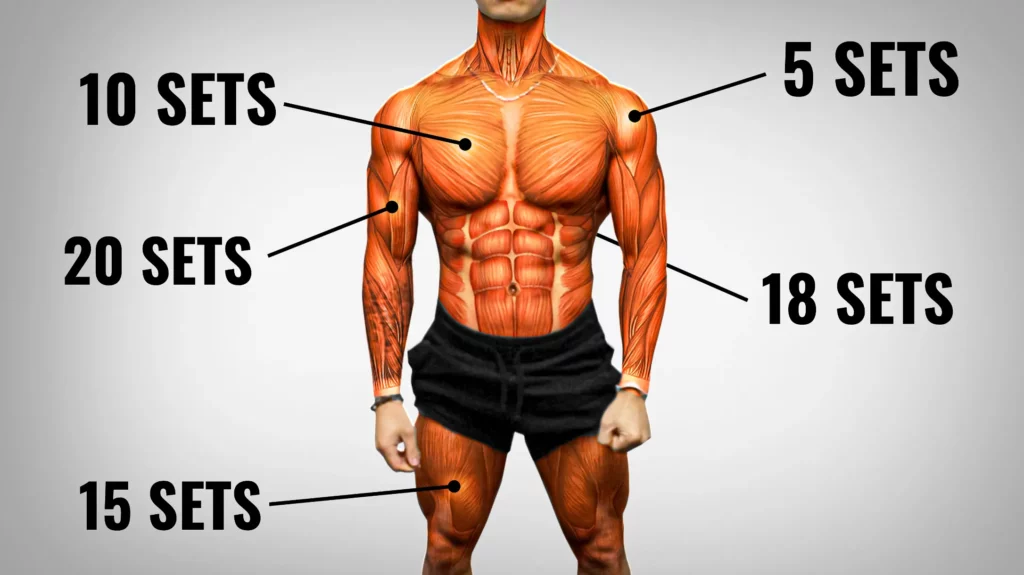
Ever found yourself staring at the bench press, wondering just how many sets you need to build muscle effectively? You’re not alone.
💪 Key Hypertrophy Takeaways from Our Coaching Team:
- Aim for 10 to 18 total hard working sets per week for the chest, distributed across 2 separate weekly sessions.
- Performing 3 to 5 heavy sets per workout taken within 1–3 reps in reserve (RIR) optimizes tension without excessive central nervous system fatigue.
- Progression in mechanical tension (adding load or reps) over time matters far more than extreme junk-volume set counts.
| Training Level | Sets Per Session | Repetition Range | Weekly Frequency | Target RIR (Effort) |
|---|---|---|---|---|
| Beginner (<1 Year) | 3 sets | 8 – 10 reps | 2x per week (6 sets total) | 2–3 RIR (Focus on Form) |
| Intermediate (1–3 Years) | 4 – 5 sets | 6 – 10 reps | 2x per week (8–10 sets total) | 1–2 RIR (Hypertrophy Peak) |
| Advanced (3+ Years) | 5 – 6 sets | 5 – 8 reps (Periodized) | 2–3x per week (12–16 sets total) | 0–1 RIR (Deload Every 5 Wks) |
Many fitness enthusiasts ask this question, seeking the perfect balance between effort and results. Imagine knowing exactly how to structure your workouts, ensuring every minute you spend at the gym counts towards sculpting the physique you desire. We’ll dive into the science and strategy behind the bench press, helping you unlock the secrets to muscle growth.
Discover how to maximize your gains and avoid common pitfalls that can slow your progress. Stay with us as we unravel the optimal number of sets that could transform your workouts and elevate your fitness journey.
Benefits Of Bench Press
Bench pressing isn’t just about lifting heavy weights; it’s a gateway to numerous benefits for your body and your workout routine. This classic exercise targets key muscle groups and helps improve strength, endurance, and overall fitness. Whether you’re a beginner or an experienced lifter, understanding the perks of bench pressing can enhance your gym sessions and lead to more significant muscle gains.
The bench press is a cornerstone of strength training for a reason. It primarily targets your chest muscles, but it also engages your shoulders, triceps, and core. This multi-muscle activation makes it a fantastic exercise for building upper body strength.
As you lift, you push your body to adapt, growing stronger with each set. This is why the bench press is so popular among those looking to increase their muscle mass effectively.
Improved Muscle Definition
Do you dream of having a well-defined chest that turns heads? The bench press can help you achieve that. By consistently pressing weights, you work on sculpting your pectoral muscles, giving them shape and definition.
Adding variety in your bench press routine, like changing grip width or incline, can further enhance muscle definition. It keeps your muscles guessing and growing.
Enhanced Strength And Power
Strength isn’t just about lifting more; it’s about lifting better. The bench press boosts your ability to exert force, enhancing your power in everyday activities and other workouts.
Imagine the confidence that comes with knowing you can push your limits. Every set you complete builds that strength, empowering you in both physical and mental pursuits.
Boosted Confidence
Ever felt the rush after completing a challenging set? It’s not just physical; it’s mental. The bench press can be a powerful confidence booster. Seeing the weights go up and knowing you’re progressing can be incredibly motivating.
It’s about small victories. Each new weight you conquer is a testament to your dedication and hard work. This confidence often spills over into other areas of life, making you feel unstoppable.
Community And Competition
In many gyms, the bench press is a social exercise. You’ll often find lifters encouraging each other, sharing tips, and even competing in friendly challenges. This camaraderie can make your workout experience more enjoyable and motivating.
Have you ever tried to outdo your gym buddy on the bench? It’s fun and pushes you to reach new heights. It’s not just about lifting weights; it’s about creating bonds and memories.
The bench press isn’t just an exercise; it’s an experience. With every rep, you’re building more than muscle; you’re building a stronger version of yourself. Why not make the most of it?

Credit: www.facebook.com
Understanding Muscle Hypertrophy
Understanding muscle hypertrophy is key to building muscle efficiently. Muscle hypertrophy refers to the growth and increase in muscle size. It happens when muscle fibers endure stress and repair stronger. Knowing how to stimulate hypertrophy effectively can help achieve fitness goals.
What Is Muscle Hypertrophy?
Muscle hypertrophy is the enlargement of muscle fibers. It occurs through resistance training. When muscles experience tension, tiny tears form. The body repairs these tears, building muscles larger and stronger.
Why Hypertrophy Matters For Muscle Growth
Hypertrophy plays a crucial role in muscle development. It increases muscle mass and strength. Regular training encourages muscle adaptation and growth. This process enhances physical performance.
Factors Affecting Muscle Hypertrophy
Several factors influence hypertrophy. Nutrition, rest, and training intensity are vital. Consuming protein supports muscle repair and growth. Adequate sleep allows the body to recover. Training intensity determines the level of muscle stress.
Choosing The Right Training Volume
Training volume affects hypertrophy. A balanced approach is essential. Performing three to five sets of bench press is effective. This range stimulates muscles without overtraining. Consistency is important for sustainable growth.
The Role Of Progressive Overload
Progressive overload is crucial for hypertrophy. Gradually increasing weight challenges muscles. This method pushes muscles to adapt and grow. Always focus on proper form to prevent injuries.
Optimal Sets For Muscle Growth
Building muscle with bench press requires the right number of sets. Optimal sets vary based on experience and goals. Understanding how many sets to perform can significantly impact muscle growth. This section explores the best practices for different lifters and the importance of balancing frequency and recovery.
Beginners Vs. Experienced Lifters
Beginners should start with fewer sets. Three to four sets can be effective. This allows them to focus on proper form and technique. Experienced lifters may benefit from more sets. Five to six sets can help stimulate muscle growth. They already have a solid foundation and can handle more volume.
Frequency And Recovery
Frequency impacts muscle growth. Training bench press more than once a week can be beneficial. Two to three times weekly allows for steady progress. Recovery is crucial between sessions. Muscles need time to repair and grow. Adequate rest ensures optimal performance in the next workout.

Credit: builtwithscience.com
Balancing Volume And Intensity
Balancing volume and intensity in your bench press routine is crucial for muscle growth. It’s like walking a tightrope; too much of one and you risk not seeing gains, too much of the other and you might burn out. Finding that sweet spot can transform your strength and physique.
Effects On Strength And Size
Increasing the volume of your sets can lead to significant strength gains. Think of adding more weight or reps to push your muscles to adapt. But remember, more isn’t always better. Quality trumps quantity.
Focus on controlled movements and proper form. This enhances muscle size, giving you that dense, powerful look. A friend’s advice—prioritize form over chasing numbers—proved invaluable in my own training. It’s the small tweaks that bring big changes.
Avoiding Overtraining
Overtraining is a real risk when upping your bench press sets. You might feel the urge to keep pushing, but listen to your body. Are your muscles constantly sore? Is fatigue setting in?
Consider setting a realistic number of sets per session. Maybe 3 to 5 sets, with adequate rest days. This balance prevents burnout. A fellow gym-goer learned this the hard way, realizing that rest days are as crucial as workouts for growth.
Ask yourself: Are you giving your muscles time to recover and grow? Recovery is where the magic happens, allowing your muscles to repair and become stronger.
Incorporating Variations
Incorporating variations in your bench press routine boosts muscle growth. Variations target different muscle fibers and improve strength. They also prevent workout monotony. Let’s explore effective bench press variations.
Incline And Decline Bench Press
Incline bench press targets the upper chest. It enhances shoulder stability and strength. Adjust the bench to a 15-30 degree angle. This adjustment shifts focus to the upper pectoral muscles.
Decline bench press emphasizes the lower chest. It involves a downward angle, activating different muscle fibers. Set the bench at a 15-30 degree decline. This variation can enhance overall chest development.
Dumbbell Vs. Barbell
Dumbbells offer a wide range of motion. They help in addressing muscle imbalances. Each arm works independently, promoting balanced development.
Barbells allow lifting heavier weights. They provide stability and support. Barbells are great for building overall chest strength.
Incorporate both tools in your routine. This approach ensures comprehensive muscle engagement and growth.
Complementary Exercises
Building muscle requires more than just bench press sets. Complementary exercises play a vital role. They enhance overall strength and muscle growth. They target muscles that support your primary lifts. This approach helps improve your bench press performance.
Supporting Muscle Groups
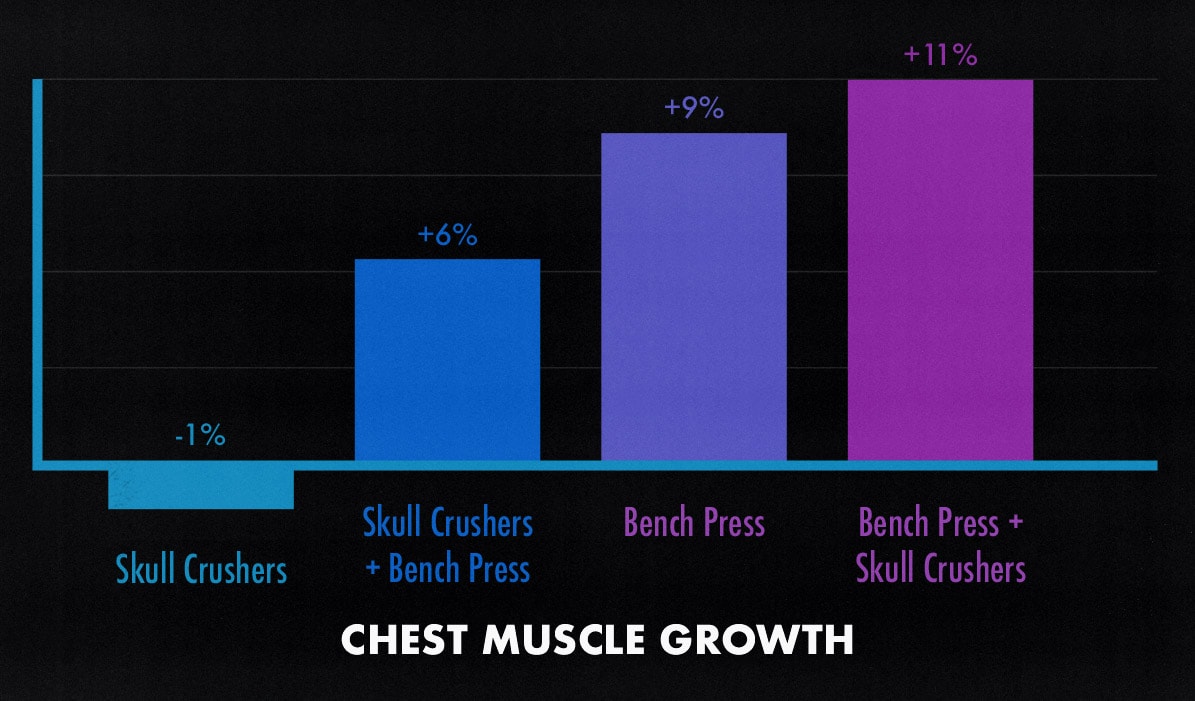
Bench press primarily targets the chest. But it also engages triceps and shoulders. To build muscle effectively, strengthen these supporting muscle groups. Exercises like tricep dips and shoulder presses are beneficial. They help build endurance and power. This support translates to better bench press results.
Role Of Accessory Work
Accessory work involves exercises that supplement main lifts. They focus on muscle groups not directly targeted by the bench press. This includes exercises such as rows and flyes. These movements enhance muscle balance and reduce injury risk. They also aid in developing a more complete physique. Consistent accessory work is crucial for muscle growth.
Nutrition And Recovery
Building muscle through bench press requires more than lifting weights. Proper nutrition and recovery are key to maximizing gains. They ensure the body repairs and grows stronger after each workout. Let’s explore how protein intake and rest can impact your muscle-building journey.
Protein Intake
Protein plays a vital role in muscle repair. It helps rebuild muscle fibers after a workout. Aim to consume a protein-rich meal within two hours post-exercise. Lean meats, eggs, and legumes are excellent protein sources. Protein supplements can also help meet daily protein needs.
For muscle growth, aim for 1.6 to 2.2 grams per kilogram of body weight. This ensures muscles receive the necessary nutrients for growth.
Rest And Sleep
Rest days are crucial for muscle recovery. They prevent overtraining and reduce injury risk. Incorporate rest days into your workout schedule. Sleep is equally important for muscle repair. Aim for 7-9 hours of quality sleep each night.
During sleep, the body releases growth hormone. This hormone aids in muscle repair and growth. Ensure a consistent sleep schedule for optimal recovery.
Credit: outlift.com
Common Mistakes To Avoid
Overtraining by doing too many bench press sets can hinder muscle growth. Balancing intensity and recovery is crucial for gains. Ignoring form leads to injury, impacting progress and strength development.
Building muscle with bench press is a goal for many fitness enthusiasts. However, certain common mistakes can derail your progress. It’s crucial to recognize these pitfalls to optimize your workout and avoid injury. Let’s dive into some of the most common errors and how you can sidestep them.
Improper Form
Using the wrong form while bench pressing is a surefire way to hinder muscle growth. If your elbows flare too wide, you’re putting unnecessary strain on your shoulders. Keep them tucked closer to your body. Imagine lifting a heavy box. You want to use your legs and core, not just your arms. The same principle applies here. Engage your entire body for a safe and effective lift. Seek feedback from a trainer or a workout buddy. A fresh pair of eyes can catch mistakes you might miss. Adjusting your form can make all the difference in your muscle-building journey.
Neglecting Warm-up
Skipping the warm-up is like driving a cold car. Your muscles need to be ready for action. A proper warm-up increases blood flow and prepares your muscles for the workload ahead. You may wonder, “How much time should I spend warming up?” Aim for at least five to ten minutes. This can include light cardio or dynamic stretches. Think of a warm-up as setting the stage for your workout. Without it, you’re risking injury and reducing your performance. Prioritize this essential step to enhance your bench press results. Avoid these common mistakes, and you’ll be on your way to a more effective and safer muscle-building routine. Remember, every detail matters in your fitness journey. What adjustments will you make today?
Frequently Asked Questions
Will 3 Sets Of Bench Press Build Muscle?
Yes, 3 sets of bench press can build muscle. Consistency and proper form enhance results. Include progressive overload and balanced nutrition for optimal gains. Regularly challenging muscles leads to growth. Adapt your routine based on fitness goals and listen to your body’s needs.
How Much Should A 170 Lb Man Bench Press?
A 170 lb man should aim to bench press between 95-115% of his body weight. This means lifting 160 to 195 lbs is average. Individual abilities can vary based on factors like experience and training level. Always prioritize proper form and safety to prevent injuries.
Is 6 Sets Of Chest A Week Enough?
Six sets of chest exercises weekly can be effective for muscle maintenance. Individual goals and recovery also matter. Adjust sets based on strength level and progress. For growth, consider increasing volume or intensity. Always prioritize proper form and rest.
Is 20 Reps Too Much For Bench?
20 reps for bench press can be effective for endurance and muscle growth. It depends on fitness goals. For strength, aim for fewer reps with heavier weights. Adjust your routine based on individual needs and preferences. Always maintain proper form to prevent injury.
Final Verdict & Coach Recommendation
Building muscle with bench press requires consistent effort and the right approach. Start with a few sets, then increase gradually. Listen to your body. Rest is vital for muscle growth. Aim for balanced progress. Focus on form to prevent injuries.
Mix up your routine to keep it exciting. Track your progress regularly. Adjust your sets based on your goals. Remember, patience and persistence are key. Muscle building takes time and dedication. Stay motivated and enjoy the journey. Your hard work will pay off.
Keep pushing forward!








