Feeling the itch to flip, tumble, and twist but can’t make it to the gym? You’re in the right place!
Imagine mastering the art of gymnastics right in your living room. It’s not just a dream—it’s entirely possible. Gymnastics workouts at home offer a unique blend of strength, flexibility, and fun, and they’re perfect for anyone looking to spice up their fitness routine.
Plus, you don’t need fancy equipment or a lot of space to get started. By the end of this article, you’ll have all the tips and tricks to transform your home into a mini gymnastics arena. Ready to turn your living room into your personal training ground? Let’s dive into the world of at-home gymnastics workouts and discover how you can become more agile, toned, and confident without stepping out your front door.
Benefits Of Home Gymnastics
Home gymnastics workouts offer flexibility and convenience, allowing you to exercise whenever you want. Improve strength and flexibility without needing a gym membership. Save time and money while staying fit in the comfort of your home.
Engaging in gymnastics workouts at home offers a plethora of benefits that can enhance both your physical and mental well-being. With a bit of space and some creativity, your home can become a personal gymnasium. You might be surprised at how this practice can fit seamlessly into your daily routine.Physical Fitness Improvement
Home gymnastics is a great way to boost your physical fitness. It strengthens muscles, improves flexibility, and enhances coordination. The convenience of doing it at home means you can easily integrate exercises into your busy schedule.Cost-effective Exercise
Why spend money on a gym membership when you can get fit at home? By practicing gymnastics at home, you save on travel time and gym fees. This approach allows you to invest in essential equipment that will last for years.Convenience And Flexibility
No need to stick to gym hours. Home workouts allow you to exercise at your own pace and on your own time. Whether it’s early morning or late evening, the timing is entirely up to you.Personalized Environment
Your home is your sanctuary. You can create a workout environment that suits your tastes and preferences. Add your favorite music or scented candles to make the experience enjoyable.Enhanced Focus And Discipline
Working out at home requires discipline, which can significantly improve your mental strength. You learn to motivate yourself without external pressure. This self-discipline often translates into other areas of your life.Family Involvement
Why not turn it into a family activity? Encouraging family members to join can make workouts more fun and engaging. It’s a fantastic way to bond and promote a healthy lifestyle for everyone.Adaptability To Your Needs
Home gymnastics can be tailored to fit your personal fitness level and goals. You can start small and gradually increase intensity as you progress. This adaptability ensures you stay challenged and motivated. Have you ever tried transforming a corner of your living room into a mini-gym? It might just be the change you need to keep your fitness journey exciting and fulfilling.Essential Equipment
Setting up for a gymnastics workout at home needs just a few essentials. A good mat ensures safety during exercises. Resistance bands and a balance beam are handy for strength and balance training.
Embarking on a gymnastics workout at home can be both exciting and rewarding. However, to make the most of your training, having the right equipment is crucial. You don’t need to transform your home into a full-fledged gym, but having essential gear can enhance your routine, ensuring both safety and efficiency. Let’s dive into the basics of setting up your home for gymnastics workouts, focusing on the essentials to get you started.Space Considerations
Before you start gathering equipment, assess the space you have available. A clear, open area is vital for performing routines safely. Measure the dimensions of the room to ensure you have enough room to stretch out your limbs without knocking over furniture. Even a small living room corner can work if you arrange it thoughtfully. Imagine doing a cartwheel and hitting a wall—that’s the last thing you want!Basic Tools
Start with a few key pieces of equipment that will form the foundation of your workouts. A quality yoga mat can provide cushioning for floor exercises and protect your joints. Consider investing in a balance beam or a set of gymnastic rings for versatility. These tools can help you practice balance and strength exercises at home. Resistance bands and a pull-up bar can add variety to your routines, allowing you to work on different muscle groups.Safety Gear
Safety should never be an afterthought in gymnastics. Wearing the right gear can prevent injuries and keep your workouts on track. A good pair of grip socks can prevent slipping on hard floors. Wrist supports and knee pads can protect your joints during more intense exercises. Evaluate your equipment regularly for wear and tear. How safe is your setup? Taking a few minutes to check now could save you from future injuries. With these essential pieces in place, you’re ready to start your gymnastics journey at home. Have you thought about what equipment you need? Investing in the right tools can make your workouts more effective and enjoyable.Warm-up Routine
Getting ready for a gymnastics workout at home starts with a solid warm-up routine. Warming up is crucial to prevent injuries and enhance your performance. It prepares your muscles and joints for the challenges ahead. Think of it as priming your body for success.
Stretching Techniques
Stretching is a key part of your warm-up. It increases flexibility, a must-have for gymnastics. Begin with dynamic stretches like leg swings and arm circles. These movements help loosen up your joints.
Focus on areas that will be heavily engaged during your workout. Stretch your hamstrings, hip flexors, and shoulders. Hold each stretch for about 20 seconds. Remember, stretching should feel comfortable, not painful.
Cardio Activities
Cardio gets your heart pumping and blood flowing to your muscles. Start with light jogging or jumping jacks. These are simple yet effective for raising your heart rate.
Consider doing high knees or butt kicks for added intensity. Aim for five to ten minutes of cardio. Feel the energy boost as your body warms up.
Have you ever noticed how your mood lifts after a good warm-up? It’s not just your body that benefits, your mind does too. You’re setting the stage for a successful workout.
What warm-up routine works best for you? Trying different techniques can help you find what suits your body. The key is consistency and listening to your body’s needs.
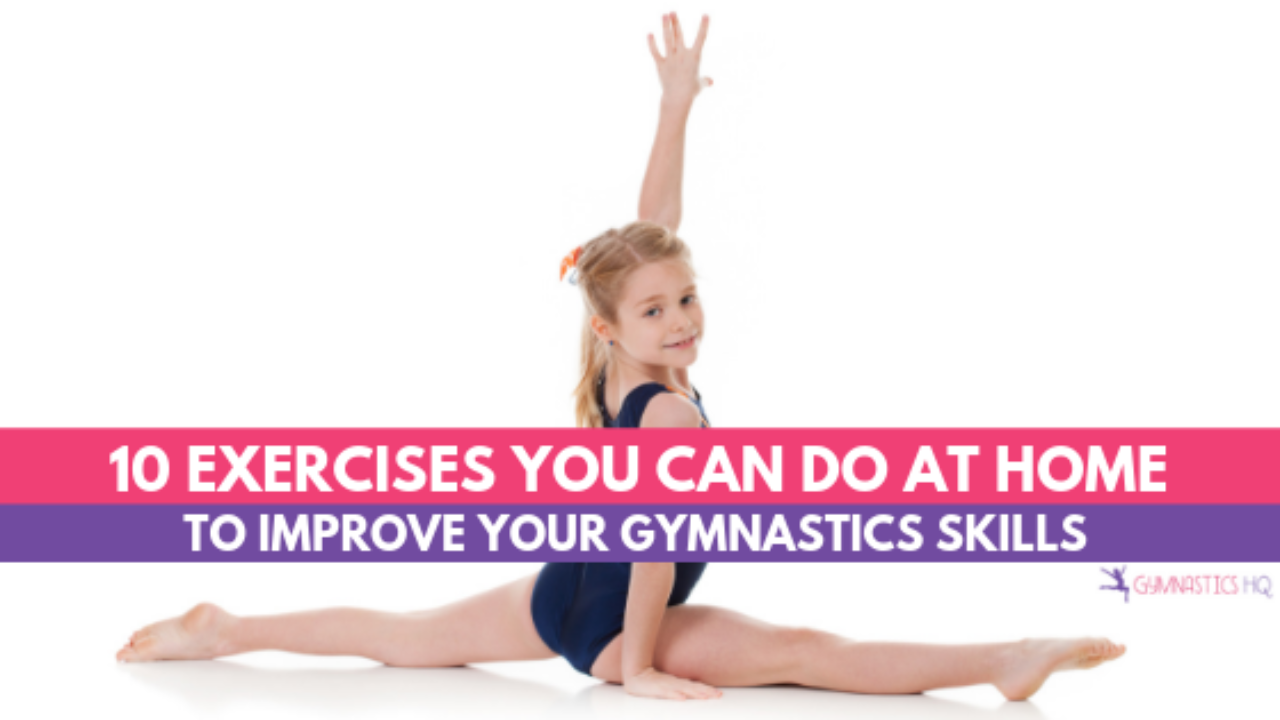
Credit: gymnasticshq.com
Core Strength Exercises
Strengthen your core with gymnastics workouts at home. Simple exercises improve balance and flexibility. Engage in routines that boost overall fitness.
Building a strong core is essential for anyone interested in gymnastics, whether you’re a beginner or a seasoned athlete. Core strength exercises not only improve your balance and stability but also enhance your overall performance. Working on your core can be conveniently done at home, requiring minimal equipment and offering maximum benefits. Let’s dive into some effective exercises that you can easily include in your daily routine.Planks And Variations
Planks are a staple in core workouts. They engage multiple muscle groups, providing a comprehensive workout. Start with the basic plank, maintaining a straight line from head to heels. Hold this position for as long as you can. Once you’re comfortable, try variations like side planks to target your obliques. Or mix it up with plank shoulder taps to improve your stability. Challenge yourself by setting a timer and increasing your hold time every week.Russian Twists
Russian twists are perfect for working on your obliques and improving rotational strength. Sit on the floor with your knees bent and feet lifted. Lean back slightly and clasp your hands together. Twist your torso to the right, then to the left, touching the floor beside you each time. To add more intensity, hold a weight or a water bottle. Aim for three sets of 15 twists on each side.Leg Raises
Leg raises are fantastic for targeting the lower abs. Lie flat on your back with your legs straight. Keep your arms at your sides. Slowly lift your legs towards the ceiling, keeping them straight. Lower them back down without touching the floor. Repeat this move for three sets of 10 repetitions. If this feels too easy, try adding ankle weights or slowing down the movement for increased resistance. Consistency is key in any workout routine. How often do you dedicate time to your core exercises? Remember, a strong core not only supports your gymnastics skills but also boosts your confidence in every move you make.Flexibility And Balance
Gymnastics workouts at home offer a wonderful way to enhance flexibility and balance. These exercises strengthen your core and help improve coordination. You don’t need fancy equipment to start. With dedication, you can make great progress in the comfort of your living room.
Splits Progression
Splits are excellent for increasing leg flexibility. Begin with basic stretches to warm up. Try sitting on the floor with legs extended. Reach for your toes to feel the stretch. Gradually slide your legs further apart. Use cushions for support if you need. Practice daily to see improvement.
Handstand Practice
Handstands improve upper body strength and balance. Start near a wall for support. Place hands firmly on the ground. Kick your legs up against the wall. Focus on holding your balance. Keep your body tight and straight. Practice regularly to build confidence.
Balance Beam Skills
Balance beams are great for coordination. Use a line on the floor as your beam. Walk heel to toe along the line. Keep your arms out for balance. Try different walking patterns. Challenge yourself with turns and jumps. Consistent practice enhances steadiness.
Upper Body Workouts
Transform your home into a gymnastics arena with upper body workouts. Strengthen arms, shoulders, and core using simple exercises. Enhance agility and flexibility without needing gym equipment.
Upper Body Workouts Are you ready to enhance your gymnastics skills from the comfort of your home? Upper body workouts are a fantastic way to build the strength and endurance needed for impressive gymnastics moves. By focusing on key exercises, you can transform your living room into a mini-gym and see remarkable improvements in your performance.Push-up Variations
Push-ups are a staple for building upper body strength. But did you know there are numerous variations to challenge yourself further? Try diamond push-ups to target your triceps more intensely. You can also try incline push-ups using a chair or low table for added difficulty. Each variation hits different muscles, keeping your workouts exciting and effective. Experiment with these variations and notice how your strength and control improve over time.Pull-up Techniques
Pull-ups are another essential exercise for gymnasts. If you don’t have a pull-up bar, a sturdy door frame can be your friend. Start with assisted pull-ups if you’re new to this exercise. Once you’re comfortable, progress to wide-grip pull-ups to build your lats. Have you ever tried negative pull-ups? They focus on the lowering phase and are excellent for strength-building.Dips And Arm Strength
Dips are perfect for targeting your triceps and shoulders. A simple pair of chairs can serve as your dip station at home. Begin with bench dips, using a chair for support, to get used to the movement. As you gain confidence, attempt parallel bar dips for a greater challenge. These exercises not only build arm strength but also enhance your balance and coordination. Which dip variation will you conquer first? Remember, consistency is key. Regularly incorporating these exercises into your routine will boost your upper body strength and enhance your gymnastics skills. So, roll out that mat and get started!Lower Body Conditioning
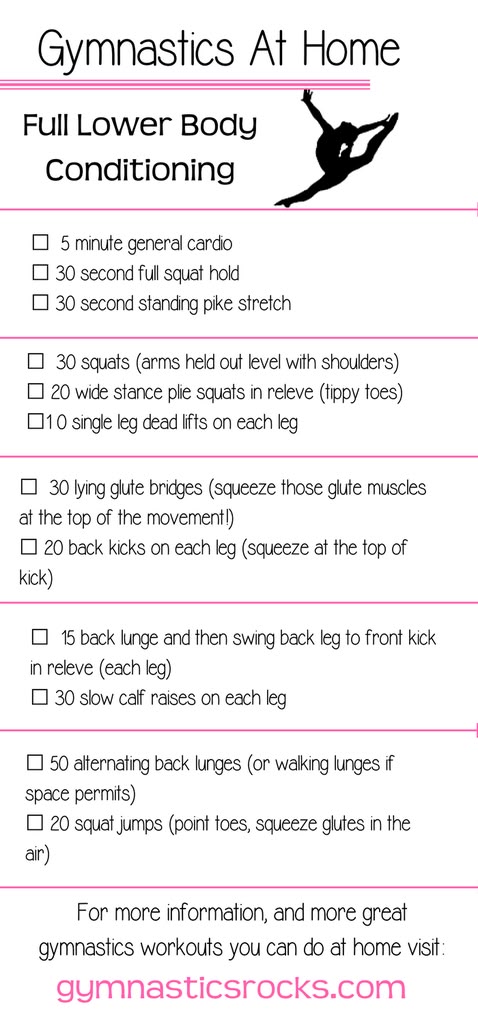
Strengthen your legs and core with a gymnastics workout at home. This lower body conditioning routine enhances flexibility and balance. Enjoy a structured exercise plan without needing special equipment.
Lower Body Conditioning Working out at home can be just as effective for strengthening your lower body as going to the gym. With a little creativity and dedication, you can perform powerful exercises without needing fancy equipment. Focusing on lower body conditioning will not only enhance your gymnastics skills but also improve your overall fitness.Squats And Lunges
Squats and lunges are fundamental exercises for building strong legs. They target the quads, hamstrings, and glutes. To perform a squat, stand with your feet shoulder-width apart, lower your hips, and keep your chest up. A simple tip: imagine you’re sitting back into a chair. Lunges, on the other hand, require stepping forward and lowering your hips until both knees are bent at a 90-degree angle. Alternating legs not only builds strength but also improves balance.Calf Raises
Calf raises are perfect for strengthening your lower legs. Stand straight, then lift your heels off the ground as high as possible. Hold the position for a moment before lowering back down. Doing calf raises on a stair edge can increase the range of motion. This simple move can make a big difference in your jumps and landings in gymnastics. Consider doing these while brushing your teeth or watching TV. Small efforts add up over time.Plyometric Drills
Plyometrics involve explosive movements that can boost your power and agility. Exercises like jump squats and box jumps fall into this category. Jump squats add a dynamic twist to regular squats. As you rise from the squat, jump as high as you can, then land softly. Box jumps require a sturdy platform. Start by jumping onto the box with both feet, then step down. They enhance explosive strength, crucial for gymnastics routines. Are you ready to feel the burn? Push your limits safely, and you’ll notice improvements in your performance.
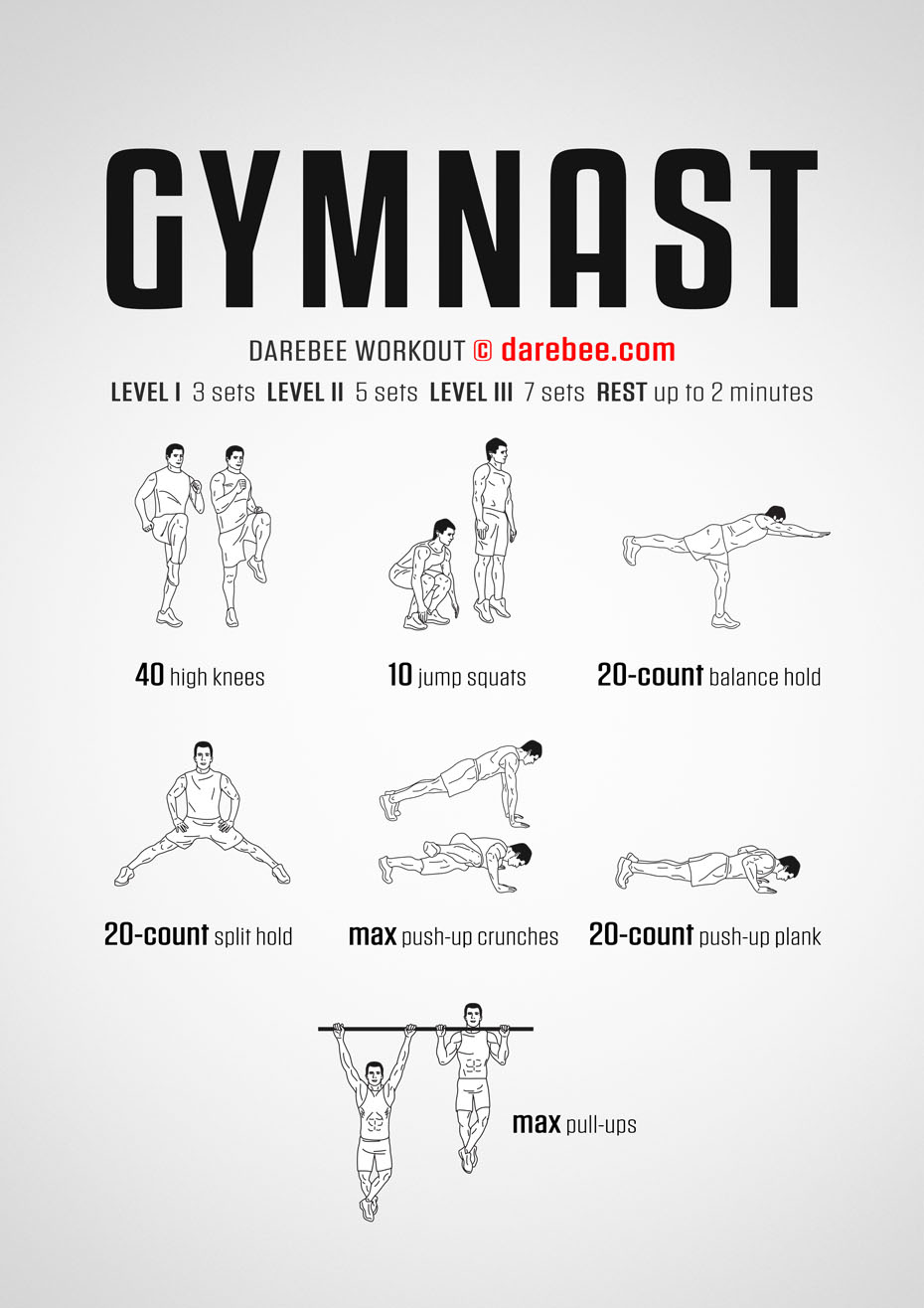
Credit: darebee.com
Cool Down And Recovery
Gymnastics workouts at home can be intense and challenging. Proper cool down and recovery are crucial for maintaining flexibility and preventing injuries. Taking time to cool down helps your body transition to a relaxed state. Recovery ensures your muscles heal and improve after a workout. This section explores simple techniques to enhance your cool down routine.
Deep Breathing Exercises
Deep breathing exercises calm your mind and relax your body. Start by sitting or lying down comfortably. Inhale deeply through your nose for four seconds. Hold your breath for four seconds. Exhale slowly through your mouth for six seconds. Repeat this cycle five times. Deep breathing lowers your heart rate and reduces stress.
Foam Rolling Benefits
Foam rolling is a self-massage technique that eases muscle tension. Use a foam roller on sore areas to increase blood flow and flexibility. It helps reduce muscle soreness and improves recovery. Roll slowly over each muscle group for 30 seconds. Focus on areas that feel tight or tender. Foam rolling can enhance your overall mobility.
Hydration And Nutrition
Hydration is key after a gymnastics workout. Drink water to replace fluids lost during exercise. Proper hydration supports muscle function and recovery. Nutrition is equally important for muscle repair. Eat a balanced meal with protein and carbohydrates after your workout. This aids in muscle growth and energy replenishment.
Tracking Progress
Tracking progress is vital in any workout routine, even gymnastics at home. It helps you see growth, stay motivated, and make necessary adjustments. Knowing how far you’ve come can boost your confidence. It can also highlight areas needing improvement. Let’s explore how you can track your progress effectively.
Setting Goals
Start by setting clear, achievable goals. These should be specific to your gymnastics routine. Want to improve balance or flexibility? Write it down. Make sure goals are realistic and time-bound. This helps maintain focus and provides a sense of direction. As you achieve each goal, set new ones. This cycle promotes continuous improvement.
Using Fitness Apps
Fitness apps can be valuable tools for tracking your progress. Many apps allow you to log workouts, set goals, and monitor improvements. They can provide visual graphs and charts. This makes it easy to see progress over time. Some apps even offer reminders. This helps keep you on track with your routine.
Journaling Achievements
Journaling is another effective way to track your progress. Keep a workout diary. Write down each session, noting achievements and challenges. Reflect on your feelings after each workout. This can provide insights into your progress. Over time, your journal becomes a motivational tool. It shows how far you’ve come on your gymnastics journey.

Credit: www.pinterest.com
Incorporating Fun
Turning your gymnastics workout into a fun activity can keep motivation high. It’s easy to lose interest if exercises feel repetitive or dull. Adding elements of joy can make fitness a part of your lifestyle that you genuinely look forward to.
Dance And Rhythm
Bringing dance into your gymnastics routine can add an exciting twist. Imagine combining strength moves with your favorite tunes. You not only work out but also dance like nobody’s watching.
Try creating a playlist with upbeat music. The rhythm will guide your movements, transforming exercises into a mini dance party. This way, each session becomes a celebration of your progress.
Family Involvement
Why not invite your family to join in? Sharing workouts can be a bonding experience. It turns fitness into family fun, with everyone cheering each other on.
Consider setting up a mini gymnastics circuit in your living room. Assign roles or challenges to each family member. You’ll not only get fit together but also create lasting memories.
Virtual Challenges
Virtual challenges can spice up your routine. Many online platforms offer gymnastics challenges that you can complete at home. Compete with friends or join a global community.
Set goals that push your limits. Each challenge accomplished boosts your confidence and keeps the workout exciting. Are you ready to take on the world from your living room?
Adding fun to your gymnastics routine can transform your workouts from a chore into a delightful hobby. What fun twist will you try next?
Frequently Asked Questions
How Do Gymnasts Train At Home?
Gymnasts train at home using bodyweight exercises, stretching routines, and basic equipment like mats or resistance bands. They focus on flexibility, strength, and balance through daily practice. Online tutorials and virtual coaching can also enhance their training. Maintaining a disciplined schedule ensures continuous progress and skill improvement.
What Is The 5 4 3 Rule In Gymnastics?
The 5 4 3 rule in gymnastics refers to team event requirements. Teams must use five athletes, perform four routines on each apparatus, and count the top three scores towards the team’s total. This rule ensures strategic athlete selection and performance consistency.
Is It Possible To Learn Gymnastics At Home?
Yes, learning gymnastics at home is possible. Start with basic exercises and online tutorials. Ensure safety by using mats and creating a spacious practice area. Consider professional guidance through virtual classes for better progress and injury prevention. Stay consistent and gradually increase difficulty for effective results.
How To Get A Gymnast Body At Home?
Focus on bodyweight exercises like push-ups, pull-ups, and squats. Maintain a balanced diet rich in protein. Incorporate flexibility routines such as yoga or pilates. Set consistent workout schedules to build strength and endurance. Stay hydrated and get adequate rest for muscle recovery.
Conclusion
Creating a gymnastics workout at home is both fun and beneficial. You don’t need fancy equipment. Just a small space and determination. Start with basic exercises. Increase difficulty gradually. Focus on balance, strength, and flexibility. Consistency is key. Practice regularly to see improvement.
Listen to your body. Rest when needed to avoid injury. Enjoy the process. Keep challenging yourself. Gymnastics at home can boost confidence and fitness. It’s a rewarding journey. Remember, every effort counts. Stay motivated, and you’ll reach your goals. Happy training!








