Are you looking to transform your leg day routine without stepping foot in a gym? A dumbbell leg workout at home could be your answer.
It’s convenient, effective, and, yes, perfectly doable in the comfort of your living room. Imagine feeling the burn and building strength while watching your favorite show or listening to your go-to playlist. You don’t need a fancy setup to achieve powerful legs; just a pair of dumbbells and the right moves.
In this guide, we’ll explore a series of exercises designed to target every part of your legs, from quads to hamstrings, all while maximizing your time and effort. Discover how you can elevate your fitness game, boost your confidence, and experience the satisfaction of a solid workout at home. Ready to redefine your leg day? Let’s dive into the exercises that will get you there.

Credit: www.pinterest.com
Benefits Of Dumbbell Leg Workouts
Dumbbell leg workouts at home improve strength and balance without needing a gym membership. These exercises target muscles like quads, hamstrings, and calves, enhancing flexibility. Regular practice can help in building endurance, making daily activities easier and more efficient.
Dumbbell leg workouts at home offer a range of benefits that can transform your fitness routine. They are convenient, effective, and require minimal equipment. Whether you’re a beginner or an experienced athlete, these workouts can help you build strength, improve balance, and enhance your overall fitness.Convenience And Flexibility
Dumbbells are easy to store and require little space. You can perform a comprehensive leg workout in your living room or garage. There’s no need for an expensive gym membership or fancy machines.Builds Strength And Muscle
Using dumbbells, you engage multiple muscle groups, including quads, hamstrings, and calves. This leads to increased muscle mass and strength. Start with lighter weights and gradually increase as your strength improves.Improves Balance And Coordination
Dumbbell exercises require stability, which enhances your balance over time. By challenging your core and stabilizer muscles, you’ll improve coordination. This can be beneficial for daily activities and other sports.Customizable Intensity
You can easily adjust the intensity of your workout by changing the weight of the dumbbells. This makes it suitable for all fitness levels. Try different exercises like lunges or squats for varied intensity.Time-efficient Workouts
Dumbbell leg workouts can be completed in a short amount of time. Even a quick 20-minute session can be effective. This is perfect for those with a busy schedule who still want to stay fit.Cost-effective
Dumbbells are a one-time purchase with lasting benefits. You won’t have recurring costs like gym fees. Investing in a good set of dumbbells can save you money in the long run. Have you ever found yourself skipping workouts because of time constraints or gym costs? Dumbbell leg workouts at home might be the perfect solution. They offer flexibility and efficiency, making it easier for you to stick to your fitness goals.Essential Equipment
Working out at home has become popular and convenient. For an effective leg workout, having the right equipment is crucial. Dumbbells are versatile and easy to use. They help target various muscle groups. Let’s explore the essential equipment needed for a dumbbell leg workout at home.
Dumbbells
Dumbbells come in various sizes and weights. Choose a pair suitable for your fitness level. Adjustable dumbbells offer flexibility. They save space and money. Start with lighter weights if you are a beginner.
Yoga Mat
A yoga mat provides comfort and stability. It protects your floors and prevents slipping. A good mat will cushion your joints. Choose a mat that is durable and easy to clean.
Resistance Bands
Resistance bands are great for adding variety. They enhance strength and flexibility. Lightweight and portable, they are easy to store. Bands come in different resistance levels.
Water Bottle
Hydration is key during workouts. Keep a water bottle nearby. Staying hydrated boosts performance. A reusable water bottle is eco-friendly and economical.
Timer Or Stopwatch
Time your sets and rest intervals. This improves workout efficiency. A timer helps track progress. Many fitness apps offer built-in timers.
Comfortable Footwear
Proper footwear prevents injuries. Shoes should offer support and grip. Choose lightweight and breathable options. Comfort enhances workout experience.
Warm-up Routines
Starting your dumbbell leg workout at home with a warm-up is crucial. It prepares your muscles and joints for exercise. A proper warm-up reduces the risk of injuries and enhances performance. It increases blood flow and flexibility, making movements smoother.
Dynamic Stretching
Dynamic stretching involves active movements that boost blood flow. Arm swings and leg swings are great examples. These stretches prepare your body for more intense exercises. They help increase range of motion and activate muscles.
Light Cardio
Light cardio elevates your heart rate and warms your body. Jogging in place or jumping jacks work well. These exercises increase your heart rate gently. They also improve circulation and prepare muscles for action.
Joint Mobility Exercises
Joint mobility exercises focus on moving joints through their full range. Ankle circles and hip rotations are effective. These exercises enhance flexibility and joint function. They ensure better movement during your workout.
Bodyweight Squats
Bodyweight squats activate leg muscles without weights. They prepare your legs for dumbbell exercises. Squats improve muscle engagement and readiness. Do them slowly to focus on proper form.
Lunges
Lunges are another great warm-up exercise. They target key muscles in the legs. Lunges improve balance and coordination. Start with a few repetitions to get muscles ready.
These warm-up routines set the stage for a successful workout. They prepare your body efficiently and effectively. Don’t skip them for better results and fewer injuries.

Credit: www.borntough.com
Squats For Strength
Squats are the king of all leg exercises. They build strength and stability in your lower body, making everyday movements easier. Whether you’re lifting a grocery bag or climbing stairs, squats have got your back.
At home, dumbbell squats can be a game-changer. They add resistance, helping you develop muscle without needing a gym membership. Ready to up your squat game? Let’s dive into some powerful squat variations you can do in your living room.
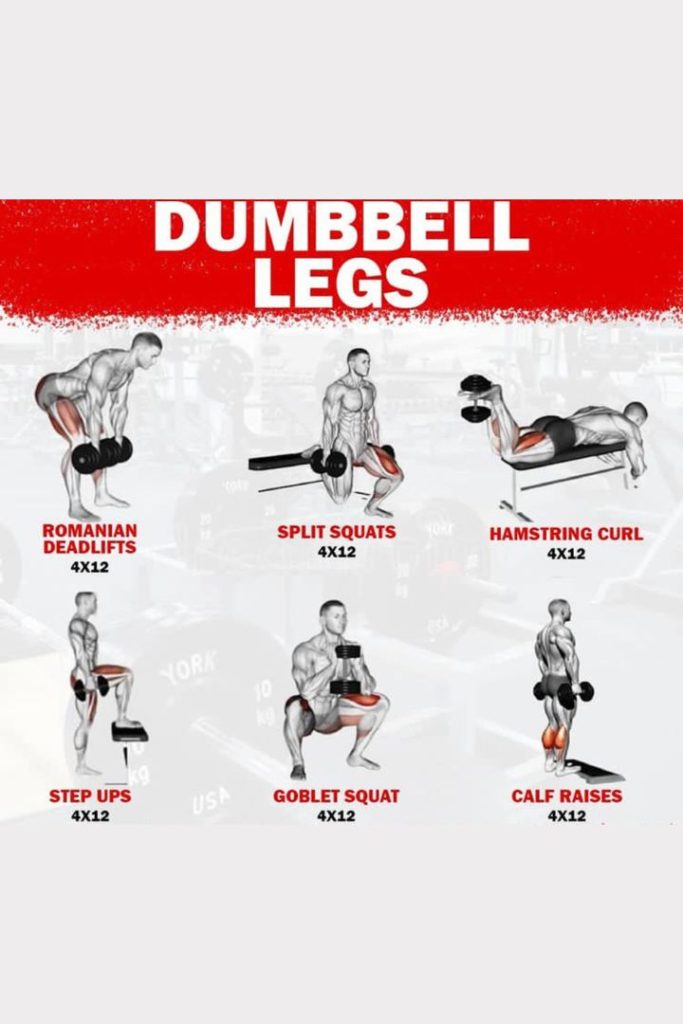
Goblet Squats
Goblet squats are fantastic for beginners and seasoned lifters alike. You hold a dumbbell close to your chest, engaging your core as you squat. This simple adjustment makes a big difference.
As you lower into the squat, keep your elbows tucked in. This helps maintain balance and prevents you from leaning forward. Aim for your thighs to be parallel to the ground, then push through your heels to stand back up.
Ever tried counting your reps out loud? It keeps you focused and helps track your progress. Challenge yourself with an extra rep each day and see how quickly your strength builds.
Split Squats
Split squats are perfect for targeting each leg individually. They improve balance and coordination, giving you an edge in sports and daily activities. Plus, they’re a great way to correct muscle imbalances.
To perform a split squat, step one foot forward and the other back. Hold a dumbbell in each hand. Lower your back knee toward the ground while keeping your front knee aligned with your ankle. This engages your leg muscles differently than traditional squats.
Feel the burn in your quads and glutes? That’s your body getting stronger. Test your limits by gradually increasing the weight. How far can you go?
Both goblet and split squats offer unique benefits. Incorporate them into your routine to boost leg power and overall fitness. Which squat variation will you try first? Let us know your experience and insights in the comments!
Lunges For Balance
Lunges are great for building balance and strength. You can do them at home with just a pair of dumbbells. They target your legs, help with stability, and improve coordination. Lunges are simple but effective. They can be part of your regular workout routine. Let’s dive into the types of lunges you can try.
Forward Lunges
Forward lunges are a good starting point. Stand straight with your feet hip-width apart. Hold a dumbbell in each hand. Step forward with your right foot. Lower your body until your right thigh is parallel to the floor. Keep your back straight. Push back to the starting position. Switch legs and repeat. Forward lunges help in improving leg muscles. They also aid in enhancing your body balance.
Reverse Lunges
Reverse lunges are another great option. Start in a standing position with dumbbells in hand. Step back with your left foot. Lower your body until your right thigh is parallel to the ground. Keep your back straight. Return to the starting position. Change legs and repeat the process. Reverse lunges strengthen your legs and core. They are less stressful on the knees than forward lunges. Try doing a few reps of each for a balanced workout.
Deadlifts For Muscle Growth
Deadlifts boost muscle growth in a dumbbell leg workout at home. Strengthen thighs and glutes effectively. Ideal for building lower body strength without gym equipment.
Deadlifts are a powerhouse exercise for anyone looking to grow muscle, especially in the legs. Performing deadlifts with dumbbells at home can offer the same benefits as using a barbell in the gym. They build strength, enhance balance, and improve flexibility. Whether you’re a beginner or a seasoned lifter, integrating deadlifts into your routine can lead to significant muscle growth.Romanian Deadlifts
Romanian deadlifts are an excellent way to target your hamstrings and glutes. Start by standing with your feet hip-width apart, holding a dumbbell in each hand. Keep your back straight and core engaged. Lower the dumbbells by bending at the hips, pushing your buttocks backward. Go as far as your flexibility allows without rounding your back. This movement should create a stretch in your hamstrings. Use your hamstrings and glutes to lift back to the starting position. Repeat this for 8-12 reps to really feel the burn. Remember, maintaining proper form is crucial to avoid injury.Single-leg Deadlifts
Single-leg deadlifts not only work your muscles but also improve balance and stability. Begin by holding a dumbbell in each hand and standing on one leg. Engage your core for better stability. Lean forward at the hips, letting the other leg extend straight back as a counterbalance. Lower the dumbbells towards the floor, keeping them close to your body. Feel the stretch in your standing leg’s hamstring, then return to the upright position. Aim for 6-10 reps on each leg. This exercise not only strengthens your muscles but also challenges your balance, making it a full-body workout. Have you ever noticed how a small change in your workout routine can lead to big results? Adding these deadlift variations could be that change for you. They offer a simple yet effective way to enhance your leg workout at home. Are you ready to take your leg day to the next level? Grab those dumbbells and get started!Calf Raises For Definition
Calf raises are a simple exercise for strong, defined calves. They enhance muscle tone and improve balance. You can perform calf raises easily at home using dumbbells. This exercise targets the lower legs, offering a focused workout for calf muscles.
What Are Calf Raises?
Calf raises involve standing on your toes and lifting your heels. This movement strengthens the calf muscles. It also helps in building muscle endurance. Dumbbells add resistance, making the exercise more effective.
Benefits Of Dumbbell Calf Raises
Adding dumbbells increases the challenge of calf raises. This results in greater muscle growth. Strong calves support better posture and aid in daily activities. They also enhance athletic performance.
How To Do Calf Raises At Home
Begin by standing with feet hip-width apart. Hold a dumbbell in each hand at your sides. Slowly lift your heels off the floor. Stand on your toes and hold for a moment. Lower your heels back down to the floor. Repeat for 10 to 15 reps for each set.
Tips For Effective Calf Raises
Focus on slow and controlled movements. Ensure your back stays straight throughout the exercise. Keep your knees slightly bent. This helps to prevent injuries. Gradually increase the weight as you gain strength.
Cool-down And Stretching
After an intense dumbbell leg workout, your muscles need a proper cool-down. Cooling down helps your body gradually transition to rest. Stretching during this phase aids muscle recovery and flexibility. It reduces soreness and prevents injury. Here’s how to effectively cool down after your leg workout.
Proper Breathing Techniques
Start by controlling your breathing. Deep breaths help calm your heart rate. Inhale slowly through the nose. Hold for a second. Then exhale gently through the mouth. Focus on steady, rhythmic breathing.
Gentle Walking
Walk around your workout space. Keep the pace slow and relaxed. This gentle movement aids circulation. It helps clear lactic acid from your muscles. Walk for about five minutes.
Static Stretches For Legs
Begin with hamstring stretches. Sit with one leg straight and the other bent. Reach forward to touch your toes. Hold the stretch for 15 seconds. Switch legs and repeat. Next, stretch your quads. Stand and pull your heel towards your glutes. Hold this position. Feel the stretch in the front of your thigh.
Calf Stretch
Stand facing a wall. Place one foot forward, the other behind. Press the heel of the back foot down. Feel the stretch in your calf. Hold for 15 seconds and switch sides.
Hip Flexor Stretch
Get into a lunge position. Keep your front knee above your ankle. Push your hips forward. Feel the stretch in your hip flexor. Hold for 15 seconds, then switch legs.
Cooling Down Benefits
Cooling down helps your muscles relax. It aids in the removal of waste products. Stretching enhances flexibility and joint mobility. It prepares your body for the next workout. Enjoy the benefits of a proper cool-down routine.
Tracking Progress
Tracking progress is crucial in any workout routine. It helps you understand your improvements over time. When working out at home, it’s easy to lose sight of your goals. That’s why tracking progress is essential for staying motivated and focused.
Setting Clear Goals
Start by setting clear, achievable goals. Decide what you want from your leg workout. It could be strength, endurance, or toning. Write these goals down. This keeps you accountable and motivated.
Recording Your Workouts
Keep a workout journal. Record each session. Note the exercises, sets, reps, and weights used. This helps you see patterns and areas for improvement. It also shows progress over time.
Tracking Strength Gains
Monitor increases in weight or reps over weeks. This indicates strength gains. If you lift heavier or do more reps, your muscles are growing. Celebrate these small victories. They show that your hard work is paying off.
Using Photos For Progress
Take photos regularly. Compare them to see physical changes. Sometimes progress is not visible on the scale. Photos can show muscle definition and shape changes. This provides a visual record of your journey.
Evaluating Endurance
Assess endurance improvements. How long can you sustain a workout? Increase workout duration gradually. This shows enhanced stamina and cardiovascular health. Endurance is just as important as strength.
Reviewing Your Plan
Review your workout plan monthly. See if it aligns with your goals. Make adjustments if needed. This keeps your routine effective. A flexible plan is key to continuous progress.
Celebrating Achievements
Celebrate achievements. Small goals accomplished lead to bigger wins. Treat yourself to something nice. This keeps motivation high and makes the process enjoyable.
Avoiding Common Mistakes
Enhance your dumbbell leg workout at home by focusing on proper form and balanced exercises. Start with lighter weights to avoid strain and gradually increase as you gain strength. Mix different movements like squats and lunges to target various muscle groups effectively.
Embarking on a dumbbell leg workout at home can be both empowering and efficient. However, to get the most out of your workout, it’s crucial to steer clear of common mistakes that might hinder your progress or lead to injury. Let’s dive into some practical tips to help you avoid these pitfalls, ensuring your journey to stronger legs is both safe and effective.Incorrect Form
Maintaining correct form is key to maximizing your workout and preventing injury. It’s easy to slip into bad habits, especially when exercising at home without guidance. Imagine squatting with your knees caving in or your back hunched; not only is this ineffective, but it’s also dangerous. Focus on keeping your knees aligned with your toes and your back straight. You might find it helpful to practice in front of a mirror or record yourself to spot any errors.Overloading With Weight
Avoid the temptation to lift too heavy, too soon. It’s a mistake many make, thinking heavier weights equal faster results. In reality, it can lead to poor form and injuries. Start with a weight that allows you to perform exercises correctly and comfortably. Gradually increase as you build strength. Remember, it’s not just about lifting heavy; it’s about lifting smart.Ignoring Rest And Recovery
Your muscles need time to recover after a workout. Skipping rest days can lead to fatigue and decreased performance. Consider how you feel after a workout; your body might need a day off to repair and grow stronger. Make sure to incorporate rest days into your routine, allowing your muscles to heal and adapt.Neglecting Warm-up
Jumping straight into a workout without warming up is a recipe for injury. A proper warm-up prepares your muscles and joints for the exercise ahead, enhancing performance and reducing risk. Think of it as a way to signal your body that it’s time to move. Spend at least five minutes on dynamic stretches or light cardio to get your blood flowing.Underestimating Core Engagement
Your core plays a crucial role in stabilizing your body during leg workouts. If you fail to engage your core, you might find your balance compromised and your form slipping. Ask yourself, how often do you focus on your core during leg exercises? Make a conscious effort to tighten your core muscles with each rep, which will help maintain stability and enhance your overall workout effectiveness. By paying attention to these common mistakes, you pave the way for a more effective and safer dumbbell leg workout at home. Adjust your routine accordingly and watch how these small changes can lead to big improvements. What adjustments will you make today to ensure you’re getting the most out of your workouts?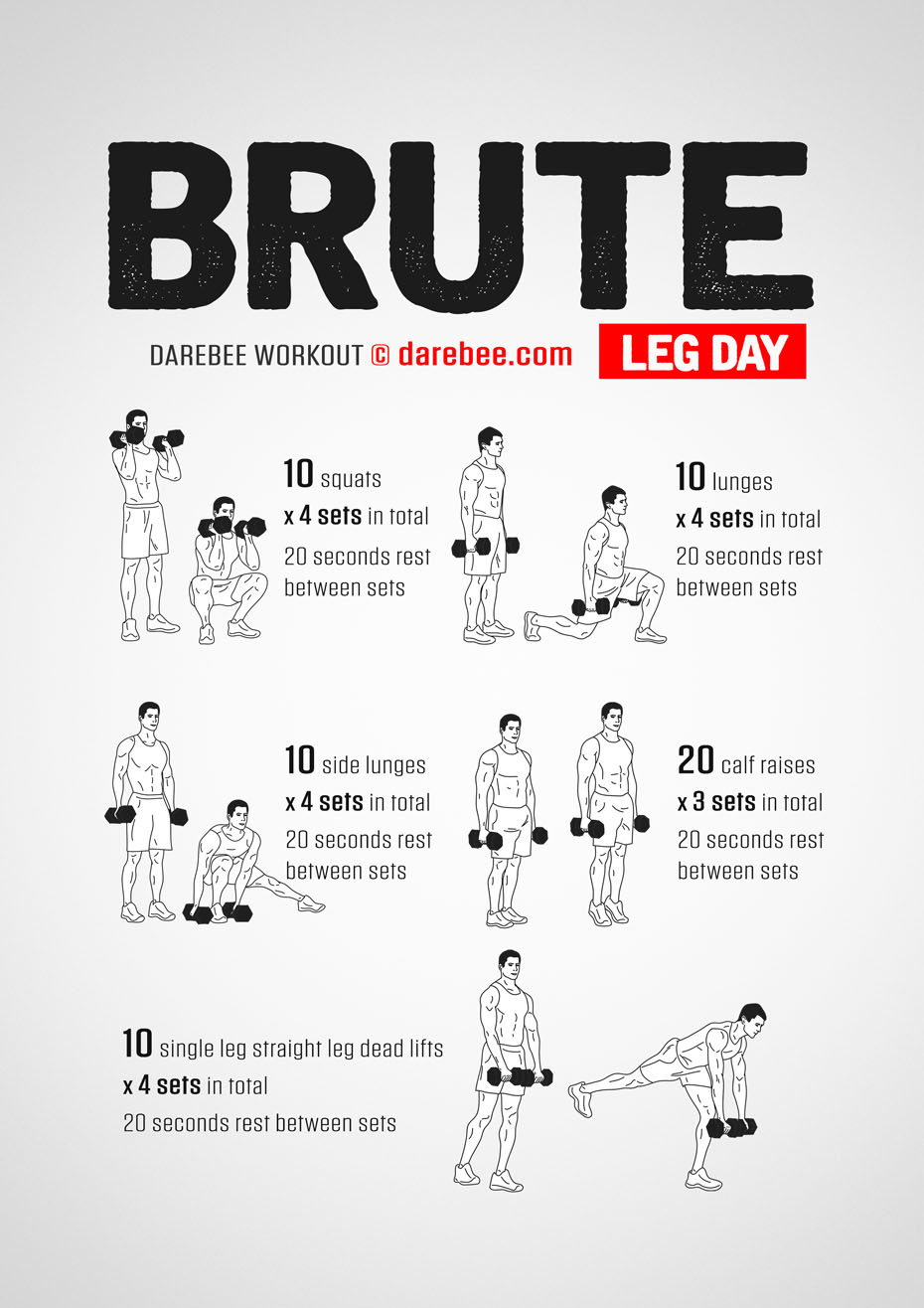
Credit: darebee.com
Frequently Asked Questions
Can You Build Legs With Just Dumbbells?
Yes, you can build legs using dumbbells. Perform exercises like lunges, squats, and deadlifts. These workouts target major leg muscles effectively. Adjust weights and repetitions to challenge your muscles. Consistency and proper form are key for growth. Dumbbells offer versatility for leg training at home or the gym.
Is A 20 Minute Leg Workout Enough?
A 20-minute leg workout can be effective if done consistently with high intensity. Focus on compound exercises like squats and lunges to maximize results. Consistency and proper form are key to achieving fitness goals.
Can I Have A Leg Day With Only 15 Pound Dumbbells?
Yes, you can have a leg day with 15-pound dumbbells. Focus on exercises like lunges, squats, and deadlifts. Increase repetitions and maintain proper form to maximize effectiveness. These exercises target different leg muscles, providing a comprehensive workout. Adjust workout intensity and gradually increase weights as you progress.
What Is The 4 2 1 Dumbell Method?
The 4 2 1 dumbbell method involves four seconds lowering, two seconds pause, and one second lifting. This technique increases muscle time under tension, enhancing strength and muscle growth. It improves focus and control during workouts, making exercises more effective.
Conclusion
A dumbbell leg workout at home is simple and effective. It builds strength and improves balance. You don’t need fancy equipment or a gym. Just a pair of dumbbells and motivation. Consistency is key for best results. Start with lighter weights, then increase gradually.
Focus on proper form to avoid injury. Mix exercises to target all leg muscles. Squats, lunges, and calf raises work great. Remember to warm up before and stretch after workouts. Enjoy your fitness journey and stay committed. Strong legs support a healthier, active lifestyle.
Embrace the challenge and keep pushing forward!








