Are you ready to punch your way to better health without leaving the comfort of your home? Imagine turning your living room into a dynamic boxing gym, where every jab and hook gets you closer to your fitness goals.
A boxing workout at home isn’t just about throwing punches; it’s a full-body workout that boosts your strength, agility, and confidence. You don’t need expensive equipment or a personal trainer to get started. With just a bit of space and some determination, you can transform your workout routine and experience the thrill of boxing.
Curious about how you can elevate your fitness game with this powerful exercise? Keep reading to discover how you can unleash your inner fighter and achieve remarkable results from the comfort of your own home.
Benefits Of Boxing At Home
Boxing at home boosts fitness and saves time. Build strength and improve coordination without needing gym equipment. Enjoy privacy and comfort while practicing techniques and punches right in your living room.
Boxing workouts are not just for the gym anymore. With a few adjustments, you can bring the benefits of boxing right into your living room. Whether you’re a seasoned boxer or a beginner, boxing at home offers a range of benefits that can boost your fitness routine and enhance your life. Let’s dive into the advantages you can gain by turning your home into a boxing haven.1. Convenience And Flexibility
Imagine finishing a long day of work and not having to commute to the gym. Boxing at home offers the ultimate convenience. You can throw punches in your pajamas or squeeze in a quick session between meetings. No more waiting for equipment or dealing with crowded spaces. Your living room becomes your personal boxing ring, ready whenever you are.2. Cost-effective Fitness
Gym memberships and personal trainers can be expensive. With home boxing, you eliminate those costs. All you need is some basic equipment like gloves and a punching bag. Invest once and you’re set. Plus, there are plenty of free resources online, like videos and apps, to guide your workouts.3. Customizable Workouts
Personalize your routine to fit your goals and schedule. Want a 10-minute cardio blast? Done. Need a 30-minute stress-buster? You got it. You control the pace and intensity. Adjust your workout to focus on strength, speed, or endurance, ensuring it aligns with your fitness journey.4. Mental Health Boost
Boxing isn’t just physical—it’s a mental game too. The focus required helps clear your mind, reducing stress and anxiety. Punching out your frustrations can be incredibly cathartic. After a session, you might find you’re not just physically tired, but mentally refreshed.5. Improved Coordination And Balance
Boxing requires quick reflexes and precise movements. Practicing at home can sharpen your coordination and balance. You might notice improvements in other activities, too. Whether it’s carrying groceries or playing sports, these skills translate into everyday life. Have you ever tried a boxing workout at home? What was your experience like? Share your thoughts and let’s keep the conversation going!Essential Equipment
Embarking on a boxing workout at home is a fantastic way to boost your fitness levels and relieve stress. But before you start throwing punches, you’ll need some essential equipment to ensure a safe and effective workout. These tools not only enhance your training but also protect your body from injury. Let’s dive into the key pieces of gear that will transform your living room into a personal boxing gym.
Gloves And Wraps
Gloves are crucial for protecting your hands during punches. Think of them as your boxing armor. You don’t need to go for the priciest option; beginner gloves are affordable and do the job well. Ensure they fit snugly to avoid any awkward movements.
Wraps are equally important. They provide extra support for your wrists and knuckles. Wrapping your hands might feel tricky at first, but after a few attempts, you’ll wrap like a pro. Have you ever tried hitting a bag without wraps? It’s not fun; trust me, it’s worth the extra minute.
Punching Bag Options
Choosing the right punching bag can make or break your home workout routine. Free-standing bags are perfect for small spaces. They don’t need a ceiling mount, just fill the base with water or sand and you’re ready to go.
If you have the space and the right setup, hanging bags are a more traditional option. They offer great resistance and swing to improve your technique. What’s your space like? Consider your room setup before deciding.
Additional Gear
Beyond gloves and bags, there are other pieces that can enhance your boxing experience. Jump ropes are fantastic for warming up and building stamina. They’re cheap, portable, and increase your footwork agility.
Consider getting a timer. It helps you track rounds and rest periods, keeping your workout structured. Without a timer, it’s easy to lose track of time and undercut your training.
Finally, a mirror is invaluable for checking your form. Seeing yourself in action allows you to correct mistakes instantly. Wouldn’t you want to avoid bad habits from the start?
Warm-up Exercises
Before you dive into your boxing workout at home, warming up is crucial. It not only prepares your muscles for action but also prevents injuries. A proper warm-up can transform your workout, making it more effective and enjoyable. Let’s break down the essentials of warming up with dynamic stretches and cardio drills that will have you primed and ready to punch with power.
Dynamic Stretches
Dynamic stretches are your ticket to loosening up those muscles. They get your body moving and ready for action, unlike static stretches that might leave you feeling sluggish. Think of exercises like arm circles and leg swings. They are simple yet effective. Imagine you’re a boxer gearing up for a fight; you wouldn’t stand still, right? You’d move, sway, and get your muscles into the rhythm. These stretches do just that.
Try starting with arm circles for 30 seconds. This helps activate your shoulder joints. Then, move to leg swings, focusing on loosening your hips. You’ll feel more agile, and your punches will pack more power. Feel the difference when you start your workout already feeling like a champion.
Cardio Drills
Cardio drills are another essential component of your warm-up routine. They get your heart pumping and blood flowing, setting the stage for an intense workout session. Skipping ropes or jumping jacks are perfect choices. They require minimal space and equipment, making them ideal for home workouts.
Consider starting with a minute of jumping jacks. Feel the energy surge as your heart rate climbs. You might think, “Why all this jumping?” Well, it’s about revving up your system, preparing it for the punches ahead. Moving onto a minute of skipping rope, you’ll notice your feet getting quicker, and your reflexes sharper. These drills are not just about warming up; they’re about setting the tone for the rest of your workout.
Warm-up exercises are your secret weapon for a successful boxing workout. What’s your favorite way to kickstart your training? Do you have a unique routine that gets you in the zone? Share your thoughts, and let’s get ready to rumble!
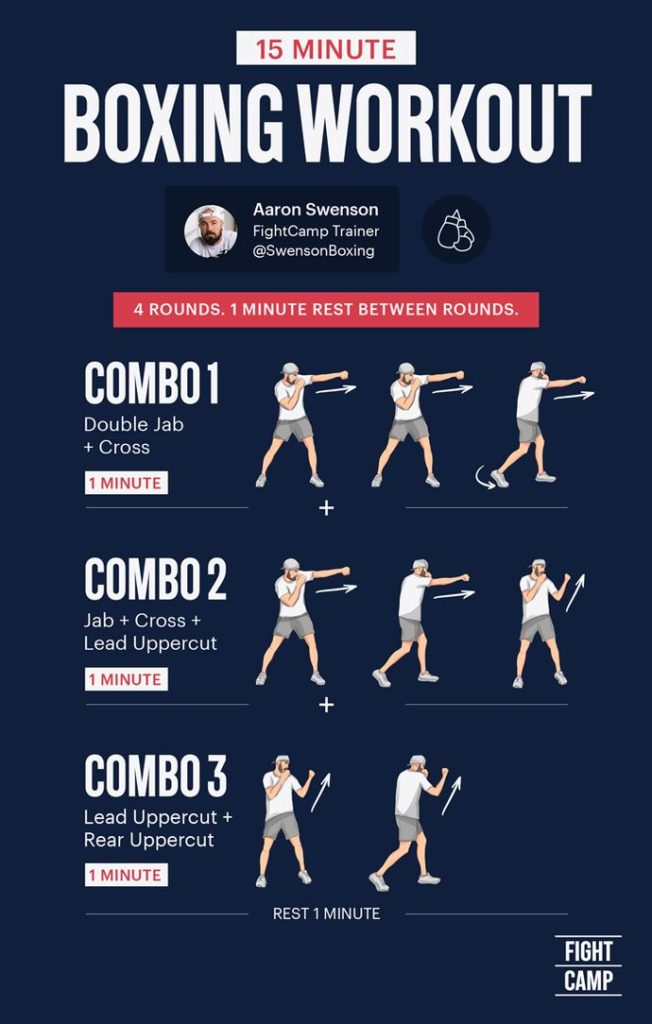
:format(jpeg)/f/115220/700x1100/2ee1539586/15-minute-at-home-boxing-workout-infographic.jpeg)
Credit: blog.joinfightcamp.com
Core Boxing Techniques
Boxing is a dynamic sport that offers an incredible workout, even at home. Learning core boxing techniques can transform your routine into an exciting and challenging experience. Whether you’re a beginner or have some experience, mastering these techniques will enhance your skills and fitness level.
Stance And Footwork
The foundation of boxing starts with your stance and footwork. Stand with your feet shoulder-width apart, knees slightly bent. Keep your weight balanced and your dominant foot slightly back.
Footwork is crucial for mobility and defense. Practice moving in all directions—forward, backward, and side-to-side. Stay on the balls of your feet to remain agile. Have you ever noticed how boxers seem to glide across the ring? That’s the magic of good footwork.
Basic Punches
The jab is your go-to punch. It’s quick and keeps your opponent at bay. Extend your arm with a twist of the fist, returning swiftly to guard position.
The cross is a powerful straight punch with your rear hand. Rotate your hips and shoulders into the punch for more power. Imagine hitting through your target, not just to it.
Hooks and uppercuts add variety. The hook comes from the side, while the uppercut rises from below. Try shadow boxing these punches to refine your technique. Do you feel the energy each punch demands?
Defensive Moves
Defense is your shield in boxing. Practice slipping punches by moving your head to the side. This minimizes the impact and keeps you in position to counterattack.
Blocking and parrying are essential skills. Use your gloves to absorb punches or deflect them. It’s like a dance of fists, where the goal is to stay unscathed.
Rolling with punches involves moving your body with the blow. This reduces the impact and keeps you balanced. Can you sense how these moves protect you while setting you up for a counterpunch?
Mastering these core techniques will take your home boxing workout to a new level. They offer a blend of strength, speed, and strategy. As you practice, remember that each technique is a stepping stone in your boxing journey. What’s your next move?
Sample Workout Routine
Staying fit doesn’t require a gym membership. A boxing workout at home can be just as effective. This routine will boost your energy and improve your skills. Dive into our Sample Workout Routine to get started.
Round 1: Cardio Blast
Start with a brisk warm-up. Jog in place for 5 minutes. Follow with jumping jacks for 3 minutes. Keep your pace steady. Then, transition to high knees for 2 minutes. Feel your heart rate climb. End with a 1-minute sprint in place. Cardio is essential for stamina.
Round 2: Technique Drills
Focus on basic punches first. Practice jabs and hooks for 10 minutes. Use a mirror to check form. Accuracy matters here. Next, shadow box for 5 minutes. Imagine an opponent. Move swiftly and strike sharply. Finally, work on footwork for 5 minutes. Quick steps and pivots enhance agility.
Round 3: Strength Training
Begin with push-ups. Aim for 3 sets of 10 reps. Push-ups build upper body strength. Move to squats next. Complete 3 sets of 15 reps. Strong legs support powerful punches. End with planks for core strength. Hold for 30 seconds, 3 times. A strong core improves balance.
Cool Down And Stretching
After an intense boxing workout at home, cooling down is essential. It helps your body transition back to a resting state. Proper cool down minimizes muscle soreness and aids recovery. Stretching keeps your muscles flexible and prevents injuries. Let’s explore effective techniques to enhance your cool down session.
Breathing Techniques
Breathing deeply calms your mind and relaxes your body. Start by inhaling slowly through your nose. Let your belly expand as you breathe in. Then, exhale gently through your mouth. Repeat for several minutes. This technique reduces stress and lowers your heart rate.
Static Stretches
Static stretches maintain muscle flexibility after exercising. Begin with a simple hamstring stretch. Sit on the floor, legs straight out. Reach towards your toes and hold the position. Feel the stretch in the back of your thighs.
Next, try a shoulder stretch. Bring one arm across your chest. Use the other arm to pull it closer. Hold for 20 seconds, then switch sides.
Don’t forget your calves. Stand with one foot forward. Bend your front knee, keeping the back leg straight. Push the back heel into the ground. Hold the stretch for 20 seconds on each leg.
These static stretches ensure your muscles stay limber. They also help reduce the risk of future injuries. Remember to breathe steadily during each stretch. This enhances relaxation and improves flexibility.
Tracking Progress
Monitor your boxing workout at home by keeping a journal. Record exercises, repetitions, and any improvements. This method helps you stay motivated and see how you’re progressing over time.
Tracking your progress is essential when you’re doing a boxing workout at home. It keeps you motivated and helps you see how far you’ve come. By setting clear goals and monitoring your improvements, you can make your workouts more effective and rewarding.Setting Goals
Start by deciding what you want to achieve with your boxing workout. Do you aim to lose weight, build strength, or improve your endurance? Write down specific goals like, “I want to do 100 punches in 2 minutes” or “I aim to lose 5 pounds in a month.” This gives you a clear target and something to work towards. Remember, setting realistic and achievable goals is key. Don’t set yourself up for failure by aiming too high too soon. Break your larger goals into smaller steps to maintain momentum and celebrate each win.Monitoring Improvements
Once your goals are set, it’s important to keep track of your progress. Use a journal or an app to record your workouts, noting the number of punches, the duration, and how you felt after each session. This helps you see patterns and areas for improvement. Consider taking progress pictures or videos every couple of weeks. Seeing physical changes can be a huge motivator and provide a visual record of your journey. Ask yourself, are you punching faster or lasting longer in your workouts? By regularly checking in, you can adjust your routine to make sure you’re still challenged and moving forward. Tracking progress isn’t just about numbers; it’s about recognizing your growth and staying connected to your fitness journey. What steps will you take today to measure your success?
Credit: www.pinterest.com
Safety Tips
Stay safe during boxing workouts at home by ensuring ample space to move freely. Use proper gear like gloves and wraps to protect hands. Begin with gentle warm-ups to prevent injuries and maintain good form throughout the session.
Boxing workouts at home can be exhilarating, empowering, and a fantastic way to stay fit. However, safety should be your top priority to ensure you reap the benefits without any setbacks. Whether you’re throwing punches in your living room or practicing footwork in your backyard, following safety tips can make all the difference. Let’s dive into some essential tips to keep your boxing workout safe and effective.Avoiding Injuries
Injuries can put a damper on your workout routine. Start by warming up your muscles with dynamic stretches. This helps prepare your body for intense movements and reduces the risk of strains. Maintain proper form while punching. Keep your wrists straight to avoid sprains, and don’t overextend your arms. If you’re using a punching bag, ensure it’s securely fastened and check it regularly for wear and tear. Consider using protective gear. Even at home, wearing hand wraps and gloves can prevent injuries. Have you ever underestimated the importance of gear, only to regret it later? Investing in quality equipment might save you from unnecessary pain.Proper Hydration
Staying hydrated is crucial, especially during intense workouts. Dehydration can lead to fatigue and dizziness, which can affect your performance and safety. Keep a water bottle handy. Take small sips throughout your workout to maintain hydration levels. This simple habit can significantly enhance your endurance and focus. Monitor your body’s signals. Are you feeling sluggish or experiencing cramps? These could be signs you’re not drinking enough water. Adjust your intake accordingly to stay fresh and alert during your session. Remember, a well-hydrated body is a resilient body. How do you plan to incorporate hydration into your routine?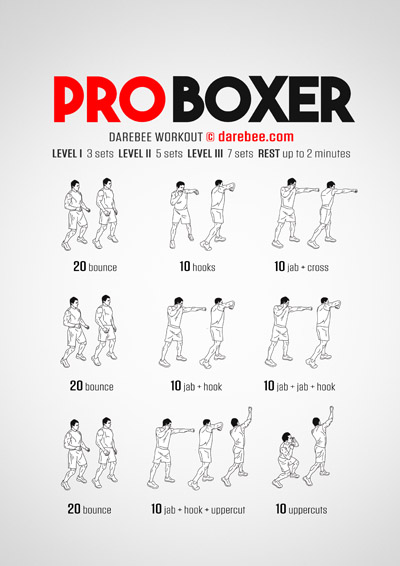
Credit: darebee.com
Frequently Asked Questions
Is Boxing At Home A Good Workout?
Yes, boxing at home is a great workout. It boosts cardiovascular health, builds strength, and improves coordination. Boxing also relieves stress and burns calories effectively. You don’t need much equipment, just gloves and a bag. It suits all fitness levels and can be easily incorporated into your routine.
Is 30 Minutes Of Boxing A Day Enough?
Yes, 30 minutes of boxing daily can be effective. It boosts cardiovascular health, builds strength, and improves coordination. For weight loss or increased muscle gain, pair it with a balanced diet and strength training. Always listen to your body and adjust intensity as needed.
Can I Train Myself Boxing At Home?
Yes, you can train boxing at home with discipline. Use online tutorials, shadow boxing, and basic equipment. Maintain focus on form, technique, and consistency. Gradually increase intensity and diversify workouts. Consider virtual coaching for personalized guidance to enhance skills and safety.
What Does 1, 2, 3, 4, 5, 6 Mean In Boxing?
In boxing, numbers 1 to 6 refer to specific punches. 1 is a jab, 2 a cross, 3 a lead hook, 4 a rear hook, 5 a lead uppercut, and 6 a rear uppercut. These numbers help boxers quickly communicate and execute combinations during training and matches.
Conclusion
Boxing workouts at home are effective and fun. They boost fitness levels. You don’t need fancy equipment. Just some space and determination. Regular practice improves strength and agility. It also relieves stress. Perfect for busy schedules. You can customize workouts.
Focus on punches, footwork, or endurance. Progress at your own pace. Consistency is key. Stay motivated and track your progress. Celebrate small victories. Enjoy a healthier lifestyle. Boxing at home is accessible and rewarding. Start today. Feel the difference.








