Imagine transforming your living room into a personal boxing gym. Picture yourself, gloves on, adrenaline pumping, as you jab, hook, and uppercut your way to fitness—all without leaving the comfort of your home.
Boxing at home workouts are not only convenient but also incredibly effective. They offer a fun and dynamic way to boost your cardiovascular health, build strength, and relieve stress. You don’t need fancy equipment or a gym membership to start.
All it takes is a little space, some basic gear, and the drive to push yourself. Ready to unleash your inner fighter and discover a workout that challenges both body and mind? Stick around. The secrets to a knockout home boxing routine are just a few scrolls away.
Benefits Of Home Boxing Workouts
Home boxing workouts offer numerous benefits for both physical and mental well-being. They are accessible, requiring minimal equipment and space. These workouts improve overall fitness and provide a thrilling way to exercise. Whether you are a beginner or seasoned athlete, boxing at home can be tailored to suit your needs.
Enhances Cardiovascular Health
Boxing workouts elevate heart rate, boosting cardiovascular health. Regular sessions strengthen the heart and improve circulation. This can lead to better endurance and increased energy levels.
Improves Strength And Flexibility
Boxing challenges multiple muscle groups at once. Punching, ducking, and dodging enhance strength and flexibility. Over time, muscles become more toned and joints more flexible.
Boosts Mental Well-being
Engaging in boxing reduces stress and anxiety. The rhythmic movements and focus required can clear the mind. This workout can elevate mood and improve mental clarity.
Convenient And Cost-effective
Home boxing eliminates the need for gym memberships. You can work out anytime, fitting exercise into your schedule. Minimal equipment means less expense, making it accessible to many.
Increases Coordination And Balance
Boxing requires precise movements, improving coordination. Regular practice enhances balance and agility. This can improve overall physical performance in other activities.
Promotes Weight Management
Boxing is a high-intensity workout, aiding in calorie burning. It can be effective for weight management or loss. Combining it with a healthy diet can yield significant results.
Essential Equipment
Punching bag, gloves, and wraps form the backbone of any home boxing workout. These items ensure safety and enhance training effectiveness. Jump ropes and hand weights complement the routine, improving agility and strength.
Boxing is not just a sport; it’s a dynamic workout that transforms your living room into a powerhouse of fitness. But before you start throwing punches, you need the right gear. Essential equipment is your first step to building a boxing routine at home. Imagine the feeling of confidence, knowing you have everything set up. With the right tools, you’ll punch harder and get fitter faster. Let’s dive into the must-haves for your boxing workout.Gloves And Hand Wraps
Investing in quality gloves is like putting on a shield. They protect your hands and wrists from injury. Choose gloves that fit snugly but comfortably. Hand wraps are equally important; they provide extra support and stabilization. Wrap them carefully to ensure maximum protection. A well-wrapped hand feels secure and ready for action.Punching Bags
A punching bag is your best sparring partner. It absorbs your punches and helps improve accuracy. Choose a heavy bag if you want resistance and power training. A speed bag, on the other hand, enhances coordination and rhythm. Imagine landing a perfect punch—it’s exhilarating! Which type would suit your goals best?Skipping Rope
The skipping rope is not just for kids. It’s a powerful tool for enhancing your agility and cardiovascular health. Jumping rope improves footwork and endurance, crucial for boxing. It’s lightweight and easy to store—perfect for home workouts. Try challenging yourself: how many jumps can you do in a minute?Boxing Timer Apps
Time management is key in boxing training. Boxing timer apps help you track rounds and rest periods efficiently. They keep you focused and disciplined. Set intervals to mirror real boxing matches and push your limits. Ever tried timing your workouts? It brings a sense of urgency and focus. Setting up your home gym with the right equipment is like laying the groundwork for success. Each piece has a specific role in enhancing your boxing skills. Now that you know the essentials, are you ready to start your boxing journey? Let’s punch our way to fitness!Basic Boxing Techniques
Boxing at home has gained popularity for its fitness benefits. It’s a fantastic way to improve strength and agility. Understanding basic boxing techniques is essential for effective workouts. Let’s explore fundamental skills that form the core of boxing.
Stance And Footwork
The boxing stance is your foundation. Stand with feet shoulder-width apart. Keep your knees slightly bent. Your dominant foot should be slightly back. This position offers balance and readiness. Footwork involves moving smoothly in all directions. Practice stepping forward, backward, and sideways. Stay light on your feet. Quick movements enhance agility and defense.
Punch Types
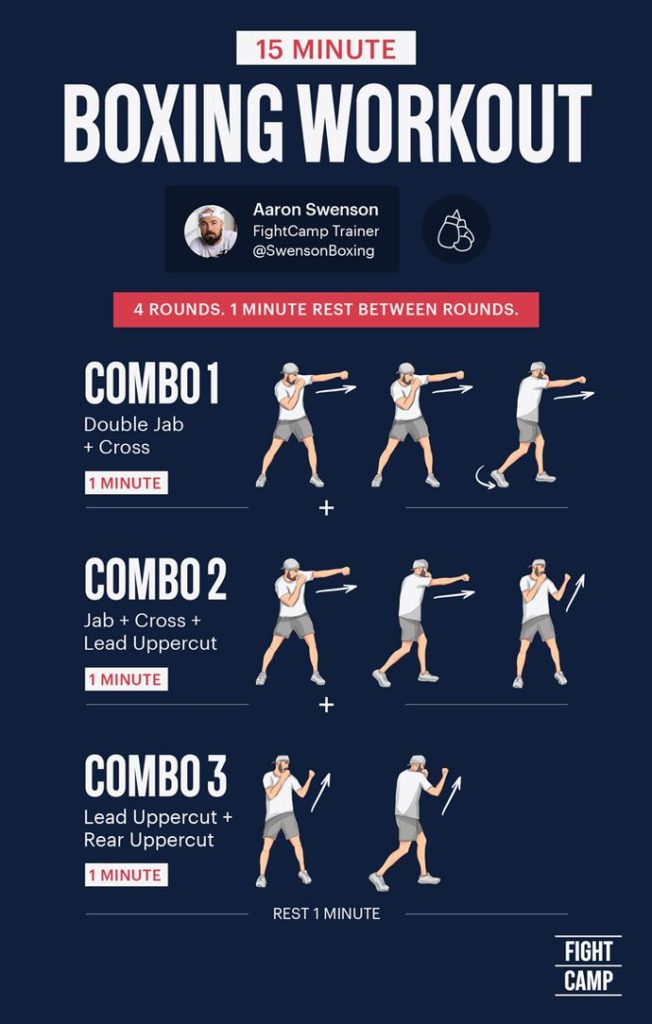
Boxing involves several punch types. The jab is a quick, straight punch. It maintains distance and prepares for other strikes. The cross is a powerful punch. It uses your dominant hand for force. The hook is a side punch aimed at the opponent’s head or body. The uppercut targets the chin. Each punch requires proper technique for effectiveness. Focus on precision and speed.
Defensive Moves
Defense is crucial in boxing. Blocking protects against punches using your arms. Keep them close to your face and body. Slipping involves moving your head to avoid hits. Ducking helps evade high punches. It requires bending your knees and lowering your head. Parrying redirects punches with your hands. All defensive moves require practice and alertness. Improve your defensive skills for better protection.
:format(jpeg)/f/115220/700x1100/2ee1539586/15-minute-at-home-boxing-workout-infographic.jpeg)
Credit: blog.joinfightcamp.com
Warm-up Routine
Boxing workouts at home are fun and effective. They offer a great way to stay fit. Before diving into intense boxing exercises, a warm-up is essential. It prepares the body, preventing injuries and boosting performance. A good warm-up routine sets the tone for the entire session. Let’s explore some key components.
Dynamic Stretching
Dynamic stretching keeps the body flexible. It involves moving parts of your body. Try arm circles and leg swings. They warm up the muscles quickly. Perform each stretch for 30 seconds. This prepares the muscles for the workout ahead. Keep movements smooth and controlled. Don’t rush. Feel the stretch.
Cardio Exercises
Cardio exercises increase the heart rate. They are vital for any boxing warm-up. Start with jumping jacks. Do them for one minute. Follow with high knees. Alternate lifting each knee to the chest. Do this for another minute. These exercises boost energy levels. You’ll feel more ready to box.
Sample Boxing Workouts
Boxing is not just a sport; it’s a powerful workout routine. At home, boxing can be an effective way to stay fit. You don’t need a ring or a gym to get started. With some basic equipment and determination, you can dive into boxing workouts. They cater to different skill levels, from beginners to advanced fighters. Let’s explore some sample boxing workouts for each level.
Beginner Workout Plan
Starting with boxing can be exciting. Begin with simple exercises like shadowboxing. It helps improve your stance and movement. Focus on basic punches: jabs, crosses, hooks. Practice footwork by moving side to side. Spend 15 minutes on these basics. Incorporate jumping rope for 10 minutes. It boosts your cardio and coordination. Finish with core exercises like sit-ups and planks. These strengthen your core muscles.
Intermediate Workout Plan
Once comfortable with the basics, move to intermediate workouts. Increase the intensity and duration. Start with 3-minute rounds of shadowboxing. Include combination punches and defensive moves. Add mitt work if available. It enhances accuracy and power. Spend 20 minutes on strength training. Focus on squats, lunges, and push-ups. These build endurance and strength. End with a cool-down stretch. It prevents injuries and improves flexibility.
Advanced Workout Plan
For advanced individuals, workouts become more challenging. Incorporate sparring sessions if possible. They enhance real-fight skills. Engage in intense interval training. Alternate between high and low-intensity drills. Use heavy bags for powerful punches. Work on speed and precision for 30 minutes. Add plyometric exercises. They improve explosiveness and agility. Include advanced strength routines. Focus on deadlifts and bench presses. These build ultimate power.
Cool Down And Recovery
Boxing workouts at home demand a proper cool down for muscle recovery. Stretching and gentle movements reduce soreness. Deep breathing and hydration aid relaxation and repair, ensuring readiness for the next session.
After an intense boxing session at home, giving your body the care it needs through a proper cool down and recovery routine is essential. This phase is not just about winding down; it’s about preparing for your next workout and avoiding injuries. By focusing on effective cool down techniques, you can enhance your performance and ensure that your fitness journey is both safe and successful.Stretching Techniques
Stretching is a crucial part of your cool down routine. It helps to relax your muscles and improve flexibility. Start with gentle stretches for major muscle groups like your arms, legs, and back. Consider dynamic stretching, which involves moving parts of your body and gradually increasing reach and speed. Arm circles and leg swings are excellent choices. They’re simple and can be done anywhere. Static stretching, where you hold a stretch for 15-30 seconds, is effective too. Focus on areas that feel particularly tight after your workout. Remember to breathe deeply, enhancing the relaxation effect.Post-workout Nutrition
What you eat after your workout can significantly affect your recovery. Your body needs nutrients to repair muscles and replenish energy stores. Aim for a balanced meal with proteins and carbohydrates. A protein shake with a banana can be a quick and effective option. It’s easy to prepare and provides the necessary proteins for muscle repair. Hydration is equally important. Drinking water helps to flush out toxins and supports muscle recovery. Consider adding electrolytes if your workout was especially intense. How do you feel after a boxing session? Remember, cool down and recovery aren’t just about routine; they’re about listening to your body and giving it what it needs. Prioritize this phase, and you’ll find yourself stronger and more resilient in your fitness journey.Safety Tips
Ensure proper space to avoid injuries during boxing workouts at home. Use protective gear like gloves and wraps for safety. Warm up before starting to prevent muscle strain.
Thinking about boxing at home? It’s a great way to get fit, but safety should always come first. Many people jump into workouts without considering the basics of safety, which can lead to injuries. With the right precautions, you can enjoy a productive and injury-free boxing session. Let’s dive into some essential safety tips to keep in mind.Proper Technique
Mastering the basics of boxing technique is crucial. Start with your stance; feet shoulder-width apart, knees slightly bent, and hands up to protect your face. Imagine you’re facing an opponent. Punches should come from your core, not just your arms. This not only gives you more power but also reduces the risk of strain. Keep your wrists straight when you punch to avoid injury. Take it slow. Practice your moves in front of a mirror to ensure you’re not missing any key points. Watching online tutorials can help, but remember, quality over quantity.Listening To Your Body
Your body gives signals when something isn’t right. If you feel sharp pain or discomfort, stop immediately. It’s better to rest for a day than to be sidelined with an injury for weeks. Hydration is crucial. Drink water before, during, and after your workout to keep your muscles in top shape. A dehydrated body is more prone to cramps and fatigue. Rest is as important as the workout itself. Make sure you’re getting enough sleep to allow your muscles to recover. Pushing through exhaustion can lead to mistakes and injuries. Have you ever pushed through a workout only to regret it the next day? Listening to your body can prevent that. Being mindful can make your boxing journey safe and enjoyable.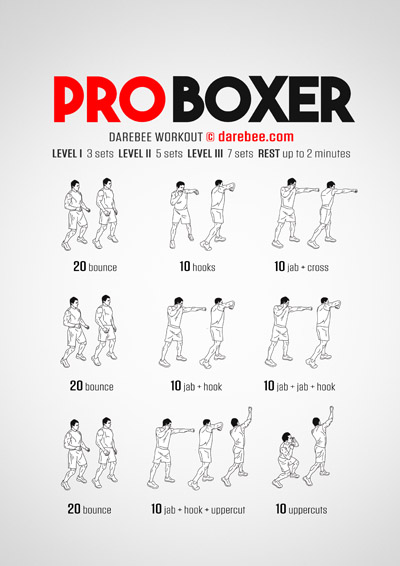
Credit: darebee.com
Tracking Progress
Tracking progress in boxing at home workouts is crucial. It keeps you motivated. It helps you reach your fitness goals. Knowing where you stand encourages improvement. You can set benchmarks. Celebrate achievements. It makes the workout journey rewarding.
Setting Goals
Setting goals gives direction. Begin with small, achievable targets. Increase intensity gradually. Define what success means to you. Maybe it’s mastering a new technique. Or improving stamina. Write down your goals. Keep them visible. Adjust them as you progress. Be realistic. Stay focused. Re-evaluate often.
Using Fitness Apps
Fitness apps simplify tracking. They provide detailed insights. You can monitor your heart rate. Track calories burned. Record workout duration. Some apps offer virtual boxing sessions. They guide technique improvement. Choose an app that suits your needs. Ensure it is user-friendly. Many apps include progress graphs. They visualize your improvements. Celebrate small victories. Stay motivated.

Credit: www.pinterest.com
Frequently Asked Questions
Is Boxing At Home A Good Workout?
Yes, boxing at home is a great workout. It boosts cardiovascular fitness, builds strength, and improves coordination. You can burn calories and relieve stress. Boxing requires minimal equipment, making it convenient and affordable. Regular practice enhances agility and endurance, providing an effective, full-body workout.
Can I Train Myself Boxing At Home?
Yes, you can train boxing at home. Focus on shadowboxing, basic footwork, and using a heavy bag. Watch online tutorials for guidance. Ensure a safe space and proper gear like gloves and wraps. Consider virtual coaching for personalized feedback. Consistency and dedication are key to progress.
What Does 1, 2, 3, 4, 5, 6 Mean In Boxing?
In boxing, numbers 1-6 represent basic punches: 1 is a jab, 2 is a cross, 3 is a left hook, 4 is a right hook, 5 is a left uppercut, and 6 is a right uppercut. These numbers help boxers communicate and train effectively.
Is 30 Minutes Of Boxing A Day Enough?
Yes, 30 minutes of boxing daily is beneficial. It boosts cardiovascular health, burns calories, and builds strength. This routine improves agility and coordination while reducing stress. Consistency is key to achieving fitness goals.
Conclusion
Boxing at home offers incredible benefits for fitness. It’s convenient and effective. You can improve your strength and agility. No expensive equipment needed. Just motivation and a small space. You can punch away stress while boosting your health. Perfect for those who love a challenge.
Start today and see the results. Feel stronger and more confident. Boxing is not just a workout. It’s a lifestyle choice. You build discipline and resilience. Embrace the power of boxing in your home. Stay active. Stay healthy. Enjoy every punch and movement.








