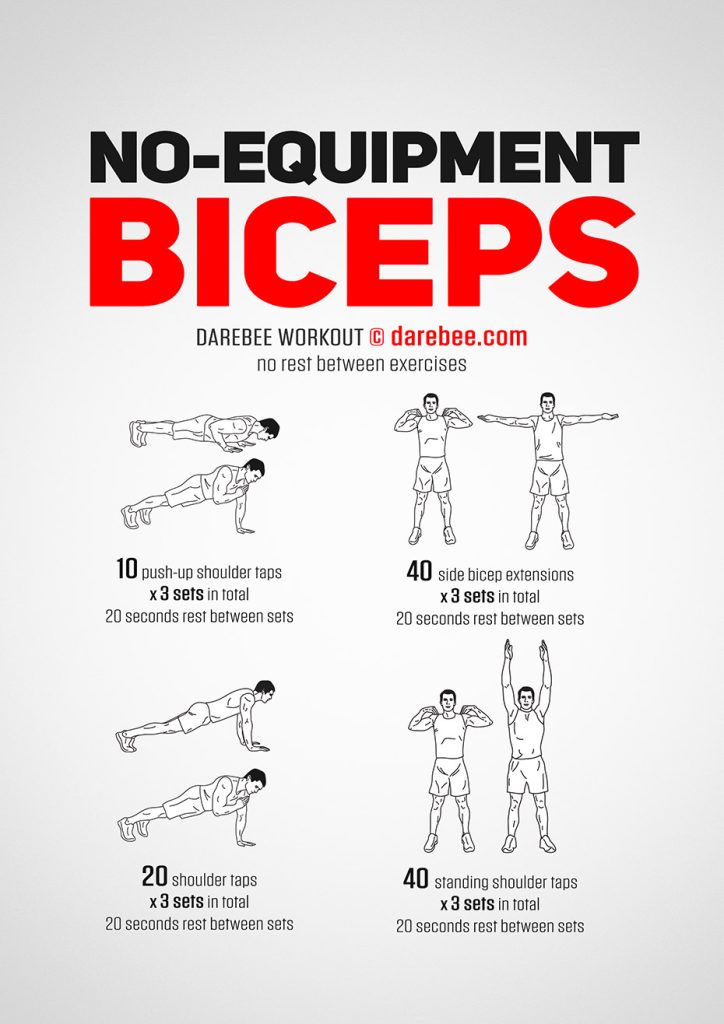
Looking to build impressive biceps without stepping foot in the gym? Imagine sculpting those powerful arms right in the comfort of your home.
You might think it’s impossible, but with the right workout routine, you can achieve those enviable biceps you’ve always wanted. We’ll dive into a series of home workouts designed to target your biceps effectively. No fancy equipment needed—just a little determination and some basic household items.
Get ready to transform your arms and boost your confidence. Keep reading to discover the secret to unlocking your biceps’ full potential at home.

Credit: www.pinterest.com
Benefits Of Home Bicep Workouts
Working out your biceps at home comes with a bundle of benefits that go beyond just convenience. Picture yourself skipping the commute to the gym and still achieving those toned arms. It’s not just about saving time; it’s about having the flexibility to tailor your workouts to your needs. Let’s dive into why home bicep workouts might be the game-changer you’ve been looking for.
Convenience And Flexibility
Imagine rolling out of bed and starting your bicep workout without leaving the comfort of your home. You save precious time and energy, allowing for more focus on your actual workout. Plus, you can fit your exercise routine around your own schedule, rather than trying to work around gym hours.
Cost-effectiveness
No need to invest in a pricey gym membership. With just a few affordable pieces of equipment like dumbbells or resistance bands, you can achieve a comprehensive workout. This financial freedom means you can invest in quality gear that lasts, rather than shelling out monthly fees for gym access.
Personalized Training Experience
Home workouts allow you to focus on your specific goals. Want to add more definition or increase strength? You choose exercises that target your unique needs without being confined to a gym’s equipment. You’re in control of your pace, intensity, and progression.
Comfort And Privacy
Working out at home offers an unmatched level of comfort. No worrying about crowded gyms or waiting for equipment. You have the privacy to experiment with new routines and push yourself without any judgment. Ever felt self-conscious trying a new exercise? At home, you can freely test and refine your technique.
Consistency And Discipline
Developing a consistent workout routine becomes easier at home. You eliminate excuses related to travel or gym availability. This consistency fosters discipline, making it easier to stick to your fitness goals. Have you ever skipped a workout because of bad weather? That’s not a problem with home workouts.
By embracing home bicep workouts, you empower yourself to take control of your fitness journey. What’s stopping you from starting today?
Essential Equipment
Building strong biceps at home is easier with the right equipment. You don’t need a gym to get fit. With a few tools, your home workout can be effective. Let’s explore the essential equipment for your bicep workout.
Dumbbells
Dumbbells are versatile and easy to store. They offer varied weight options for different exercises. Start with lighter weights for curls and gradually increase. Adjustable dumbbells save space and provide flexibility. They’re perfect for strength training at home.
Resistance Bands
Resistance bands are lightweight and portable. They come in various resistance levels. Use them for curls and tricep extensions. Bands enhance muscle engagement and flexibility. They’re ideal for a dynamic workout routine.
Household Items
No equipment? No problem. Use water bottles or canned goods as weights. Towels can replace resistance bands. Stairs are great for tricep dips. Creativity makes everyday items effective workout tools. Transform your living room into a fitness zone.
Warm-up Routine
Before diving into your biceps workout, warming up is crucial. It prepares your muscles, reducing injury risks. A good warm-up boosts circulation and flexibility. This section highlights effective warm-up techniques. Each method targets specific muscle groups.
Dynamic Stretches
Dynamic stretches improve flexibility and blood flow. They engage multiple muscle groups simultaneously. Arm swings are a great start. Swing your arms forward and backward gently. This movement loosens your shoulder muscles. Next, try cross-body arm swings. Stretch your arms across your chest. Repeat this motion for 10 reps.
Joint Mobility Exercises
Joint mobility is key to healthy biceps. Focus on the wrists and elbows. Start with wrist circles. Rotate your wrists clockwise and counterclockwise. Do 10 circles in each direction. Elbow circles come next. Bend your elbows, then rotate them. Perform this exercise for 10 reps. These movements enhance joint flexibility.
Effective Bicep Exercises
Strengthening biceps at home needs effective exercises. These exercises target different parts of the bicep muscle. They build strength and improve muscle tone. Simple equipment like dumbbells or resistance bands works well. Focus on form to get the best results. Here are some exercises to try.
Bicep Curls
Bicep curls are classic and effective. Stand straight with feet shoulder-width apart. Hold a dumbbell in each hand. Keep arms at your sides with palms facing forward. Curl the weights up towards your shoulders. Keep elbows close to your body. Lower the weights slowly to the starting position. Repeat for desired reps.
Hammer Curls
Hammer curls target different bicep parts. Stand with feet shoulder-width apart. Hold dumbbells with palms facing each other. Curl the weights up, keeping elbows tight to your sides. Lower the weights back down slowly. This exercise builds bicep and forearm strength. Perform sets with controlled movements.
Concentration Curls
Concentration curls focus on bicep peak. Sit on a bench or chair. Lean forward slightly and rest an elbow on the inner thigh. Hold a dumbbell in one hand. Curl the weight up while keeping the elbow fixed on the thigh. Slowly lower the dumbbell back down. Switch arms after completing reps. This exercise isolates the bicep for maximum engagement.
Incorporating Resistance Bands
Resistance bands offer a versatile way to build biceps at home. They’re compact, affordable, and easy to use. Perfect for varying your workout routine. These bands target muscles differently than weights. This can lead to improved muscle growth and endurance. Let’s explore two effective exercises using resistance bands.
Band Curls
Band curls are a simple yet effective exercise. Start by standing on the band with both feet. Hold the band handles with your palms facing up. Keep your elbows close to your body. Slowly curl the bands up towards your shoulders. Pause briefly at the top. Lower the bands back down slowly. Repeat for several reps to feel the burn.
Isometric Holds
Isometric holds challenge your muscles in a different way. Begin by stepping on the band, feet shoulder-width apart. Grip the handles firmly with palms up. Curl the band and hold the position halfway. Maintain tension in your biceps. Hold for 20-30 seconds. Feel the intensity without movement. Repeat this hold for several sets.
Advanced Techniques
Elevate your biceps workout at home with advanced techniques like resistance bands and high-intensity interval training. Focus on controlled movements and varied angles to maximize muscle growth and strength. Aim for consistency and proper form to achieve noticeable results in your fitness journey.
Building impressive biceps doesn’t require a gym membership. With advanced techniques, you can achieve significant gains right from your living room. These techniques push your muscles beyond their limits, ensuring you reach your full potential. But are you ready to take your bicep workouts to the next level?Drop Sets
Drop sets are a powerful tool for maximizing muscle growth. Start by performing a set of bicep curls with a challenging weight. Once your muscles reach fatigue, reduce the weight and continue without resting. This method keeps your muscles under tension for longer, promoting growth. Remember: the key is to push through the burn. You’ll be surprised how much you can achieve when you think you’ve already given your all. Why stop when you feel tired? Drop sets challenge your mental resilience as much as your physical strength. Next time you’re doing curls, ask yourself if you can go lighter and keep going.Supersets
Supersets involve doing two exercises back-to-back with no rest in between. For biceps, pair a bicep exercise with another that targets the triceps. This method not only saves time but also enhances the pump. For example, try pairing bicep curls with tricep dips. You’ll feel your arms working hard, and the results will speak for themselves. Supersets also enhance your cardiovascular fitness, making your workout more efficient. Think about how much more you can achieve with the same amount of time by simply reducing rest periods. Engaging in these advanced techniques can transform your home workout routine. You’ll not only build stronger biceps but also enhance your overall fitness. The question is: are you ready to make every rep count?Creating A Balanced Routine
Building a balanced biceps home workout routine is simple and effective. Focus on exercises like push-ups, curls, and resistance band workouts. This approach helps strengthen your arms while fitting easily into your daily schedule.
Creating a balanced biceps workout routine at home can be a game-changer for your fitness journey. It ensures that you’re not only building muscle but also maintaining your overall arm health. A well-structured plan keeps you motivated and helps you track your progress effectively. Let’s dive into how you can create a balanced routine that fits your lifestyle.Frequency
How often should you train your biceps at home? Two to three times per week is generally a sweet spot for most people. This allows your muscles ample time to recover while keeping them engaged regularly. Overtraining can lead to fatigue and even injuries, so remember, more isn’t always better.Repetitions And Sets
Wondering how many repetitions and sets you should aim for? A good starting point is 3-4 sets of 8-12 repetitions. This range targets muscle growth effectively. If you’re using lighter weights, increase your repetitions to challenge your muscles adequately. Personal experience taught me that varying your rep range every few weeks can break plateaus. Adjust your routine based on how your body feels and progresses.Rest Intervals
Rest intervals between sets play a crucial role in your workout efficiency. Aim for 30 to 60 seconds between each set. This duration helps maintain the intensity of your workout while giving your muscles enough time to recover. Find yourself losing steam mid-workout? It might be a sign to tweak your rest intervals. Listen to your body; it knows what it needs. Creating a balanced routine isn’t just about lifting weights; it’s about understanding what works best for you. Are you ready to redefine your biceps workout at home?
Credit: ar.pinterest.com
Tracking Progress
Tracking your progress is crucial in a biceps home workout. It helps you understand what works best. Watching your improvements boosts motivation. You see your strengths and weaknesses clearly. This practice keeps you engaged and committed.
Journaling
Writing down your workout details can be very helpful. Note the exercises you perform. Record the number of sets and reps. Write how you feel after each session. This journal serves as your workout diary. It shows your growth over time. It also helps identify what needs change. Keeping a workout journal offers a clear view of progress.
Photo Comparisons
Visual progress is powerful. Take photos before starting your biceps workout. Click pictures every few weeks. Compare these photos side by side. Notice changes in muscle size and definition. Photos reveal progress that scales can’t show. They motivate you to keep pushing. Seeing physical changes in images boosts confidence. With photo comparisons, your journey becomes visible and rewarding.
Common Mistakes To Avoid
Many people enjoy doing bicep workouts at home. It’s convenient and effective. Yet, some common mistakes can hinder progress. Avoiding these errors can ensure efficient and safe workouts. Let’s dive into two frequent missteps: overtraining and poor form.
Overtraining
Overtraining is a common pitfall in home workouts. Too much exercise can lead to fatigue. Muscles need rest to grow and strengthen. Working biceps daily can cause strain and injury. Aim for two to three sessions a week. Allow ample time for recovery. Listen to your body. If you feel tired, rest.
Poor Form
Poor form is another frequent mistake. Proper form prevents injuries and ensures effectiveness. Incorrect posture can strain other muscles and joints. Focus on technique rather than weight. Keep your back straight and elbows steady. Use controlled movements. Quality over quantity is key. Start with lighter weights to master the form.
Recovery And Nutrition
Recovery and nutrition are crucial components of any biceps home workout routine. They help your muscles heal, grow, and prepare for the next session. Ignoring these aspects can lead to fatigue and injury, which no one wants. So, how do you ensure your biceps get the best care post-workout? Let’s break it down into protein intake, hydration, and rest days.
Protein Intake
Protein is the building block your muscles crave after a workout. It repairs and builds muscle tissue, making your biceps stronger and more defined. Aim to add protein-rich foods like chicken, fish, eggs, or plant-based sources such as lentils and chickpeas to your meals.
A friend once shared how he improved his biceps strength by adding a protein smoothie after each workout. Small changes can make a big difference. Consider what simple additions you could make to your diet to support your muscle recovery.
Hydration
Water is your best friend when recovering from a workout. It aids in the transport of nutrients and helps remove waste products from your muscles. Keep a water bottle handy during and after your workout.
Do you drink enough water? Sometimes, we underestimate our hydration needs. A simple trick is to drink a glass of water every hour. Your biceps will thank you for it, and you’ll feel more energized.
Rest Days
Rest days are not just for lounging around. They are a key part of muscle recovery. Your muscles need time to repair and grow, and rest days provide that opportunity.
Have you ever pushed through workouts only to feel worn out? It’s okay to take a break. Listen to your body, and give it time to heal. Rest days can enhance your workout results, making your biceps home workout more effective.
Recovery and nutrition are not optional—they are essential. By focusing on protein intake, hydration, and rest days, you can maximize the benefits of your biceps home workout. Your muscles work hard; make sure you support them with the care they deserve!

Credit: www.healthline.com
Frequently Asked Questions
How Do I Train My Biceps At Home?
Perform bicep curls using dumbbells or resistance bands. Include push-ups and chin-ups for added strength. Maintain proper form to avoid injury. Increase repetitions gradually to build muscle effectively. Stay consistent with your workouts for optimal results.
Is It Possible To Build Biceps Without Weights?
Yes, you can build biceps without weights using bodyweight exercises. Try push-ups, pull-ups, and planks. Consistent training with resistance bands also helps. Focus on high repetitions and proper form for muscle growth. Maintain a balanced diet and rest adequately to support your bicep development.
Are 4 Exercises Enough For Biceps?
Four exercises can effectively target biceps if chosen wisely. Focus on curls, hammer curls, and variations for balanced growth. Adjust weight and reps to suit your fitness level for optimal results. Consistency and proper form are key for building strong, well-defined biceps.
What Is 7 7 7 Bicep Exercise?
The 7 7 7 bicep exercise is a variation of the bicep curl. It involves three sets of 7 reps each: 7 lower half curls, 7 upper half curls, and 7 full range curls. This technique intensifies muscle engagement, promoting strength and growth in the biceps.
Conclusion
Building biceps at home is easy and effective. No need for fancy equipment. Just dedication and consistency. Follow the outlined exercises regularly. Feel your strength and confidence grow. Enjoy the flexibility of working out at home. Save time and money.
Tailor your workouts to fit your schedule. Adjust intensity as you progress. Stay motivated and track your progress. Remember, every rep counts. Achieve your fitness goals with simple home routines. Keep pushing, stay focused, and see results. Your biceps will thank you.
Keep moving forward on your fitness journey. You’ve got this!








