Imagine feeling the burn in your biceps without ever leaving the comfort of your home. Yes, it’s possible, and you don’t need a gym membership to make it happen.
Whether you’re a workout warrior or just starting your fitness journey, a solid bicep workout can easily be achieved with minimal equipment right at home. Why waste time and money on crowded gyms when you can sculpt your arms in your living room?
Not only does working out from home save you time, but it also allows you to create a routine that perfectly fits your lifestyle. In this guide, you’ll discover effective exercises that will target your biceps, helping you achieve the strength and definition you’re after. Ready to get those arms you’ve always wanted? Stick around, because this could be the game-changer for your fitness routine.
Benefits Of Home Bicep Workouts
Home bicep workouts offer many benefits for fitness enthusiasts. These exercises provide flexibility and convenience. Skip the commute to the gym. Enjoy your personal space. Save time and money. You can easily fit a workout into your day. All you need is a little motivation.
1. Convenience and AccessibilityExercising at home is very convenient. No need to travel anywhere. Your living room becomes your gym. You can work out anytime. Morning or evening, it’s your choice. This flexibility helps maintain a regular routine.
2. Cost-EffectiveA home workout saves money. Forget about expensive gym memberships. No need for high-priced equipment. Use affordable tools like resistance bands or dumbbells. You can even use body weight exercises. These are effective and free.
3. Customizable WorkoutsHome workouts allow personal customization. Tailor exercises to your needs. Whether a beginner or advanced, choose your difficulty level. Focus on specific areas like biceps. Modify your routine as you progress.
4. Privacy and ComfortWorking out at home offers privacy. No judgment from others. Wear what feels comfortable. Play your favorite music. Create a stress-free environment. This can boost motivation and focus.
5. Improved Time ManagementHome workouts improve time management. Cut down on travel time. Fit exercises into busy schedules. Even a quick session is beneficial. Consistency becomes easier. This helps achieve fitness goals.
Credit: mayawatch.com.br
Essential Equipment For Home
Working out from home has become a staple in our fitness routines. It’s convenient, cost-effective, and with the right equipment, you can achieve impressive results. But what do you really need for a killer bicep workout without stepping out the door? Let’s dive into the essential equipment that can transform your living room into a mini gym.
Dumbbells
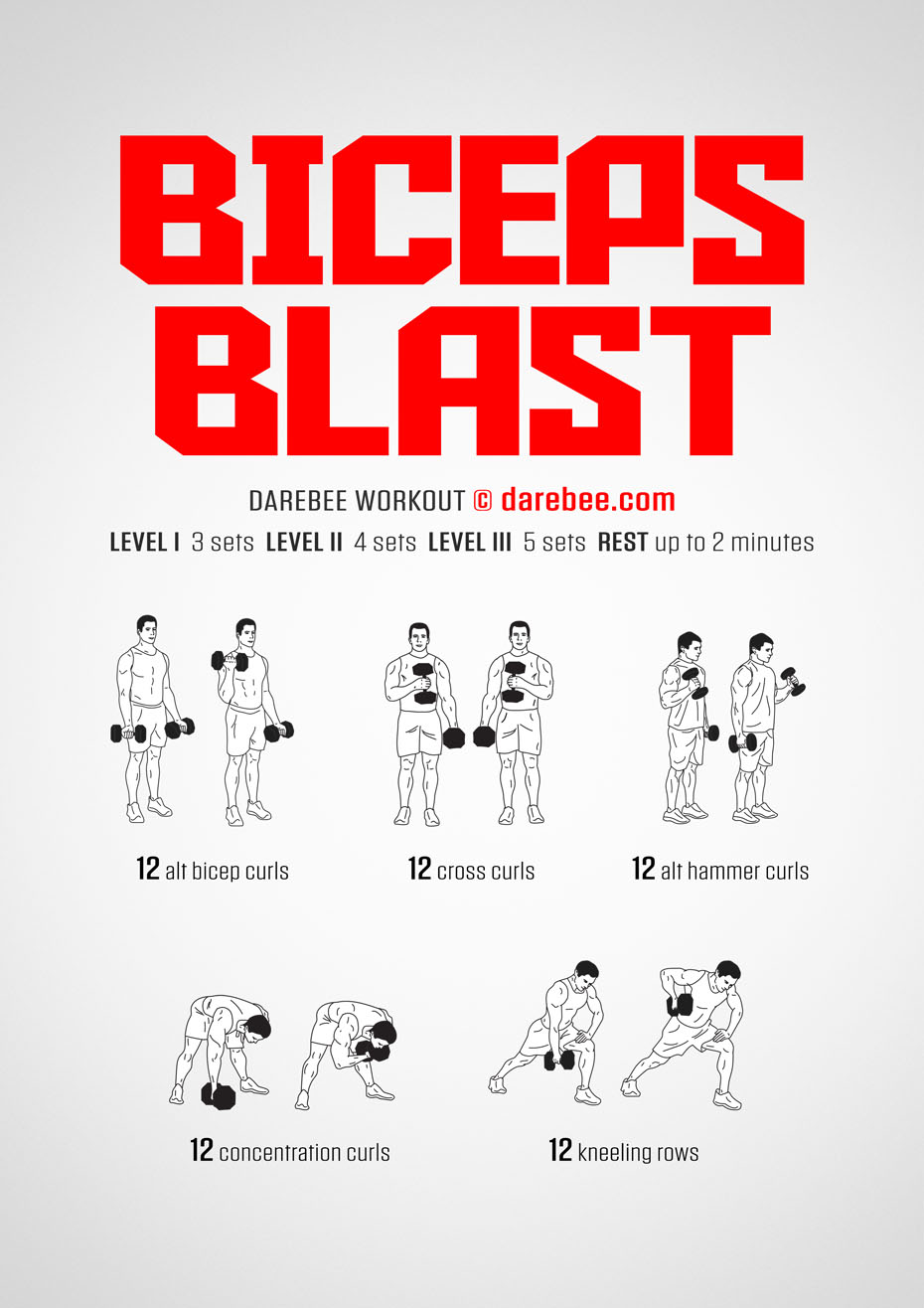
Dumbbells are a fantastic choice for home bicep workouts. They come in various weights, allowing you to tailor your exercises to your strength level. Start with lighter weights to perfect your form. Gradually increase the weight as you get stronger.
Keep a pair of adjustable dumbbells if space is a concern. You can easily change the weight by adding or removing plates. The versatility of dumbbells makes them invaluable; they can be used for everything from bicep curls to hammer curls.
Imagine watching your favorite show while doing dumbbell curls. It’s multitasking at its finest. Plus, a pair of dumbbells is often cheaper than a gym membership!
Resistance Bands
Resistance bands offer a unique advantage over traditional weights. They’re portable and easy to store, making them perfect for small spaces. Resistance bands come in different tension levels, catering to beginners and pros alike.
Think about the variety they bring to your workout. You can perform curls, rows, and even simulate a cable machine workout. The constant tension of the bands works your muscles differently than weights, providing a new challenge.
Resistance bands are also great for warming up your muscles. You can feel the burn without risking injury. Have you tried using them while traveling? They’re a fitness game-changer on the road!
Bodyweight Alternatives
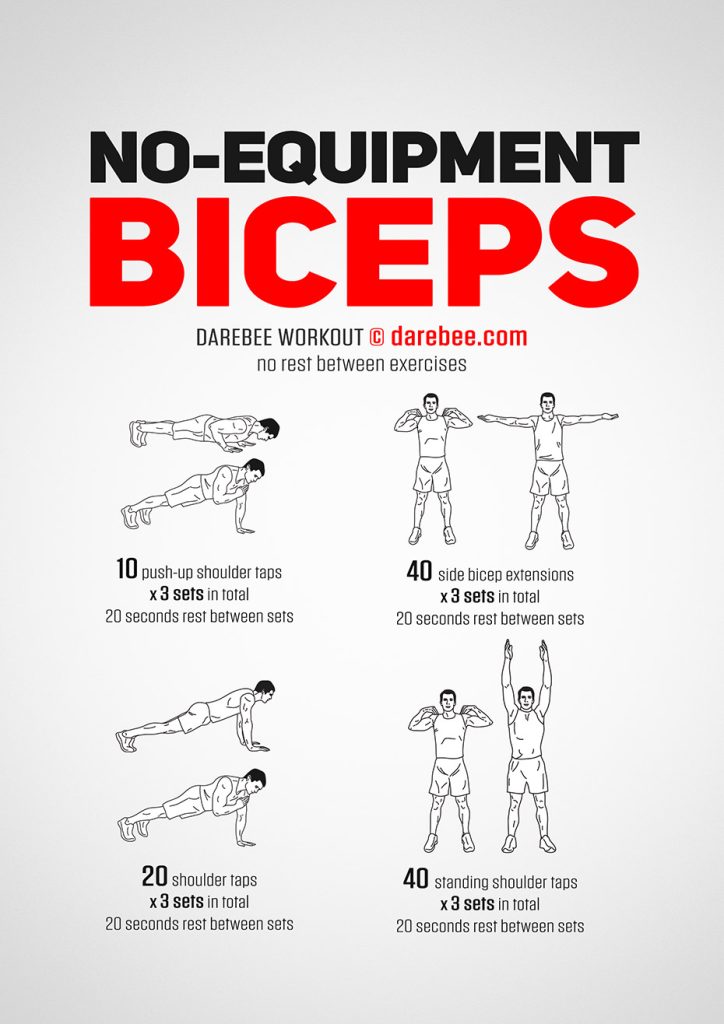
Don’t have equipment? No problem! Your body is the best tool you have. Exercises like push-ups and planks can target your biceps without any gear. You might be surprised at how effective they are.
Try incorporating variations like incline push-ups or tricep dips. These moves engage your biceps and help build strength. The beauty of bodyweight exercises is their adaptability; they can be done anywhere, anytime.
Challenge yourself by increasing reps or adding tempo changes. Have you ever considered how a simple push-up can turn into a full-body workout? It’s all about technique and consistency.
So, what’s stopping you from getting those bicep gains? With the right equipment—or even none at all—you’re ready to take your home workouts to the next level. Which method will you try first? Your biceps are waiting for the challenge!
Effective Warm-up Routines
Effective warm-up routines are crucial for a successful bicep workout at home. They prepare your muscles, reduce the risk of injury, and enhance your performance. Without a proper warm-up, you might not get the most out of your workout.
Dynamic Arm Circles
Start with dynamic arm circles. Stand with your feet shoulder-width apart, and extend your arms to the sides. Rotate your arms in small circles, gradually increasing the size. Do this for 30 seconds in each direction. This will increase blood flow to your shoulder and arm muscles.
Resistance Band Warm-up
If you have a resistance band, use it for warm-ups. Hold the band in both hands and stretch it by pulling your arms apart. Do 10-15 reps. This helps activate your biceps and forearms, preparing them for heavier lifting.
Jump Rope Session
A short jump rope session can be effective. Jump rope for 1-2 minutes to get your heart rate up. This increases circulation and warms up your entire body, including your arms. Plus, it’s a fun way to start your workout.
Shadow Boxing
Try shadow boxing for an energizing warm-up. Punch the air with controlled movements for about 1-2 minutes. Focus on engaging your biceps and keeping your movements fluid. This not only warms up your arms but also boosts your mood.
Push-up Variations
Push-ups are a great warm-up exercise. Start with a set of regular push-ups. Then, switch to close-grip push-ups to target your biceps more. Aim for 10 reps of each. This builds strength and preps your muscles for the workout ahead.
Can you feel the difference when you skip your warm-up? Try these routines, and notice how much better your bicep workout feels. Have a favorite warm-up routine that you swear by? Share it with your workout buddies and see if they notice the benefits too.

Credit: www.facebook.com
Top Bicep Exercises At Home
Working out from home offers convenience and flexibility, especially when focusing on specific muscle groups like your biceps. You don’t need a gym membership to build impressive biceps; with just a few simple tools and your own body weight, you can effectively target and strengthen these muscles. Let’s dive into some of the top bicep exercises you can do right in your living room.
Dumbbell Curls
Dumbbell curls are a classic exercise that never goes out of style. They’re straightforward and efficient. Grab a pair of dumbbells, stand with feet shoulder-width apart, and keep your elbows close to your torso. Curl the weights up, keeping your palms facing your body. Lower slowly. Repeat for 10-15 reps. You’ll feel the burn quickly. If you don’t have dumbbells, use water bottles or soup cans. Have you ever tried increasing weight by filling a backpack with books?
Resistance Band Curls
Resistance bands are incredibly versatile and take up almost no space. Secure one end under your foot and hold the other with your hand. Curl the band upwards while keeping your elbow steady. Aim for 12-20 reps. The resistance feels different than weights, making it ideal for those who want variety. Bands come in different tensions, offering you a way to progress. What’s your creative way of adding resistance?
Bodyweight Chin-ups
Bodyweight chin-ups are perfect if you have a sturdy bar or even a doorway pull-up bar at home. They challenge your biceps and back simultaneously. Grip the bar with palms facing you, pull yourself up, and lower slowly. Aim for 5-10 reps if you’re new to chin-ups. It’s tough but rewarding. Using a chair for assistance can help if you’re struggling. Remember, everyone starts somewhere. What’s your strategy for making chin-ups easier?
These exercises are practical and can easily fit into your daily routine. Whether you’re lifting weights, pulling bands, or using your body weight, you’re on your way to stronger biceps. What’s stopping you from starting today?
Creating A Balanced Workout Plan
Home workouts for biceps can be effective with simple exercises. Dumbbell curls and resistance band routines build muscle strength. Short sessions fit easily into daily schedules, enhancing fitness without gym visits.
Creating a balanced workout plan for your biceps at home is crucial to achieving those toned arms you’ve always wanted. It’s not just about lifting weights; it’s about how you structure your routine. A well-rounded plan considers how often you work out, the intensity of each session, and how you allow your muscles to recover. It’s a delicate balance that can lead to real gains.Frequency And Intensity
How often should you work your biceps at home? Aim for 2-3 times a week. This frequency allows your muscles to grow without overtraining them. On the days you work out, keep the intensity high. Focus on the quality of each rep rather than quantity. Try using resistance bands or household items like water bottles for added weight. This keeps your muscles challenged and engaged. Are you pushing yourself enough? If you finish your workout without breaking a sweat, it’s time to amp up the intensity.Rest And Recovery
Rest days are just as important as workout days. Your muscles need time to repair and grow. After a bicep workout, give yourself 48 hours before targeting them again. Don’t underestimate the power of sleep. Quality sleep helps muscle recovery. Are you getting enough rest? If you feel constantly sore, consider adjusting your rest periods. Use active recovery techniques like stretching to ease muscle tension. This can improve flexibility and reduce the risk of injury.Progression Strategies
Seeing progress in your bicep workouts is motivating. Start by tracking your reps and weights. Gradually increase them as you gain strength. Switch up your routine every few weeks. Change exercises or adjust the number of sets. This prevents your muscles from getting too used to the same movements. Celebrate small victories. Did you lift a heavier weight or do an extra set? These achievements matter and keep you moving forward. How do you know when it’s time to progress? Listen to your body. If the routine feels easy, it’s time to step up your game.Nutrition Tips For Muscle Growth
Building strong biceps at home requires good nutrition. Focus on proteins like chicken, fish, and beans to fuel muscle repair. Pair nutritious meals with consistent workout routines for effective muscle growth.
When you’re working out from home, especially targeting those biceps, your nutrition plays a crucial role in seeing results. Your muscles need the right fuel to grow and recover efficiently. Here’s how you can tweak your diet to maximize those gains.Protein Intake
Protein is the building block of muscle. Make sure you’re getting enough of it every day. You might wonder, how much is enough? Aim for around 1.2 to 2.2 grams of protein per kilogram of your body weight. This range supports muscle growth without overdoing it. Think about easy sources like chicken, fish, tofu, and legumes. I once swapped my cereal breakfast for eggs and noticed a significant difference in my energy levels during workouts.Hydration
Water is often overlooked but is essential for muscle function and recovery. Dehydration can lead to fatigue, which affects your workout performance. Keep a water bottle handy and sip throughout the day. Don’t wait until you’re thirsty, as thirst signals dehydration. I used to think I was drinking enough until I tracked my intake and realized I was falling short. Simply adding an extra glass before and after my workouts helped me feel less fatigued.Supplement Considerations
Supplements can be a helpful addition but aren’t a necessity for everyone. Whey protein and creatine are popular choices for muscle growth. Before adding supplements, evaluate your diet. Are you getting enough nutrients from food? If not, supplements can fill the gap. I once tried a pre-workout supplement, expecting miracles. Instead, I realized that a balanced meal before exercising gave me the same energy boost without the jitters. What adjustments will you make to your nutrition plan? Consider these tips and see how they might enhance your home bicep workouts.Tracking Progress And Adjustments
Tracking progress and making adjustments are crucial parts of any fitness journey, especially when working out from home. They ensure that your efforts translate into real, visible gains. Without tracking, it’s easy to plateau and lose motivation. Here’s how you can measure, adapt, and set new goals for your bicep workouts at home.
Measuring Arm Growth
Keep a simple tape measure handy. Measure the circumference of your biceps at the same time of day to ensure consistency. Record these measurements weekly or bi-weekly in a journal or a fitness app.
Photos can be an amazing motivator. Take regular progress photos from the same angles. This visual record can often highlight changes that are hard to notice in the mirror daily.
Don’t forget to note how your clothes fit. Tighter sleeves are often a sign that your efforts are paying off. These small victories can be the boost you need to keep pushing forward.
Adapting Workouts
Stagnation can sneak up if you stick to the same routine. Try adding more reps or sets every few weeks. This can help you continue building muscle without needing new equipment.
Switch up your exercises to keep your muscles guessing. If you’ve been doing dumbbell curls, try hammer curls or resistance band curls. This variation can target different parts of the muscle.
Listen to your body. If an exercise feels too easy, it’s time to make it harder. Conversely, if you’re struggling too much, it might be wise to dial it back. Balance is key.
Setting New Goals
Once you’ve reached a milestone, set a new one. This keeps your workouts fresh and motivating. Ask yourself, what do you want to achieve next month?
Consider setting both short-term and long-term goals. Short-term goals might involve increasing the weight you lift, while long-term goals could focus on overall muscle growth or definition.
Reflect on your progress regularly. Celebrate your achievements and learn from any setbacks. This self-awareness is crucial to continuous improvement.
Remember, each person’s fitness journey is unique. What adjustments have you found most effective in your workouts? Share your experiences and inspire others to adapt and grow.
Common Mistakes To Avoid
Many skip warm-ups, risking injury during bicep workouts at home. Using weights that are too heavy can also lead to poor form. Consistent rest intervals are often overlooked, reducing workout effectiveness and muscle recovery.
Working out from home has become a staple in many fitness routines. However, without the guidance of a trainer, it’s easy to fall into some common pitfalls. Avoiding these mistakes can make your bicep workouts more effective and help you achieve your goals faster. Let’s dive into some of the most common mistakes you should steer clear of.Overtraining
It’s tempting to think that more is always better. But when it comes to bicep workouts, overtraining can lead to fatigue and even injury. Your muscles need time to recover and grow stronger. Consider this: I once pushed my biceps to the limit, working them every day. Instead of seeing gains, I hit a plateau. Rest days are crucial for muscle recovery. Balance your workout schedule to include them.Poor Form
Proper form is everything. Performing exercises with poor form not only reduces effectiveness but can also cause injuries. When lifting weights, keep your elbows close to your body and avoid swinging them. Imagine doing a bicep curl and feeling strain on your lower back. That’s a sign your form is off. Focus on slow, controlled movements. If necessary, reduce the weight to maintain good form. It’s better to lift lighter weights correctly than heavier ones incorrectly.Neglecting Other Muscle Groups
Focusing only on your biceps can lead to muscle imbalances. Your body works as a unit, and neglecting other muscles can hinder your overall progress. A balanced workout routine will yield better results and prevent injuries. Think about incorporating exercises for your triceps, shoulders, and back. These muscles support bicep functions and help in creating a well-rounded physique. Are you dedicating enough time to them? Avoid these mistakes and you’ll likely see more impressive results in your bicep workouts. Your efforts will pay off with stronger, more defined arms. Which mistake are you most guilty of making, and how will you change your routine to avoid it?
Credit: www.pinterest.com
Frequently Asked Questions
How Do I Train My Biceps At Home?
Train biceps at home with exercises like push-ups, bicep curls using dumbbells or resistance bands, and chin-ups. Maintain proper form and increase repetitions gradually. Incorporate these exercises into your routine for effective results.
Can I Build Biceps Without Weights?
Yes, you can build biceps without weights. Use bodyweight exercises like push-ups, pull-ups, and dips. Incorporate resistance bands for added challenge. Ensure proper form and consistency for effective results.
What Is 7 7 7 Bicep Exercise?
The 7 7 7 bicep exercise targets the biceps using three sets of seven reps. Perform seven reps at the bottom half, seven at the top half, and seven full curls. This technique enhances bicep growth and strength effectively.
Are 4 Exercises Enough For Biceps?
Four exercises can effectively target biceps when done correctly. Focus on form and intensity. Incorporate variations like curls, hammer curls, and chin-ups for balanced growth. Adjust sets and reps based on fitness goals. Quality matters more than quantity for muscle development.
Conclusion
Building strong biceps at home is simple and effective. You don’t need fancy equipment. Just determination and consistency. Focus on proper form and gradual progress. Mix different exercises for variety. Keep your workout routine fresh and engaging. Aim for balanced muscle growth.
Listen to your body and rest when needed. Track your progress to stay motivated. Celebrate small wins along the way. Enjoy the journey towards stronger arms. Remember, patience is key. With time, your efforts will show results. Stay committed to your fitness goals.
Your biceps will thank you. Happy exercising!








