Imagine achieving toned legs, a firmer core, and boosted confidence—all without stepping out of your home. Yes, you can transform your fitness routine with just one powerful exercise: the squat.
The best part? You don’t need a gym membership or fancy equipment. You only need your determination and a few spare minutes each day. Are you ready to discover how an at-home squat workout can revolutionize your fitness journey? By the end of this article, you’ll have all the insights you need to maximize results right in your living room.
Let’s dive in and unlock the secret to strength and vitality, right at your fingertips.
Benefits Of Squats
Squats offer a convenient way to boost fitness at home. They strengthen muscles, improve balance, and enhance flexibility. Consistent squat workouts can help tone legs and core, supporting overall health without the need for equipment.
Squats are a powerhouse exercise that can transform your fitness routine at home. They’re not just about building muscles in your legs; they offer a wide range of benefits that can enhance your overall well-being. Whether you’re a beginner or a seasoned athlete, understanding the advantages of squats can motivate you to incorporate them into your daily workout.Strength Building
Squats target multiple muscle groups, including your quadriceps, hamstrings, and glutes. This makes them incredibly effective for building strength in your lower body. Remember when you struggled to lift heavy grocery bags? Regular squats can make such tasks easier as they increase your muscle power and endurance.Improved Flexibility
Performing squats regularly can enhance your flexibility. They stretch your lower body muscles and improve your range of motion. If you find yourself struggling to bend down and pick things up, squats can help. They condition your body to move more freely and efficiently.Core Stability Enhancement
Did you know squats are great for your core as well? Engaging your core during squats stabilizes your body and improves balance. This can translate to better posture and reduce the risk of injuries in everyday activities. Next time you find yourself wobbling while standing on one foot, think about how adding squats to your routine can help. Have you ever noticed how squats can make simple tasks feel like a breeze? The benefits go beyond just physical strength. They can also boost your confidence and make you feel more capable in day-to-day activities. So, why not start incorporating squats into your at-home workouts and experience these benefits for yourself?
Credit: www.pinterest.com
Preparing For Your Squat Workout
Squats are a cornerstone of fitness routines, strengthening muscles and enhancing balance. Preparing for your squat workout ensures that you maximize benefits while minimizing risks. Proper preparation involves warming up, understanding squat form, and following safety guidelines. Let’s dive into these essential aspects.
Essential Warm-up Exercises
Warming up is crucial before starting your squat workout. Begin with light cardio to increase heart rate. Try jumping jacks or brisk walking for five minutes. Follow with dynamic stretches like leg swings and hip circles. These exercises loosen muscles and prepare joints for movement. Spend at least 10 minutes on your warm-up routine.
Proper Form And Technique
Maintaining proper form is vital for effective squats. Stand with feet shoulder-width apart. Keep your chest up and back straight. Lower your body by bending at the hips and knees. Ensure your knees don’t extend beyond your toes. Aim for thighs parallel to the ground. Focus on controlled movements and breathe steadily.
Safety Tips To Prevent Injury
Safety should be a priority during squat workouts. Avoid sudden or jerky movements. Begin with bodyweight squats before adding weights. Gradually increase intensity as your strength improves. Ensure your workout area is clear of obstacles. Listen to your body and stop if you feel pain. Regularly check your form with a mirror or video.
Types Of Squat Variations
Squat workouts are essential for building strength and muscle. They enhance balance, flexibility, and overall fitness. Exploring different squat variations keeps your routine exciting. Each type offers unique benefits and challenges.
Bodyweight Squats
Bodyweight squats are simple yet effective. Stand with feet shoulder-width apart. Lower your hips while keeping your chest up. Ensure knees align with your toes. Aim for a 90-degree angle at the knees. This variation strengthens your legs and improves posture.
Jump Squats
Jump squats add intensity to your workout. Begin with a regular squat position. Propel yourself upward with a jump. Land softly and return to the squat stance. This explosive movement boosts power and burns calories. It increases heart rate, enhancing cardiovascular fitness.
Pistol Squats
Pistol squats are advanced and challenging. Stand on one leg while extending the other forward. Lower your body as if performing a squat. Balance and strength are crucial here. They improve coordination and core stability. Great for those seeking a tougher workout.
Goblet Squats
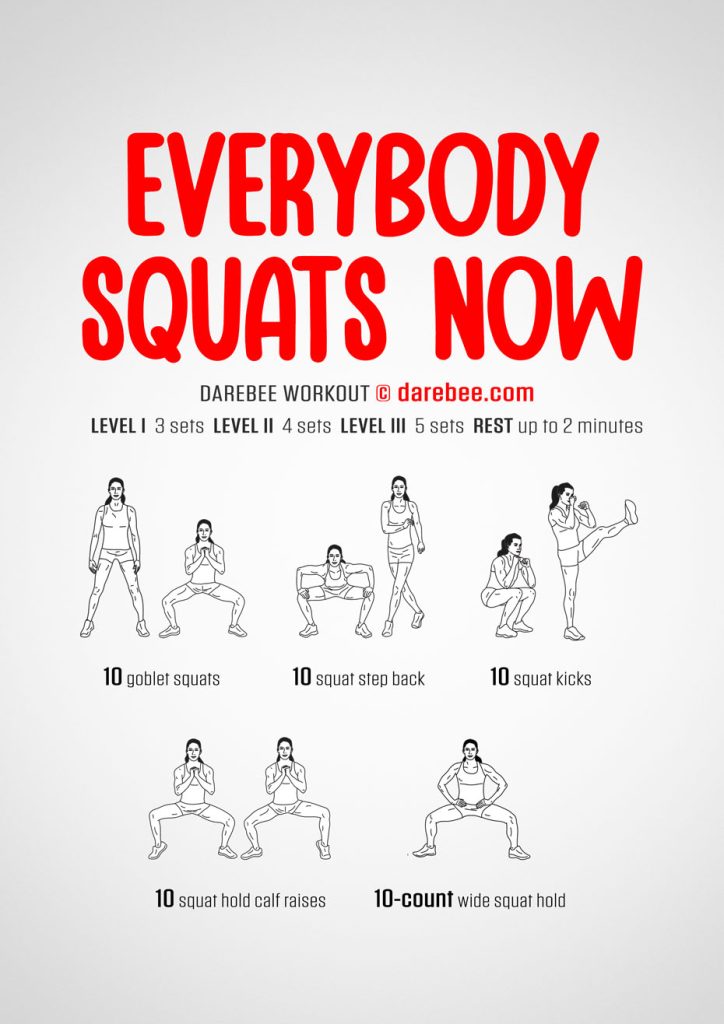
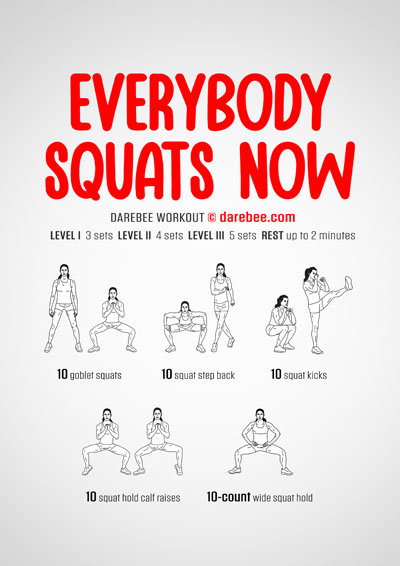
Goblet squats require a weight like a dumbbell or kettlebell. Hold the weight close to your chest. Perform a squat while keeping the weight steady. This variation enhances upper body strength. It also aids in improving squat form and depth.
Credit: darebee.com
Creating A Squat Workout Routine
Crafting an at-home squat workout helps build strength and improve flexibility. Begin with basic squats, then gradually add variations. Aim for consistency to see progress over time.
Creating a Squat Workout Routine can transform your fitness journey from mundane to extraordinary. It’s about finding the right balance between challenge and comfort. You don’t need a gym membership or fancy equipment to start. All you need is commitment and a clear plan. Let’s dive into how you can build an effective squat workout routine at home.Setting Realistic Goals
Start by defining what you want to achieve. Maybe you aim to strengthen your legs or improve your posture. Setting clear, realistic goals is crucial. It gives direction and purpose to your workouts. Think about where you are now and where you want to be. Do you want to perform 50 squats in a row? Or perhaps, you aim to squat with perfect form? Break down larger goals into smaller, achievable milestones. This keeps you motivated and focused. Remember, it’s not just about the number of squats. Quality matters more than quantity. Prioritize form and technique over speed.Structuring Your Weekly Routine
A well-structured routine fits seamlessly into your life. Consider how many days you can realistically dedicate to squats each week. Three to four days can be a good start. Balance is key. Alternate between intense squat days and lighter, recovery days. This gives your muscles time to heal and grow stronger. Use variety to keep things interesting. Mix different types of squats like basic squats, sumo squats, and split squats. This not only enhances your workout but also targets various muscle groups.Tracking Your Progress
Tracking progress keeps you motivated and informed. It’s satisfying to see how far you’ve come. Consider maintaining a workout journal or using fitness apps. Record the number of squats, types, and any improvements in form. This helps you identify patterns and areas for improvement. Are you hitting your goals? If not, why? Reflecting on your progress allows you to tweak your routine for better results. Celebrate small victories along the way, as they build up to bigger achievements. Would you like to squat deeper or with more ease? Regularly assess your progress and adjust accordingly. It’s all about moving forward, one squat at a time.Incorporating Equipment For Squats
Enhancing your squat routine at home can be simple. Use resistance bands or dumbbells for added strength. A sturdy chair or wall helps maintain balance during squats.
Incorporating equipment into your squat workout can enhance your fitness routine. Using the right tools not only adds variety but also boosts effectiveness. Whether you’re a beginner or seasoned athlete, equipment can help improve your squat technique. Explore different options that suit your fitness level and goals.Using Resistance Bands
Resistance bands are versatile and affordable. They provide extra tension during squats. This tension helps in building strength and endurance. Bands come in different resistance levels. Choose one that challenges you but allows proper form. Loop the band around your thighs or knees. It encourages proper knee alignment. This small tool can make a big difference in your workout.Incorporating Dumbbells
Dumbbells add extra weight, increasing squat intensity. Start with a manageable weight. Gradually increase as you gain strength. Hold a dumbbell in each hand. Keep them by your sides or at shoulder height. This position engages more muscles. It helps tone your arms and shoulders while squatting. Dumbbells are excellent for home workouts. They are easy to store and versatile for various exercises.Benefits Of A Squat Rack
A squat rack provides stability and safety. It’s ideal for those lifting heavier weights. The rack supports the barbell, reducing injury risk. Adjust the height to fit your squat depth. It allows for heavier lifts and muscle growth. A squat rack is a valuable home gym addition. It enhances your strength training routine.Common Mistakes To Avoid
Avoid common squat workout mistakes like poor posture and shallow depth. Ensure knees align with toes and maintain a straight back.
When it comes to perfecting your squat technique at home, it’s easy to fall into common pitfalls that can hinder your progress or even lead to injury. Squats are a fantastic exercise for strengthening your legs and core, but doing them incorrectly can negate their benefits. Let’s dive into some of the frequent mistakes you should watch out for. By correcting these errors, you’ll enhance your workout results and maintain your body’s health.Improper Knee Alignment
One of the most prevalent mistakes is letting your knees cave inward or extend too far forward during a squat. This can put unnecessary stress on your joints. To avoid this, keep your knees aligned with your toes as you lower your body. Imagine drawing a straight line from your knees to the tips of your toes. This helps maintain stability and prevents injuries. Next time you squat, take a moment to check this alignment in the mirror.Neglecting Core Engagement
Another critical mistake is overlooking the role of your core. A strong core stabilizes your body and supports your lower back. Without engaging your core, your posture suffers, and you risk straining your spine. Before you squat, tighten your abs as if you’re bracing for a light punch. This simple action can make a significant difference. Have you ever noticed how a firm core boosts your performance in other exercises too?Overtraining Risks
While enthusiasm is great, overtraining can lead to burnout or injuries. It’s tempting to push your limits, especially when you’re seeing progress. However, rest days are as crucial as workout days. Your muscles need time to repair and grow stronger. Listen to your body—if you’re feeling overly fatigued, it might be time to take a break. Have you ever pushed yourself too hard only to face setbacks? Balance is key. By being mindful of these common mistakes, you can enhance your squat workouts at home. Pay attention to your form, engage your core, and respect your body’s limits. What small changes can you make today to improve your squat routine?Tips For Staying Motivated
Staying motivated during an at-home squat workout can be tough. Yet, motivation is key to achieving your fitness goals. Whether you’re new to exercise or a seasoned pro, maintaining enthusiasm is crucial. Let’s explore some effective tips to keep your motivation high.
Setting Achievable Milestones
Small goals lead to big successes. Break down your workout plan into smaller milestones. Celebrate when you reach each one. Start with a specific number of squats each week. Increase the number gradually. This approach keeps you motivated and prevents burnout.
Finding A Workout Buddy
A workout buddy can be a great motivator. They keep you accountable. Choose someone with similar fitness goals. Plan your squat sessions together. Encourage each other to stay consistent. You’ll find workouts more enjoyable with a partner by your side.
Keeping Workouts Fun And Varied
Monotony can kill motivation. Add variety to your squat workouts. Try different squat variations like sumo or goblet squats. Incorporate music or follow online workout videos. Change your routine often to keep it fresh. A varied workout keeps you engaged and excited.

Credit: www.pinterest.com
Frequently Asked Questions
Do Squats At Home Really Work?
Yes, squats at home are effective. They strengthen legs, glutes, and core muscles. Consistency enhances results. Proper form prevents injuries and maximizes benefits. Squats also improve balance and flexibility. Incorporate variations for comprehensive workouts.
Is 30 Squats A Day Enough?
Doing 30 squats daily can improve muscle tone and endurance. Results depend on individual fitness levels and goals. For significant benefits, combine squats with varied exercises and balanced nutrition. Consistency and progression are key for effective strength and fitness outcomes.
Is A 300lb Squat Impressive?
A 300lb squat can be impressive, depending on factors like body weight, age, and experience. For beginners, it’s a significant achievement. Advanced lifters might see it as a milestone. Always consider individual goals and personal progress.
What Will 100 Squats A Day Do?
Performing 100 squats daily can enhance leg strength, tone muscles, and improve overall fitness. It may boost metabolism and aid weight loss when combined with a balanced diet. Consistency is key for noticeable results, but it’s important to maintain proper form to prevent injury.
Conclusion
Squat workouts at home offer many benefits. They boost strength and flexibility. No gym needed. Just dedication and a small space. Start slow, focusing on form and balance. Gradually increase intensity as you grow stronger. Consistency is key. Keep a regular routine for best results.
Listen to your body to avoid injuries. Enjoy the journey to better fitness. Share your progress with friends and family. Inspire them to join you. Remember, every squat counts. Celebrate your achievements, big or small. Keep pushing forward. You’ll see amazing results over time.
Stay committed. Stay strong.








