Looking to boost your fitness without leaving the house? You’re in the right place.
An at-home conditioning workout is not just convenient; it’s a game-changer for your health and well-being. Imagine transforming your living room into a personal gym where you can break a sweat, all while saving time and money. Whether you’re a fitness newbie or a seasoned athlete, this workout can be tailored to fit your needs and goals.
Dive into this article to discover simple, effective exercises that will elevate your fitness game, enhance your energy, and improve your mood—all from the comfort of your own home. Don’t miss out on these powerful tips to make the most of your home workout sessions!
Benefits Of Home Workouts
Home workouts have skyrocketed in popularity. They’re not just a trend; they’re a practical solution for many. Why drive to the gym when you can sweat it out in your living room? Discover the benefits of home workouts and see why they might be the perfect fit for your lifestyle.
Convenience And Flexibility
Home workouts offer unmatched convenience. There’s no need to pack a gym bag or commute. You can exercise in your pajamas if you like. This flexibility allows you to fit workouts into your schedule easily, whether it’s early morning or late at night.
Cost-effective
Save money on gym memberships and travel expenses. Home workouts require minimal equipment. Use items you already have, like chairs for tricep dips or towels for resistance. With free online resources, you can access countless workout routines without spending a dime.
Privacy
Exercising at home provides privacy. You don’t have to worry about gym crowds or judgment. Feel comfortable trying new exercises without the fear of others watching. This can boost your confidence and motivation.
Customizable Environment
Set the mood with your favorite music or ambient lighting. Your home is your sanctuary, and you can tailor your workout environment to suit your needs. This personalization makes your workout experience more enjoyable.
Safety And Health
During flu season or times of health concerns, staying home reduces exposure to germs. You can maintain your fitness routine without compromising your health. This is especially beneficial for those with underlying conditions or those who prefer a safer option.
Have you ever considered the impact of eliminating the commute to the gym? More time for yourself and less stress. Home workouts might be the key to balancing your busy life. Try it out and see the difference it makes for you.
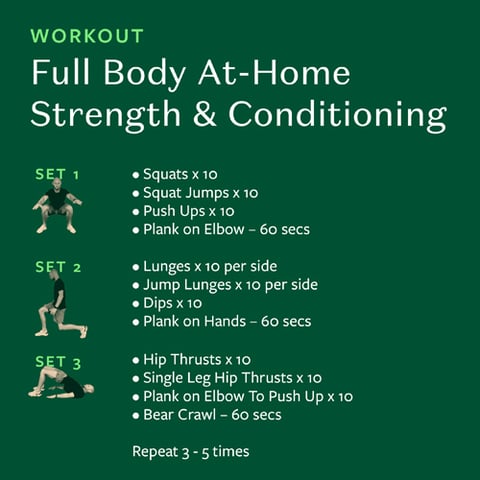
Credit: www.corecollective.sg
Essential Equipment
Working out at home doesn’t mean you need a full gym setup. Having the right equipment can make your conditioning routine effective and enjoyable. You can get fit without breaking the bank or cluttering your space. Let’s explore essential equipment for your home workout that won’t overwhelm your living room or your budget.
Bodyweight Options
Bodyweight exercises are a great way to start your home conditioning workout. They require no equipment, yet they are powerful for building strength and endurance. Think of exercises like push-ups, squats, and lunges. They engage multiple muscle groups at once.
Imagine doing a set of burpees in your living room. It’s an intense workout that challenges your entire body. You don’t need anything but yourself and a little space. The simplicity of bodyweight workouts makes them accessible for everyone.
Is there a corner in your home where you can stretch out comfortably? That’s all you need to kick off your bodyweight regimen. Your body is your gym, and it’s available anytime.
Affordable Tools
Adding affordable tools can enhance your workout and keep it exciting. Consider resistance bands. They are lightweight and versatile. You can use them to target specific muscle groups like arms, legs, or back.
A pair of dumbbells is another smart investment. They’re perfect for adding resistance to your exercises. You can start with light weights and gradually increase as you build strength. Dumbbells are compact and easy to store.
If you enjoy cardio, a jump rope is an excellent choice. It’s inexpensive and great for improving your heart health. Jumping rope can burn calories quickly, and it’s fun. You might recall jumping rope as a kid—use that enthusiasm to fuel your workout!
Do you have a yoga mat? It’s not only for yoga. It’s useful for any floor exercise, providing comfort and stability. A small investment in a mat can make a big difference in your workout experience.
Are there tools you’ve been curious about but haven’t tried yet? Experimenting with different equipment can keep your routine fresh and engaging. Consider what fits your space and goals, and start building your home gym today.
Warm-up Routine
Starting your at-home workout with a warm-up routine is crucial. It prepares your body, reduces injury risk, and boosts performance. But how do you make your warm-up effective?
Dynamic Stretching
Dynamic stretching is your first step. These stretches are active movements that help loosen up your muscles. Imagine gently swinging your arms or kicking your legs back and forth. This movement gets your blood flowing and muscles ready for action.
Try adding high knees or arm circles to your routine. These exercises engage multiple muscle groups at once. You’ll feel your heart rate increasing, signaling that your body is getting ready to tackle more intense exercises.
Cardio Warm-up
Now, let’s get your heart pumping with a cardio warm-up. You don’t need fancy equipment for this; a simple jog around the room or jumping jacks work wonders. This part of the warm-up ramps up your energy levels.
Consider doing a minute of jumping rope or marching in place. These activities elevate your heart rate and prepare your cardiovascular system for the workout ahead. You’ll notice an immediate boost in your energy, making the rest of your workout more effective.
Remember, your warm-up sets the tone for the entire workout. If you skip it, you might find your muscles aren’t as responsive. So, are you ready to make your warm-up routine count?

Credit: www.pinterest.com
Core Conditioning Exercises
Core conditioning exercises are essential for building strength and stability. They target muscles in your abdomen, back, and pelvis. These exercises improve balance and posture. You don’t need fancy equipment. You can do them at home. Let’s explore some effective exercises.
Plank Variations
Planks strengthen your core without moving your body. Start with a basic plank. Lie face down, then lift your body. Support yourself on forearms and toes. Keep your body straight. Try holding for 30 seconds.
Side planks add a twist. Lie on your side, lift your hips. Support on one forearm. Keep your body aligned. Aim for 30 seconds on each side.
Plank with leg lift increases difficulty. From a basic plank, raise one leg. Hold it for a few seconds. Switch legs. This challenges your balance and engages more muscles.
Crunch Alternatives
Crunches can strain the neck. Try alternatives for a safer workout. Bicycle crunches are effective. Lie on your back, lift legs. Rotate your torso, touch elbow to opposite knee. This works multiple muscles.
Reverse crunches target lower abs. Lie flat, lift legs towards the chest. Keep knees bent. Use your core to lift hips. Lower slowly, repeat.
Toe reaches strengthen upper abs. Lie down, lift legs to 90 degrees. Reach towards your toes with your arms. Keep your back on the floor. This engages your core effectively.
Upper Body Workouts
Upper body workouts are essential for building strength and endurance right from the comfort of your home. They target muscles in your chest, arms, shoulders, and back, helping you sculpt a toned physique. Whether you’re a beginner or seasoned athlete, these exercises can be tailored to meet your fitness level. Let’s dive into some effective techniques that can elevate your workout routine.
Push-up Techniques
Push-ups are a classic exercise that engages multiple muscles at once. The key to mastering push-ups is maintaining proper form. Keep your body straight like a plank, ensuring your core is tight and your elbows are close to your body.
Experiment with variations to challenge different muscle groups. Try wide-grip push-ups to focus more on your chest, or diamond push-ups for a greater tricep burn. If you’re new to push-ups, start with knee push-ups. They’re easier but still effective.
Consistency is crucial. Track your progress and set small goals, like adding one more push-up each week. How many push-ups can you do in a row today?
Resistance Band Exercises
Resistance bands are versatile tools that can enhance your upper body workouts. They are light, portable, and offer varying levels of resistance. This makes them perfect for home workouts.
Use resistance bands for bicep curls. Stand on the band, hold the ends, and curl your arms up. You’ll feel the tension working your muscles. Another great exercise is the banded row. Secure the band at a low point, pull towards you, and engage your back muscles.
The beauty of resistance bands is their adaptability. Adjust the resistance by changing your grip or shortening the band. This flexibility keeps your workouts fresh and challenging. Which exercise will you try first?
Upper body workouts at home don’t need fancy equipment. With push-ups and resistance bands, you can effectively build strength. Remember, progress comes from consistent effort. So grab your gear and start building that strong upper body today!
Lower Body Strengthening
Strengthening the lower body is key for overall fitness. It improves balance, boosts metabolism, and enhances daily activities. Home workouts for the lower body can be effective and convenient. You don’t need fancy equipment. Just some space and determination.
Below, we explore some essential exercises. These will target your lower body effectively. Let’s dive into these exercises and build strength together.
Squat Variations
Squats are excellent for building lower body strength. They target the thighs, hips, and buttocks. Start with the basic squat. Stand with feet shoulder-width apart. Lower your body as if sitting back in a chair. Keep your chest up and knees behind toes.
Once comfortable, try squat variations. The goblet squat involves holding a weight close to your chest. This adds resistance and engages your core. The sumo squat requires a wider stance. It targets inner thighs and glutes more intensely.
Another variation is the jump squat. This adds a cardio element to your routine. Squat down and then jump up, landing softly. This builds explosive power in your legs.
Lunges And Alternatives
Lunges are effective for targeting the quads, hamstrings, and glutes. Begin with the basic lunge. Stand upright, then step forward with one leg. Lower your hips until both knees are bent at 90 degrees. Push back to the starting position.
For variety, try reverse lunges. Step backward instead of forward. This reduces strain on the knees. Side lunges work the inner and outer thighs. Step to the side and bend the leading knee while keeping the other leg straight.
For a challenge, consider the Bulgarian split squat. Place one foot on a chair or bench behind you. Lower into a lunge position. This focuses on the quads and improves balance.
These exercises enhance lower body strength. They are effective, even at home. Include them in your routine for better results.
Full Body Circuit
A full body circuit workout targets multiple muscle groups. It’s efficient and effective. You can do it at home with minimal equipment. This workout helps build strength and improve endurance. It combines different exercises into one session. You can keep your workout interesting and challenging.
High-intensity Interval Training
High-Intensity Interval Training (HIIT) is a popular method. It involves short bursts of intense exercise. These are followed by brief rest periods. This format boosts your heart rate quickly. HIIT workouts are time-efficient. They burn a lot of calories in a short time. You don’t need fancy equipment for HIIT. Bodyweight exercises work well. Squats, push-ups, and burpees are great options.
Bodyweight Circuit Plan
A bodyweight circuit plan requires no gym equipment. It uses your own body weight for resistance. This makes it accessible for everyone. Start with a warm-up to prepare your muscles. Then, move to exercises like lunges, planks, and jumping jacks. Perform each exercise for 30 seconds. Rest for 10 seconds between exercises. Repeat the circuit two or three times. Adjust according to your fitness level.
Cool Down Strategies
After an intense workout, cooling down is essential. It helps your body recover. Cool down strategies reduce muscle soreness and improve flexibility. They calm your mind and slow your heart rate. Discover effective cool down techniques to enhance your workout routine.
Static Stretching
Static stretching is a key component of cooling down. Hold each stretch for 15 to 30 seconds. Focus on major muscle groups like legs and back. Feel the gentle pull in your muscles. Avoid bouncing or jerking movements. Stretching improves flexibility and reduces injury risk. Consistent stretching leads to better muscle health.
Breathing Techniques
Breathing techniques help relax your body after exercise. Inhale deeply through your nose. Hold the breath for a few seconds. Exhale slowly through your mouth. This calms the nervous system. It brings oxygen to tired muscles. Controlled breathing reduces stress and tension. Practice regularly for better relaxation.
Tracking Progress
Tracking progress is key for any workout routine. It helps you see results and stay motivated. While doing conditioning workouts at home, tracking progress becomes even more important. With the right tools, you can monitor improvements and adjust your routines. Here are some effective ways to track your progress.
Fitness Apps
Fitness apps offer an easy way to track workouts. They provide statistics and keep records. Many apps let you input exercise details and monitor changes over time. Some apps also offer features like graphs and charts. This visual representation helps you understand your journey better. They can also send reminders and motivational messages. Choose an app that fits your needs and goals.
Journaling Achievements
Writing down your achievements can be very rewarding. Keeping a fitness journal helps you see improvements. You can record daily workouts and note how you feel after each session. This practice allows you to reflect on your progress. You can also write about challenges and how you overcame them. A journal provides a personal touch to your fitness journey. It’s a simple yet effective tool.
Credit: www.youtube.com
Staying Motivated
Home workouts boost motivation by offering convenience and flexibility. Create a routine that suits your lifestyle. Enjoy the benefits of exercise without leaving your living room.
Staying motivated during at-home conditioning workouts can be tough. Many distractions can pull you away from your fitness goals. Keeping your focus intact is essential for progress. With a few strategies, you can boost your motivation and keep moving forward.Setting Realistic Goals
Goals should be achievable and specific. Aim for small, attainable targets each week. Maybe increase your workout duration or add more reps. Celebrate each milestone. This builds confidence and keeps you motivated. Write down your goals where you can see them. This visual reminder keeps your mind on track.Finding A Workout Buddy
A workout buddy can make a big difference. They hold you accountable and encourage you. Share your workout plans and progress with them. Discuss challenges and celebrate successes together. This partnership boosts motivation. You feel more committed when someone else is involved. Choose someone with similar goals. This ensures mutual support and understanding.Frequently Asked Questions
What Is The Best Workout For Conditioning?
High-intensity interval training (HIIT) is the best for conditioning. It boosts cardiovascular fitness and burns calories. You alternate short bursts of intense exercise with rest or low-intensity periods. This workout improves endurance, strength, and speed efficiently. Include it in your routine for maximum conditioning benefits.
What Is The 3 3 3 Rule For Working Out?
The 3 3 3 rule involves exercising three days a week, with three sets of each exercise, and resting for three minutes between sets. This approach helps balance intensity and recovery, promoting effective workouts and muscle growth. It’s ideal for beginners seeking a structured, manageable fitness routine.
What Is The 5 4 3 2 1 Workout Method?
The 5 4 3 2 1 workout method involves five exercises done in decreasing repetitions. Start with five reps, then four, three, two, and one. It covers diverse exercises like squats, push-ups, lunges, burpees, and planks. This technique enhances strength, endurance, and flexibility efficiently.
What Is The 6 12 25 Rule?
The 6 12 25 rule is a guideline for writing effective emails. Limit the subject line to 6 words, keep the body to 12 sentences, and ensure the entire email fits within 25 lines. This approach helps maintain clarity, focus, and readability in professional communication.
Conclusion
At-home conditioning workouts offer convenience and flexibility. They fit into any schedule. No gym needed. This makes them accessible to everyone. Start at your own pace. Gradually increase intensity for better results. Consistency is key. Stay committed to see improvements.
Enjoy the comfort of your own space. Save time and money. Achieve fitness goals from home. Remember to stay hydrated. Listen to your body. Adjust exercises as needed. Celebrate small victories. Keep motivated with varied routines. Reap the benefits of a healthier lifestyle.
Make your home workout journey enjoyable and rewarding. Keep moving and stay active.








