Imagine transforming your living room into a boxing ring, where you can unleash your inner fighter without stepping outside. At-home boxing workouts offer more than just a way to break a sweat; they provide a powerful boost to your physical and mental health.
Whether you’re a seasoned athlete or just starting, this workout is your ticket to enhanced strength, agility, and confidence. Feel the rush of adrenaline as you punch and move with purpose. This isn’t just exercise—it’s a full-body experience that engages your mind and body.
Ready to discover the secrets of an effective boxing workout at home? Keep reading to learn how you can harness the power of boxing to achieve your fitness goals right from your living space.
Benefits Of Boxing Workouts
Boxing workouts offer more than just physical strength. They boost mental and emotional health too. Training at home brings flexibility and comfort. Discover the benefits of boxing workouts right in your living room. Let’s dive into the myriad benefits of boxing workouts.
1. Physical Fitness
Boxing workouts improve cardiovascular health. Punching and moving increase heart rate. This leads to better endurance. Regular sessions tone muscles and burn calories. You build a lean physique. Enjoy increased stamina and strength.
2. Mental Health
Boxing relieves stress and tension. It’s a great outlet for emotions. Focus improves with each session. Concentrating on punches clears the mind. Feel relaxed and refreshed. Enhanced brain function is a bonus.
3. Coordination
Improve hand-eye coordination with boxing. Each punch requires precision. Footwork enhances balance and agility. Boxing develops quick reflexes. Coordination skills transfer to daily life activities. It’s a full-body workout.
4. Self-defense
Learn self-defense techniques with boxing. Confidence grows as skills improve. You gain a sense of security. Protect yourself in challenging situations. Boxing teaches discipline and control. Feel empowered and safe.
5. Weight Loss
Burn calories efficiently with boxing. High-intensity sessions shed pounds. Metabolism gets a boost. Achieve weight loss goals faster. Boxing combines strength and cardio. It’s effective for a healthy lifestyle.
6. Flexibility
Enhance flexibility through boxing moves. Stretching warms up muscles. Punches and footwork increase range of motion. Feel more agile and limber. Flexible body reduces injury risk. It supports overall well-being.
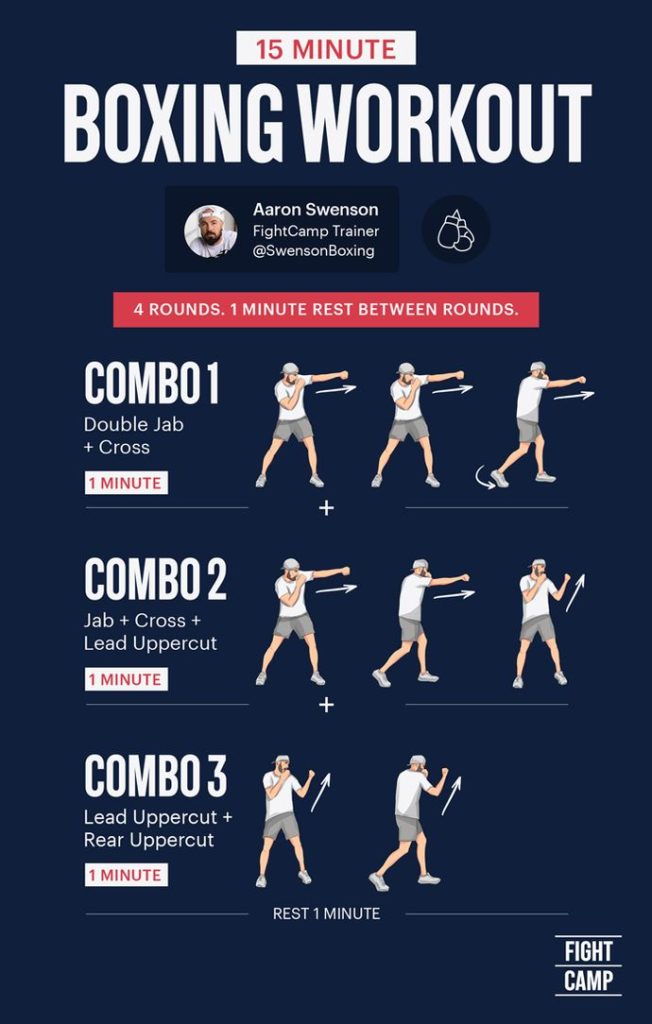
:format(jpeg)/f/115220/700x1100/2ee1539586/15-minute-at-home-boxing-workout-infographic.jpeg)
Credit: blog.joinfightcamp.com
Essential Equipment
Boxing workouts at home offer a fantastic way to stay fit without needing a gym membership. However, having the right equipment can elevate your workout from just throwing punches in the air to a full-fledged boxing session. Let’s dive into the essential gear you’ll need to get started.
Choosing The Right Gloves
Your boxing gloves are your best friends in this workout. Not only do they protect your hands, but they also enhance your performance. When picking gloves, consider the weight and fit. A snug fit prevents slipping, while the right weight can make a difference in your training intensity.
Think about your goals: Are you focusing on speed or power? Lighter gloves are great for speed, while heavier ones build strength. Personally, I found that a well-fitted pair kept my hands comfortable even during intense sessions.
Punching Bags Options
Punching bags are crucial for practicing your strikes. You have choices like hanging bags or freestanding ones. Hanging bags offer a more traditional experience, but freestanding bags are ideal if you’re short on space.
If you’re new to boxing, a lighter bag can be easier to manage. As your skills grow, you might want to switch to a heavier bag for more resistance. I’ve always appreciated how a good punching bag can make my living room feel like a mini-gym.
Skipping Ropes
Skipping ropes aren’t just for school kids; they’re a boxer’s secret weapon for cardio. They improve your footwork and boost your endurance. The key is to choose a rope that suits your height and skill level.
Adjustable ropes are perfect for beginners. They’re versatile and can be tailored to your needs. I remember the first time I included skipping in my workout; it was a game changer for my stamina.
Are you ready to step up your at-home boxing game? With the right equipment, your living room can transform into an effective training ground. What’s your first piece of equipment going to be?
Basic Techniques
Boxing workouts at home are an excellent way to stay fit. They help build strength, improve agility, and enhance coordination. Understanding basic techniques is essential to start your boxing journey. Proper techniques ensure effective workouts and reduce injury risk. Learn the basics to boost your confidence and enjoy the sport.
Stance And Footwork
Start with your feet shoulder-width apart. Keep your knees slightly bent for balance. Your dominant foot should be slightly back. This helps you stay grounded and agile. Your hands should be up to protect your face. Move lightly on your feet. Practice shifting your weight from one foot to the other. This footwork helps you remain quick and unpredictable. It forms the foundation for effective boxing.
Jabs And Crosses
The jab is a quick, straight punch. Extend your arm fully but don’t lock your elbow. Keep your fist tight and aim for your opponent’s nose or chin. The cross is a powerful punch from your dominant hand. Rotate your hips for extra force. Keep your opposite hand guarding your face. Practice alternating jabs and crosses. It builds rhythm and precision in your punches.
Hooks And Uppercuts
Hooks are circular punches aimed at the side of your opponent’s head. Keep your elbow bent and rotate your body. Uppercuts are upward punches targeting the chin. Bend your knees slightly for leverage. Rotate your hips to increase power. These punches require timing and accuracy. Practice them slowly to develop control. Incorporate hooks and uppercuts into your routine for a complete workout.
Warm-up Exercises
Starting your at-home boxing workout with the right warm-up exercises is crucial. A proper warm-up can enhance your performance, prevent injuries, and get your mind in the right place for an intense session. Dive into these routines to make sure your body is ready to throw those punches with power and precision.
Stretching Routine
Imagine your muscles as rubber bands—stretching them before a workout ensures they don’t snap under pressure. Begin with dynamic stretches like arm circles and leg swings. These movements are perfect for loosening up your joints.
Consider adding a few neck rolls and shoulder shrugs. They release tension and prepare your upper body for action. It’s like giving your body a gentle wake-up call, saying, “Hey, it’s time to get moving!”
What’s your favorite stretch? Share it with a friend, and you might discover a new routine that transforms your workout.
Cardio Preparation
Cardio preparation is the heartbeat of your warm-up. It gets your blood pumping and sets the rhythm for your workout. Start with jumping jacks or high knees for a quick boost.
Try a minute of shadowboxing. It lets you practice your technique while elevating your heart rate. You’ll feel the difference in your energy levels and readiness.
Have you ever noticed how your mood lifts after just a few minutes of cardio? It’s like an instant energy shot for your mind and body.
Incorporating these warm-up exercises can be a game changer. Not only do they prepare you physically, but they also set the tone mentally for a successful boxing workout. Are you ready to punch harder, move faster, and train smarter?
Core Boxing Workout
Are you looking to boost your boxing skills from the comfort of your home? The Core Boxing Workout is your answer. This workout focuses on building strength, agility, and technique, all essential components of boxing. No need for a gym membership or fancy equipment—your living room can transform into the perfect training ground.
Shadow Boxing Drills
Start with shadow boxing drills. This is where you practice punches and movements without a partner. Picture your opponent and focus on form. This drill helps improve your technique and footwork. Try moving around your space as you throw punches to simulate a real fight.
Set a timer for three-minute rounds. This mimics actual boxing rounds. Between each round, take a short break. This keeps your energy up and your mind focused. How does it feel to move freely and strike with precision?
Punch Combinations
Punch combinations are a great way to enhance your skills. Begin with basic combinations like jab-cross or hook-uppercut. Gradually increase complexity. Mixing punches challenges your brain and body simultaneously.
- Jab, Cross, Hook
- Uppercut, Jab, Cross
- Cross, Hook, Uppercut
Repetition is key. Focus on speed and accuracy. How quickly can you throw those punches while maintaining form?
Interval Training
Interval training adds intensity to your workout. Alternate between high-intensity bursts and short rest periods. This boosts your endurance and simulates real fight conditions.
Try 30 seconds of fast punches followed by 15 seconds of rest. Repeat this cycle multiple times. Gradually increase the duration of your high-intensity intervals. Can you maintain your speed and power as fatigue sets in?
By combining these elements, you create a comprehensive boxing workout at home. Each section builds your skills and endurance. Dive into this routine and discover the fighter within you.
Strength And Conditioning
Boxing workouts at home boost strength and conditioning. Punch combos build muscle and improve heart health. No gym needed for effective training.
Strength and conditioning are at the heart of an effective at-home boxing workout. Not only do they build your physical resilience, but they also enhance your performance in the ring. You don’t need fancy equipment or a gym membership to get started. With some simple exercises, you can significantly improve your power, speed, and endurance right from your living room.Push-ups And Sit-ups
Push-ups are fantastic for building upper body strength. They target your chest, shoulders, and triceps, which are crucial for powerful punches. Aim for multiple sets of push-ups, gradually increasing reps as your strength improves. Sit-ups, on the other hand, focus on your core, crucial for balance and stability. A strong core helps you maintain form and generate more power in your strikes. Mix in different sit-up variations to keep your routine challenging and effective.Squats And Lunges
Squats are excellent for developing leg strength and endurance. They work on your quads, hamstrings, and glutes, enhancing your footwork and ability to duck and weave. Incorporate different types of squats, like jump squats, to increase intensity. Lunges help in improving balance and coordination. They also target the lower body, contributing to your overall agility in the ring. Alternate between forward and reverse lunges to engage different muscle groups and keep your workout dynamic. While these exercises might seem simple, they are incredibly effective. Have you ever tried to punch without a strong base? It’s like trying to push a car uphill! With these exercises, you’ll feel stronger and more confident in your boxing skills. Strength and conditioning are not just about muscle. They shape your endurance, enhancing your ability to stay active longer. In boxing, that’s a game-changer. So, lace up your sneakers and get ready to pack a punch with your at-home workout!Cool Down And Recovery
After an intense boxing workout, cooling down is crucial. It helps the body transition from activity to rest. Recovery is just as important. It aids in repairing muscles and prevents soreness. This section focuses on effective cool-down and recovery techniques.
Breathing Techniques
Breathing deeply helps calm the nervous system. Inhale slowly through your nose. Fill your lungs completely. Hold the breath for a moment. Then, exhale through your mouth. Make sure it’s slow and steady. Repeat this process several times. It helps lower your heart rate. Breathing exercises also reduce stress. They improve overall well-being.
Muscle Relaxation
Muscle relaxation is vital after boxing. Start with gentle stretching. Focus on major muscle groups. Hold each stretch for 15 seconds. Do not push too hard. Use a foam roller for deeper relaxation. Roll it over sore areas. This reduces muscle tension. It also increases blood flow. Consider a warm bath as well. It soothes tired muscles and aids recovery.

Credit: www.pinterest.com
Tracking Progress
Tracking progress in your at-home boxing workout is essential. It keeps you motivated and on the right path. Knowing how far you’ve come helps you push harder. Stay focused on your fitness journey with clear tracking methods.
Setting Goals
Start by setting realistic goals. Aim for achievable milestones in your boxing workout. Write down what you want to accomplish. Short-term goals can keep you on track. Long-term goals inspire you to work towards big achievements.
Monitoring Improvements
Keep a record of your workouts. Note your progress after each session. Track the number of punches, rounds, or minutes spent. Compare your results weekly. See how your endurance and strength improve over time.
Use digital tools if you prefer. Fitness apps can offer detailed insights. They provide charts and graphs to visualize your progress. This can motivate you to stick to your routine.
Review your notes regularly. It helps identify areas for improvement. Celebrate small victories to boost your morale. Recognize patterns and adjust your workout plan accordingly. This ensures continuous growth.
Safety Tips
Boxing workouts at home offer a great way to stay fit. They are convenient and effective. But safety is crucial. Without proper precautions, injuries can occur. Understanding safety tips helps avoid harm and improves your workout quality.
Avoiding Injuries
Preventing injuries starts with a proper warm-up. Warm muscles are less prone to injury. Spend at least 10 minutes warming up. Stretch your arms, legs, and core. Use dynamic stretches for better results.
Listen to your body during workouts. Pain is a warning sign. If something hurts, stop immediately. Rest until the pain subsides. Hydration is another key aspect. Drink water before, during, and after exercise. It keeps your muscles functioning well.
Proper Form And Technique
Correct form is essential for effective boxing. Stand with feet shoulder-width apart. Keep knees slightly bent. Hands should be up, protecting your face. Elbows tucked in close to your body.
When punching, use your whole body. Engage your core and hips. Avoid swinging your arms wildly. Controlled movements reduce strain. Practice your punches slowly first. Focus on precision and control.
Footwork is also important. Move with light steps. Pivot on your feet smoothly. This prevents unnecessary strain. Maintain balance at all times. Proper technique enhances your workout and keeps injuries at bay.
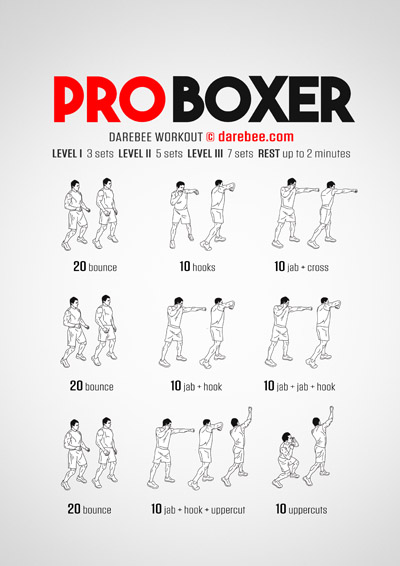
Credit: darebee.com
Frequently Asked Questions
Is Boxing At Home A Good Workout?
Yes, boxing at home provides an excellent workout. It enhances cardiovascular health, strength, and coordination. You burn calories and relieve stress effectively. With minimal equipment like gloves and a punching bag, it’s convenient and adaptable. Perfect for all fitness levels, boxing is a dynamic exercise routine.
Can I Train Myself Boxing At Home?
Yes, you can train boxing at home. Use online tutorials, practice techniques, and shadow boxing. Invest in basic equipment like gloves and a punching bag. Focus on footwork, speed, and strength exercises. Always prioritize safety and consider occasional professional guidance to ensure proper form and technique.
Is 30 Minutes Of Boxing A Good Workout?
Yes, 30 minutes of boxing is a great workout. It improves cardiovascular fitness, strength, and coordination. Boxing burns calories and reduces stress, making it effective for weight loss and mental health. This high-intensity workout boosts endurance and agility, offering a full-body exercise routine.
What Does 1, 2, 3, 4, 5, 6 Mean In Boxing?
In boxing, numbers 1 to 6 refer to punch types. 1 is a jab, 2 is a cross, 3 is a lead hook, 4 is a rear hook, 5 is a lead uppercut, and 6 is a rear uppercut. These numbers help in training and communication.
Conclusion
Boxing at home offers a fun and effective workout. It’s easy to start with just basic equipment. You can adjust intensity for your fitness level. Regular boxing boosts strength, speed, and endurance. Perfect for stress relief and mental focus. It’s a versatile workout for any schedule.
Invite a friend to join in for motivation. Stay committed and notice improvements over time. Remember, consistency is key for results. Enjoy your boxing journey!








