Are you ready to transform your living room into your personal gym and take the first step towards a healthier you? Starting your fitness journey at home can feel like a daunting task, especially if you’re new to working out.
But fear not! With the right guidance and a sprinkle of determination, you can achieve your fitness goals without ever stepping foot in a gym. Imagine the convenience of exercising at your own pace, in your own space, and without any judgment.
This is your chance to embrace a workout routine that fits seamlessly into your lifestyle. Stick with us, and you’ll discover how easy, fun, and rewarding a beginner at-home workout can be, tailored specifically for you. Let’s dive in and unlock the secrets to a healthier, more confident you!
Benefits Of Home Workouts
Starting a workout routine at home offers many benefits for beginners. It provides privacy and flexibility, allowing women to exercise at their own pace. Home workouts eliminate the need for expensive gym memberships and travel, making fitness more accessible and convenient.
Are you curious about the benefits of working out at home? As a beginner, home workouts offer more than just convenience. They provide a flexible environment where you can exercise freely without feeling judged. You’ll save time and money, all while fostering a sense of discipline and self-motivation. Plus, you can tailor your workout to fit your schedule and comfort level. Let’s delve deeper into the advantages of home workouts for females.Cost-effective
Home workouts eliminate the need for expensive gym memberships. You can start with minimal equipment like a yoga mat and dumbbells. Over time, as you get more comfortable, you might invest in additional gear. This approach allows you to build your workout arsenal gradually, without breaking the bank.Flexible Scheduling
Imagine finishing a workout before breakfast or squeezing in a session between meetings. Home workouts offer this flexibility. You can choose the time that suits you best, fitting exercise seamlessly into your daily routine. No more rushing to the gym or waiting for machines.Privacy And Comfort
Working out at home provides a private space where you can experiment without the fear of being judged. Maybe you’re trying a new routine or working on your form. At home, you have the freedom to make mistakes and learn at your own pace.Personalized Environment
You have control over your workout setting. Play your favorite music, adjust the lighting, or even exercise outdoors if you prefer. This personalized environment can boost your motivation and make workouts more enjoyable.Consistency And Habit Formation
Home workouts help in building a consistent routine. When exercise is just a room away, the barriers to starting are lower. Consistency is key to forming healthy habits that last. Consider setting a specific time each day for your workout to solidify this routine.Adaptable To Skill Level
Whether you’re a beginner or advancing in your fitness journey, home workouts can be tailored to meet your needs. Start with basic exercises and gradually increase complexity as you gain strength and confidence. There are countless online resources and apps that provide guided workouts suitable for all levels.Time Saver
Say goodbye to commuting. Home workouts save you precious time, allowing you to focus on what matters most. This extra time can be spent on meal preparation, relaxation, or hobbies, enhancing your overall well-being.A Community Awaits
You’re not alone in your home workout journey. There are online communities and social media groups where you can share progress, tips, and encouragement. Engaging with others can provide support and accountability, making your fitness journey more interactive and rewarding. Have you considered all these benefits? Which aspect of home workouts appeals to you the most?Essential Equipment
Starting your home workout routine can feel daunting, but having the right equipment makes all the difference. Investing in essential tools not only enhances your workout experience but also keeps you motivated. Let’s explore some must-have equipment that will transform your living room into an effective workout space.
Dumbbells And Resistance Bands
Dumbbells are incredibly versatile. With them, you can target different muscle groups, from your biceps to your glutes. Choose a weight that challenges you but doesn’t compromise your form. A pair of adjustable dumbbells can save space and adapt to your growing strength.
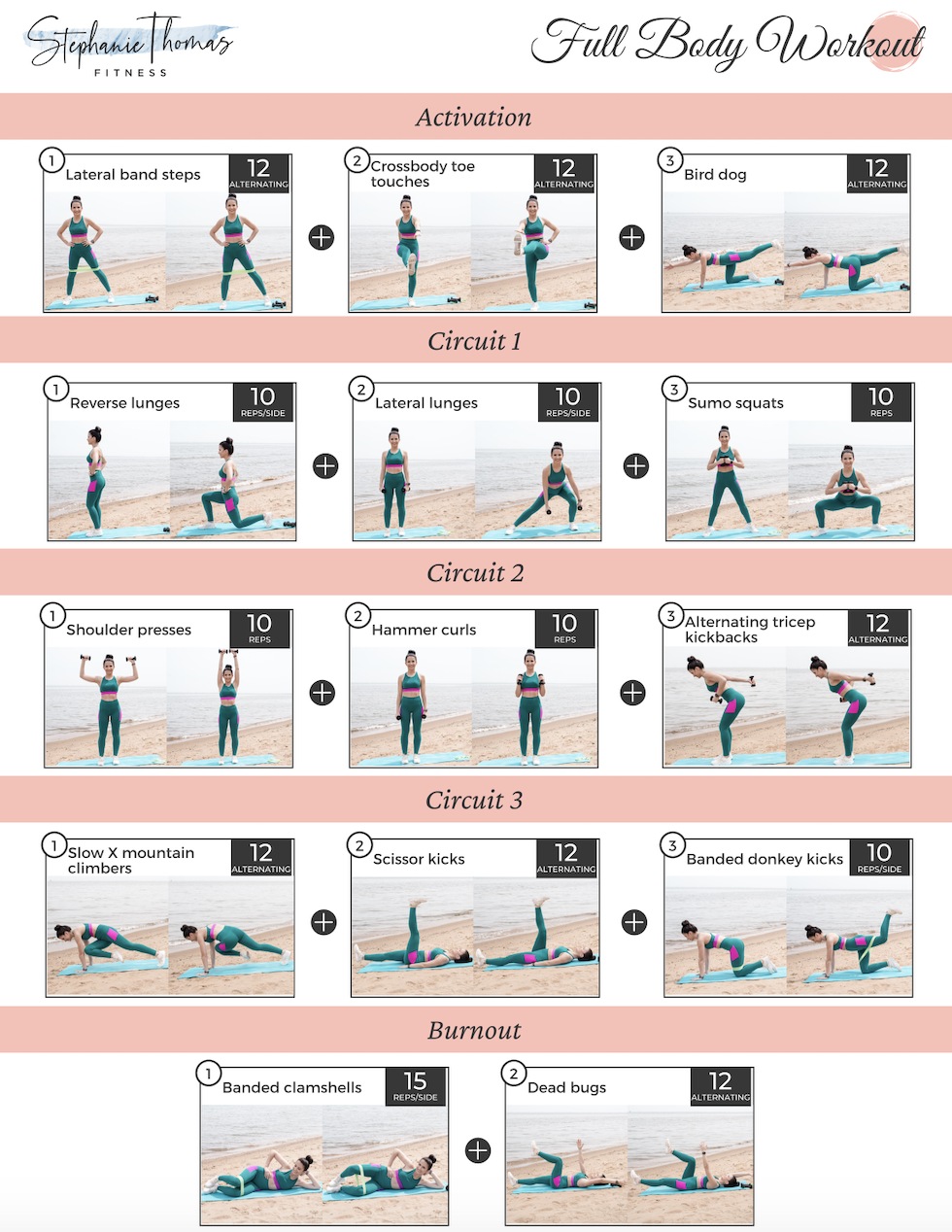
Resistance bands are another fantastic addition. They are lightweight and perfect for travel. Use them to add extra tension to your squats, lunges, and even push-ups. They come in different levels of resistance, giving you the flexibility to vary your workouts.
Yoga Mat And Stability Ball
A good yoga mat is essential for any floor exercises. It provides grip and cushioning, making your workouts more comfortable. Whether you’re practicing yoga or doing core exercises, a mat is your best friend.
The stability ball is a game-changer for core strengthening. It’s not just for ab workouts; you can use it for wall squats or even as a bench for chest presses. The instability it offers helps engage your muscles more effectively.
Optional Equipment
Once you get comfortable with the basics, you might consider adding a few optional pieces. Ankle weights can intensify leg workouts without bulk. They’re easy to strap on and can increase the challenge of simple moves.
A foam roller is excellent for muscle recovery. After a tough workout, it helps relieve tension and improve flexibility. Plus, it’s a great tool for a quick massage after exercising.
Think about what suits your goals and space. You don’t need everything at once, but a few thoughtful additions can keep your workouts exciting and effective.
What equipment have you found indispensable? Perhaps there’s something unique in your routine that others haven’t considered. Share your experiences and inspire fellow beginners to discover new possibilities in their home workouts.
Creating A Workout Space
Creating a workout space at home is essential for beginners. It helps maintain focus and boosts motivation. A dedicated area makes exercising more convenient. It ensures that you have everything you need within reach. Let’s explore how to set up this space effectively.
Choosing The Right Area
Pick a spot with enough room to move freely. Ensure it has good ventilation and natural light. This keeps the space fresh and energizing. Avoid crowded areas to minimize distractions. A quiet corner can be ideal for focused workouts.
Organizing Equipment
Keep your workout gear neatly arranged. Use shelves or bins to store items like mats, weights, and resistance bands. Label them for easy access. Arrange equipment by workout type. This saves time and keeps you organized.
Ensuring Safety
Check the floor for stability. Avoid slippery surfaces to prevent accidents. Ensure there’s enough space between equipment. This prevents injuries from overcrowding. Keep the area tidy to reduce tripping hazards.
Warm-up Routine
Starting a workout without a proper warm-up can lead to injuries. Warm-ups prepare the body for exercise by increasing heart rate and blood flow. They also help to loosen muscles and enhance flexibility. A good routine ensures you’re ready for action and reduces muscle strain.
Dynamic Stretches
Dynamic stretches involve moving parts of your body to stretch muscles. They are crucial for improving range of motion. Arm circles are a great way to start. Swing your arms in small circles to loosen shoulder muscles. Leg swings can prepare your legs for the workout. Stand on one leg and swing the other forward and backward. This increases flexibility and gets your blood moving.
Cardio Warm-up
Cardio warm-ups boost your heart rate and blood circulation. Jumping jacks are simple and effective. They get your whole body moving and elevate your energy levels. Marching in place is another easy option. Lift your knees high and pump your arms. This helps in waking up your muscles and gets you ready for more intense exercises.
Strength Training Basics
Strength training is essential for building muscle and boosting metabolism. It helps improve posture, balance, and overall fitness. For beginners, starting with simple exercises is key. Consistency and correct form are crucial for progress. This guide covers bodyweight exercises and using dumbbells at home.
Bodyweight Exercises
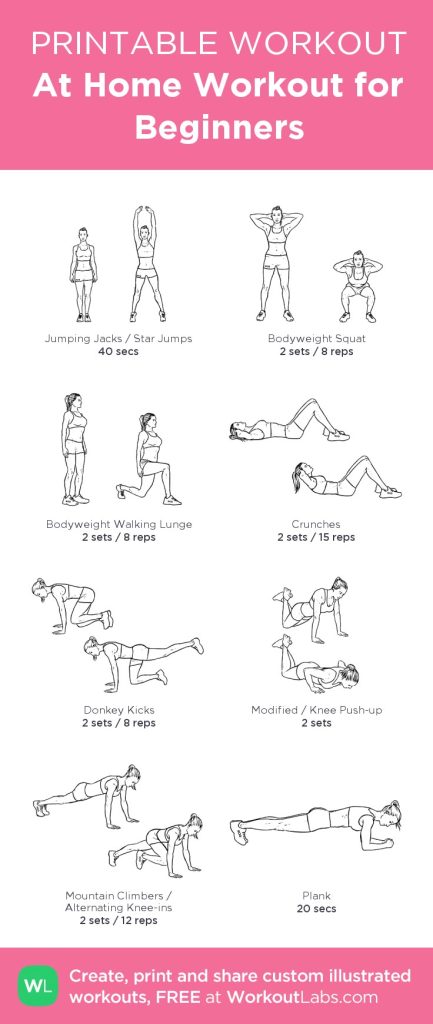
Bodyweight exercises are great for beginners. They require no equipment and can be done anywhere. Squats strengthen legs and core. Push-ups build arm and chest muscles. Planks enhance core stability. Lunges improve leg strength and balance. These exercises use your own weight for resistance. Focus on form to avoid injury. Start with a few repetitions, then increase gradually.
Using Dumbbells
Dumbbells add resistance to your workout. They are effective for building strength. Start with light weights. Gradually increase as you get stronger. Dumbbell curls target biceps. Overhead presses work shoulders and arms. Deadlifts strengthen the back and legs. Chest presses improve upper body strength. These exercises enhance muscle growth. Maintain proper form and balance during each move.

Credit: in.pinterest.com
Core Strengthening Exercises
Starting a workout routine at home can be a rewarding journey. Building core strength is essential for any fitness plan. Strong core muscles support balance and stability. They improve posture and reduce back pain. For beginners, focusing on core exercises is crucial. These exercises strengthen the muscles around the trunk and pelvis. Let’s dive into some effective core strengthening exercises.
Plank Variations
The plank is a fundamental exercise for core strength. It targets the entire core, including the abs and lower back. Start with a standard plank. Place your forearms on the floor and extend your legs. Keep your body in a straight line. Hold this position for 20-30 seconds. As you gain strength, try different plank variations. Side planks focus on the oblique muscles. Lift one arm towards the ceiling. Hold for 15-20 seconds on each side. Plank with leg lifts adds a challenge. Lift one leg while holding the plank position. This increases the intensity and engages more muscles.
Russian Twists
Russian twists are excellent for targeting the oblique muscles. Sit on the floor with knees bent. Lean back slightly, keeping your back straight. Hold your hands together at your chest. Twist your torso to the right, then to the left. Keep your core engaged throughout the exercise. For more challenge, hold a weight or a ball. Aim for 10-15 twists on each side. This exercise helps improve rotational strength. It also enhances flexibility and coordination.
Lower Body Workouts
Starting a lower body workout at home is perfect for beginners. Focus on exercises like squats and lunges. They help tone muscles and improve strength. No equipment needed. Enjoy a simple, effective routine. Suitable for women at any fitness level.
Embarking on a fitness journey at home can be both exciting and challenging, especially when you’re focusing on building a stronger lower body. Lower body workouts are essential for creating a balanced, powerful physique. They not only enhance your strength but also boost your metabolism and improve your overall posture. Whether you’re squeezing in a quick session before work or enjoying a full workout on the weekend, these exercises will help you achieve noticeable results.Squats And Lunges
Squats and lunges are the cornerstone of any lower body workout. They target your thighs, hips, and glutes, providing a comprehensive workout. Begin with the classic bodyweight squat. Stand with your feet shoulder-width apart, keep your back straight, and lower your hips as if sitting on a chair. Aim for three sets of 10 to 15 reps. Lunges add variety and improve balance. Step forward with one leg, lower your hips until both knees are bent at about a 90-degree angle. Alternate legs and complete three sets of 10 reps per leg. Feeling ambitious? Hold small weights in each hand for added resistance. Remember, consistency is key, and every squat and lunge counts towards your fitness goals.Glute Bridges
Glute bridges are perfect for targeting your glutes and hamstrings. They are simple yet effective, making them ideal for beginners. Lie on your back with your knees bent and feet flat on the floor. Lift your hips towards the ceiling, squeezing your glutes at the top. Hold for a second, then slowly lower back down. Perform three sets of 12 to 15 reps. You can intensify the workout by placing a weight on your hips. Glute bridges are not only great for strengthening but also help alleviate lower back pain. Feeling the burn? That’s your muscles getting stronger! Have you ever considered how these exercises can transform your daily routine? A stronger lower body can make everyday activities like climbing stairs and carrying groceries easier. So, why not start today and feel the difference?Upper Body Workouts
Upper body workouts are essential for a balanced fitness routine. These exercises strengthen muscles in the arms, chest, and shoulders. For women starting workouts at home, focusing on the upper body can build strength and improve posture. This section explores beginner-friendly exercises that target these areas effectively.
Push-ups And Variations
Push-ups are a classic exercise for upper body strength. They work the chest, shoulders, and arms. Start with the basic push-up. Keep your body straight and lower your chest to the ground. If it’s too hard, try knee push-ups. They are easier and help build strength gradually.
Once you’re comfortable, experiment with variations. Incline push-ups are great for beginners. Use a sturdy chair or bench. Place your hands on the surface and push-up. This reduces strain and makes the exercise manageable.
Tricep Dips
Tricep dips target the back of the arms. They are effective for toning and strengthening. Use a chair or low table for support. Sit on the edge, hands gripping the surface. Move your body forward, lower yourself by bending your elbows.
Keep your back close to the chair. Straighten your arms to lift your body. Repeat this motion for several repetitions. Tricep dips can be modified to suit your strength level. Start with fewer reps, then increase as you get stronger.
Cool Down And Stretching
Finishing your workout is just the beginning of recovery. Cooling down helps your body transition from exercise to rest. It lowers your heart rate and relaxes your muscles. This process is vital for preventing injury. Stretching further aids in reducing muscle tightness. It improves flexibility and circulation. These steps are crucial for feeling good after exercise.
Static Stretches
Static stretches involve holding a pose. They lengthen muscles and improve flexibility. Standing quad stretch is great for your legs. Hold your ankle behind you for 20 seconds. Try the seated forward bend for your back. Reach for your toes while sitting. These stretches help muscles recover quickly.
Breathing Techniques
Breathing deeply calms your mind and body. Inhale slowly through your nose. Fill your lungs completely. Exhale gently through your mouth. This slows your heart rate. It also reduces stress and tension. Controlled breathing enhances the relaxation effect. Practice these techniques after every workout.
Tracking Progress
Tracking progress in your workout journey is essential for motivation. Watching your improvement keeps you inspired. It helps you understand what works best. Tracking lets you see your achievements. It encourages you to push further. For beginners, a simple method is key. Focus on easy ways to track your progress.
Using A Journal
A journal helps keep your workout organized. Write down each exercise you do. Record the number of sets and reps. Note how you feel after each session. This helps you see patterns over time. A journal allows you to reflect on your progress. It shows you where you need to improve. You can also track your mood and energy levels. It’s a personal space for your thoughts and achievements.
Setting Achievable Goals
Set goals that you can reach. Start with small targets. Focus on short-term achievements. This keeps you motivated and focused. When goals are realistic, you feel more confident. It’s important to celebrate small victories. Each milestone encourages you to aim higher. Break your main goal into smaller steps. This makes the journey manageable and rewarding.
Staying Motivated
Finding motivation for home workouts can be challenging. Set small, achievable goals to keep spirits high. Celebrate progress to stay on track.
Staying motivated during a home workout can be challenging. Many beginners feel excited at first but struggle to maintain enthusiasm. Finding ways to stay motivated is key to achieving your fitness goals. Here are some practical tips to keep your energy high and your dedication strong.Finding A Workout Partner
A workout partner can boost your motivation. Share your fitness journey with someone you trust. This support system encourages consistency. You are less likely to skip a workout when someone is counting on you. Partners can offer encouragement and feedback. They make exercise feel less like a chore. It becomes a social activity. Find someone with similar goals. This ensures compatibility and mutual motivation. Together, you can celebrate each milestone.Incorporating Music
Music transforms your workout experience. Create a playlist that energizes you. Fast-paced tunes increase your heart rate. They make exercising more enjoyable. Music distracts from fatigue and discomfort. It can improve your mood and focus. Songs with strong beats help maintain rhythm. They keep you moving. Choose genres that inspire you. Switch up your playlist to avoid monotony. Music makes your solo workouts feel lively. It can be your personal cheerleader.
Credit: herzfitnessblog.wordpress.com
Credit: www.thalinepal.com
Frequently Asked Questions
How Should A Beginner Start Working Out At Home?
Start with bodyweight exercises like push-ups, squats, and lunges. Set a consistent schedule. Gradually increase intensity and duration. Incorporate stretching to enhance flexibility. Follow online workout videos for guidance and motivation.
How Do Beginners Start Exercising As A Woman?
Begin with low-impact activities like walking or yoga. Set realistic goals and gradually increase intensity. Incorporate strength training with light weights. Stay consistent and listen to your body. Hydrate and maintain a balanced diet for optimal results. Consider joining a class or using apps for guidance and motivation.
What’s The Best Workout Program For A Beginner Woman?
A beginner woman can start with a balanced workout program. Focus on strength training, cardio, and flexibility exercises. Include exercises like squats, push-ups, and brisk walking. Aim for 30 minutes, three times a week. Always prioritize proper form and listen to your body.
Gradually increase intensity as you progress.
What Is The 5-3-1 Rule In Gym?
The 5-3-1 rule is a strength training program focusing on compound lifts. It involves performing sets with 5, 3, and 1 rep schemes, progressively increasing weight each cycle to build strength. Ideal for individuals seeking gradual strength gains over time.
Conclusion
Starting a workout at home is simple and rewarding. Follow the steps outlined to build a strong routine. Consistency is key in seeing results over time. Remember, progress may be slow but it’s steady. Listen to your body and celebrate small victories.
Stay motivated by setting achievable goals each week. Explore different exercises to keep it fun and engaging. Keep pushing forward, and you’ll notice positive changes. Health and fitness are lifelong journeys. Enjoy each step of your personal fitness path. You’ve got this!








