Are you tired of trying to fit gym sessions into your already packed schedule? Imagine this: You can achieve a full-body workout in just 20 minutes, right in the comfort of your home.
No more traffic, no more waiting for machines, and no more excuses. This quick and effective routine is designed to fit seamlessly into your busy day, helping you stay fit and energized. With minimal equipment and maximum results, you’ll discover how easy it is to make fitness a part of your daily life.
Ready to transform your routine and boost your energy levels? Let’s dive into the ultimate 20-minute at-home workout that promises to keep you coming back for more.

Credit: www.dustandpine.com
Benefits Of Home Workouts
Home workouts are becoming more popular for many reasons. They offer flexibility, save time, and provide a comfortable space to exercise. You can start a workout without leaving your home. Let’s dive into the benefits of doing workouts at home.
1. Convenience and FlexibilityWorkouts at home fit into any schedule. No need to travel or wait for equipment. You can exercise early morning or late at night. Flexibility helps maintain a regular routine. This consistency boosts physical health.
2. Cost-EffectiveNo gym membership fees. You save money by exercising at home. No need for fancy equipment. Use your body weight or simple tools. This makes home workouts affordable for everyone.
3. Privacy and ComfortHome is a private space. You can exercise without feeling judged. Wear anything comfortable. No need to worry about gym fashion. This creates a stress-free environment for workouts.
4. Improved Mental HealthExercise boosts mood and reduces stress. Home workouts can calm the mind. They provide a break from daily routines. Short workouts can brighten your day. This leads to a happier, healthier you.
5. CustomizationCreate a workout plan that fits your needs. Focus on strength, cardio, or flexibility. Adjust routines as you progress. Home workouts allow personal growth. This keeps you motivated and engaged.
Essential Equipment
Getting fit at home doesn’t require fancy equipment. With just a few items, you can transform your space into a workout haven. These tools are budget-friendly and effective. Ready to elevate your 20-minute workout?
Resistance Bands
Resistance bands add intensity to your routine. They’re lightweight and easy to store. Use them for strength training and flexibility exercises. They come in various levels of resistance. Choose the right one for your fitness level. Great for toning muscles and improving strength.
Yoga Mat
A yoga mat provides comfort and stability. It protects your joints during floor exercises. Essential for exercises like planks, sit-ups, and stretches. Easy to roll up and store away. Choose a mat with good grip to prevent slipping.
Dumbbells
Dumbbells help build muscle strength. Available in different weights. Start with lighter weights and gradually increase. Perfect for arm, shoulder, and chest exercises. They enhance resistance training and improve muscle tone.
Jump Rope
A jump rope is excellent for cardio workouts. It boosts heart rate and burns calories fast. Jump ropes are inexpensive and portable. Great for improving coordination and balance. Just a few minutes can enhance your cardiovascular health.
Stability Ball
Stability balls support core strengthening. They help improve balance and posture. Use them for sit-ups and back exercises. They add variety to your workout. Choose a ball that fits your height for maximum effectiveness.
Warm-up Routine
Getting ready for a workout is just as crucial as the workout itself. A proper warm-up routine sets the stage for a safe and effective exercise session. By warming up, you prepare your muscles and joints, reducing the risk of injury and enhancing performance. So, what does a solid 20-minute at-home warm-up look like?
Dynamic Stretching
Dynamic stretching is a fantastic way to kick off your warm-up. Unlike static stretching, which involves holding a position, dynamic stretching is all about movement. Think about leg swings, arm circles, and torso twists. These movements get your blood flowing and increase your range of motion.
Try doing arm circles for about 30 seconds. Feel the muscles in your shoulders waking up. Follow this with some leg swings to loosen your hips. You might be surprised at how invigorated you feel afterwards. Your body will thank you for the added flexibility and readiness.
Light Cardio
After loosening up with dynamic stretches, it’s time to ramp up your heart rate with light cardio. This doesn’t mean you need to run laps around your living room. Simple activities like jogging in place or jumping jacks are perfect. These exercises elevate your heart rate and prepare your body for more intense activity.
Spend about 5 minutes on light cardio. You could start with a minute of jogging in place, followed by jumping jacks. Feel the energy surge through your body. Notice how your breathing becomes deeper and more rhythmic. This light cardio session is your body’s way of saying, “I’m ready for action!”
Consider how different your workout feels when you skip the warm-up. Without it, you might feel stiff or sluggish. But with a proper warm-up, you’re gearing up for success. What changes have you noticed when you take the time to warm up? Share your thoughts below!
Full-body Circuit
Welcome to the world of Full-Body Circuits. This workout packs a punch in just 20 minutes. Designed for efficiency, it targets every muscle group. No gym needed. Perfect for busy schedules.
Upper Body Exercises
Start with push-ups. They hit your chest and arms. Keep your body straight. Lower slowly, then push up. Try 10 reps. Next, grab some dumbbells. Do shoulder presses. Stand tall and press overhead. Feel your shoulders engage. Repeat for 10 reps.
Core Strengthening Moves
Focus on your core next. Planks are a must. Hold for 30 seconds. Keep your body straight. Feel your abs working. Then, switch to bicycle crunches. Lie down and lift your legs. Move them like pedaling a bike. Aim for 15 reps.
Lower Body Workouts
Finish with the lower body. Squats are your go-to. Stand with feet shoulder-width apart. Bend your knees and lower down. Rise back up slowly. Try 15 reps. Then, lunges. Step forward and bend both knees. Return to start. Alternate legs for 10 reps each.
Cool Down Techniques
Explore effective cool down techniques after a 20-minute home workout. Stretch muscles gently to prevent stiffness. Focus on deep breathing to relax your body and mind.
After you’ve powered through your 20-minute workout, it’s crucial to cool down properly. Cooling down helps your body transition smoothly from exercise mode to rest mode. It reduces muscle stiffness and promotes relaxation. Plus, it’s your chance to reflect on the effort you’ve put in. Let’s dive into some effective techniques to wrap up your workout session.Static Stretching
Static stretching involves holding a stretch for a period, usually between 15 to 60 seconds. This allows your muscles to elongate and relax. Imagine your muscles as elastic bands—they need time to settle back into their original form. Focus on major muscle groups like your hamstrings, quadriceps, and shoulders. A simple hamstring stretch can do wonders. Sit on the floor, extend your legs, and reach towards your toes. Feel the gentle pull as you breathe deeply. It’s a moment to celebrate your flexibility progress!Breathing Exercises
Breathing exercises are a powerful way to conclude your workout. They help lower your heart rate and calm your mind. Try this: sit comfortably, close your eyes, and take deep breaths through your nose. Hold for a few seconds, then exhale slowly through your mouth. Concentrate on the rhythm of your breathing. Feel the tension leaving your body with each exhale. Have you noticed how relaxed you feel? This simple practice reduces stress and enhances focus. Cooling down is not just a physical need; it’s a mental one too. What cool down techniques work best for you? Share your thoughts and let’s learn from each other!Tips For Staying Motivated
Staying motivated during a 20-minute home workout can be challenging. With distractions at home, it’s easy to lose focus. Yet, motivation is key to maintaining a consistent routine. Here are simple tips to keep your energy high and your workouts on track.
Set Clear Goals
Define what you want to achieve with your workouts. Is it strength, flexibility, or endurance? Write these goals down. They will serve as a reminder and keep you on the path to success.
Create A Dedicated Space
Set aside a specific area in your home for exercise. This space should be free from clutter and distractions. A dedicated spot helps you switch into workout mode quickly.
Follow A Schedule
Plan your workouts for the same time each day. Consistency builds habit. Treat this time as an important appointment that you cannot miss.
Track Your Progress
Keep a journal or use a fitness app to log your workouts. Seeing progress over time boosts motivation. Celebrate small victories to stay encouraged.
Mix Up Your Routine
Variety keeps your workouts interesting. Try different exercises or change the order. Mixing things up prevents boredom and challenges your body in new ways.
Use Music Or Videos
Music can lift your mood and energy levels. Create a playlist with your favorite workout songs. Alternatively, follow online workout videos for guidance and motivation.
Stay Hydrated And Nourished
Drink water before, during, and after your workout. Eating a light snack beforehand can also provide energy. Proper hydration and nutrition keep your body ready for exercise.
Join A Community
Find online groups or forums of people with similar goals. Sharing your journey with others fosters encouragement. It can also provide accountability and support.
Adjusting Workout Intensity
Boost workout results by adjusting exercise intensity. Short bursts of effort can increase heart rate effectively. A 20-minute home workout can be tailored to your fitness level, making it versatile and convenient.
Adjusting workout intensity is a critical aspect of any effective 20-minute home exercise routine. Whether you’re a beginner or a seasoned athlete, finding the right balance in your workout intensity can make or break your fitness goals. It’s about knowing when to push harder and when to ease off, ensuring you get the most out of every minute.Understanding Your Limits
Knowing your limits is key to adjusting workout intensity. You want to challenge yourself, but not to the point of exhaustion or injury. Start with a pace that feels comfortable. Gradually increase your speed or resistance as your body adapts. Listen to your body—if you’re feeling too strained, it’s okay to take a step back.Using Heart Rate As A Guide
Monitoring your heart rate can provide insights into your workout intensity. A heart rate monitor or fitness tracker can help you stay in the optimal zone for your fitness level. Aim for a moderate intensity where you’re breathing faster but can still hold a conversation.Incorporating Interval Training
Interval training is an effective way to manage workout intensity. Alternate between bursts of high-intensity activity and periods of rest or lower intensity. This technique maximizes calorie burn and keeps your workout dynamic. You could sprint for 30 seconds, then walk or jog for a minute before repeating.Adjusting Based On Progress
As you become fitter, your workout should evolve. If a routine feels too easy, increase the difficulty by adding weights or more challenging exercises. Reflect on your progress regularly—are you reaching your fitness goals?Personal Story: Finding My Balance
When I started home workouts, I underestimated the importance of adjusting intensity. I pushed myself too hard, too soon, and felt burnt out quickly. Learning to pace myself and listen to my body was a game-changer. It made my workouts more sustainable and enjoyable. Have you found your perfect intensity balance yet?
Credit: spotebi.com
Tracking Progress
Keep track of your progress with a 20-minute home workout. Short, daily sessions help you stay fit. Simple exercises boost energy and improve strength, making it easy to follow your fitness journey.
Tracking your progress in a 20-minute home workout is crucial for staying motivated and reaching your fitness goals. Whether you’re just starting or have been exercising for a while, knowing how far you’ve come can boost your confidence and help you improve. Let’s dive into some practical strategies to keep track of your workout achievements.Set Clear Goals
Start by setting specific, measurable goals. Are you aiming to increase the number of push-ups you can do in one set? Or perhaps you want to cut down your time on the plank? Define what success looks like for you. Write these goals down and keep them visible. It could be on a sticky note on your mirror or a digital note on your phone. Seeing your goals frequently will remind you of your commitment.Use A Workout Journal
A workout journal is a fantastic tool for tracking progress. Record the exercises you perform, the number of reps, and how you feel after each session. You don’t need fancy apps; a simple notebook works just fine. This habit will help you notice patterns and areas where you might need to push harder or ease up.Celebrate Small Wins
It’s easy to overlook small victories, but they are essential. Did you manage one more squat than yesterday? Celebrate it! These small wins accumulate over time, and acknowledging them keeps your motivation alive. You might even reward yourself with something small, like an extra rest day or a new workout playlist.Regular Progress Check-ins
Schedule regular check-ins to assess your progress. Maybe every two weeks, revisit your goals and your journal entries. Ask yourself: Are you getting closer to your targets? Do you need to adjust your workout routine? This reflection helps you stay on track and make informed decisions about your fitness journey.Leverage Technology
Utilize technology to aid your progress tracking. Fitness apps can simplify logging your workouts and offer insights into your improvements. Consider using apps that provide graphs and statistics to visualize your progress. These visual representations can be powerful motivators when you see how much you’ve achieved.Seek Accountability
Sharing your goals with a friend or family member can boost your accountability. Ask them to check in with you about your progress. You might even consider joining online fitness communities. Engaging with others on a similar journey can provide support and encouragement.Reflect On Personal Experiences
Think about past successes in other areas of your life. Remember how tracking progress helped you succeed before? Apply those lessons to your workout routine. Reflecting on personal triumphs can reinforce the importance of tracking in your current journey. It shows you that progress is achievable and worth the effort.Ask Yourself Important Questions
Consider questions like: Are my goals realistic? Am I enjoying the process? How can I make my workouts more effective? These questions not only help you stay engaged but also ensure your workouts align with your overall wellbeing. Tracking progress isn’t just about numbers; it’s about feeling good and staying committed.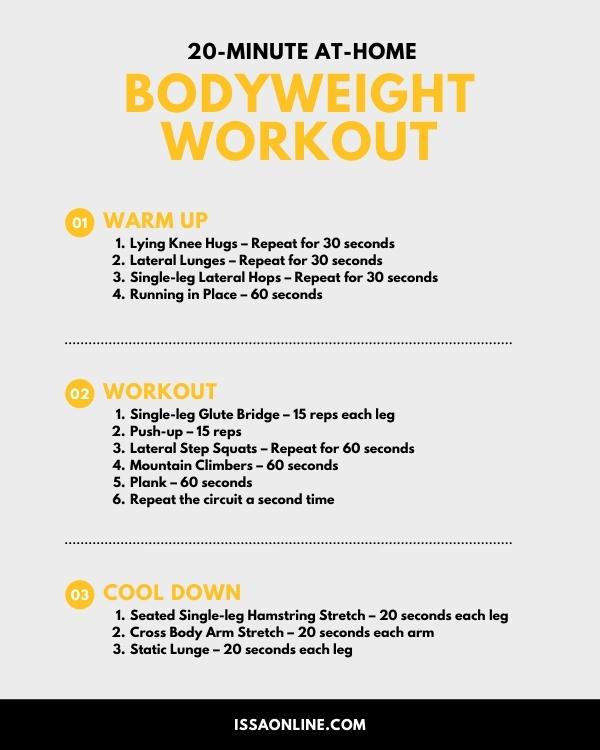
Credit: www.issaonline.com
Frequently Asked Questions
Can A 20-minute Workout Be Effective?
Yes, a 20-minute workout can be effective. Consistency and intensity are key. Short, high-intensity sessions boost metabolism, improve cardiovascular health, and build strength. Tailor exercises to your fitness level for best results.
Is It Possible To Burn 500 Calories In 20 Minutes?
Yes, it’s possible but challenging. High-intensity exercises like sprinting or vigorous cycling can achieve this. Maintaining maximum effort is crucial. Always consult a fitness professional to ensure safety and effectiveness.
Does Walking 20 Minutes A Day Count As Exercise?
Yes, walking 20 minutes daily is exercise. It improves cardiovascular health, boosts mood, and burns calories. Regular walking can enhance fitness levels and support overall well-being. Incorporating this habit into your routine contributes to a healthier lifestyle. Stay consistent for maximum benefits.
How To Burn 400 Calories In 20 Minutes?
Engage in high-intensity interval training (HIIT) with exercises like burpees, sprints, or jump rope. Maintain maximum effort and short rest intervals. Include exercises that target multiple muscle groups for efficiency. Consistency and intensity are key to burning calories rapidly. Always warm up before starting and cool down afterward.
Conclusion
A 20-minute workout at home can change your fitness journey. It fits into busy schedules easily. No need for fancy equipment or a gym membership. Just dedication and consistency matter. Start today and feel the benefits soon. More energy. Better mood.
Improved health. Each session brings you closer to your goals. So, set your timer and get moving. Remember, every minute counts. Keep pushing, and don’t give up. Your future self will thank you for it. Stay active and enjoy the journey.
You got this!








