Are you tired of the same old workout routine? Do you want to feel the burn without ever stepping foot in a gym?
Circuit training workouts at home might be just what you need. Imagine transforming your living room into a powerhouse of fitness, where every corner becomes a new challenge and every session leaves you buzzing with energy. You don’t need fancy equipment or a personal trainer; all you need is a little space, some creativity, and the willingness to push your limits.
With circuit training, you can achieve your fitness goals in less time than you think. It’s fun, versatile, and perfect for you, no matter your fitness level. Ready to discover how you can turn your home into the ultimate fitness studio and get the results you crave? Keep reading, and let’s dive into the world of at-home circuit training!

Credit: fitasamamabear.com
Benefits Of Circuit Training
Thinking about the benefits of circuit training can inspire you to rethink your workout routine. It’s not just about getting fit; it’s about optimizing your time and seeing significant results without fancy equipment. You can enhance your strength, boost your endurance, and enjoy a dynamic workout—all from the comfort of your home. Imagine feeling the burn in less time and with more excitement than traditional workouts.
What Makes Circuit Training Effective?
Circuit training combines several exercises with minimal rest. This keeps your heart rate up and maximizes calorie burning. You perform each exercise in quick succession, targeting different muscle groups. This variety not only keeps the workout interesting but also ensures a comprehensive fitness approach. You get cardio, strength, and flexibility all in one session.
Time Efficiency: More Results In Less Time
Busy schedule? Circuit training is your friend. You can complete a full-body workout in 30 minutes or less. This efficiency means you can squeeze in a session before work, after dinner, or even during lunch breaks. It’s perfect for anyone who feels they don’t have enough hours in the day. More time for other activities, while still keeping fit.
Adaptability: Tailor To Your Needs
No gym membership? No problem. Circuit training at home is adaptable to your space and equipment. You can use bodyweight exercises or incorporate dumbbells, resistance bands, or household items. This flexibility allows you to tailor your workouts to your goals and preferences. You have the freedom to change exercises and intensity as needed.
Mental Engagement: Keep Your Mind Interested
Ever get bored during long workouts? Circuit training keeps your mind engaged by constantly switching exercises. The variety prevents monotony and keeps you focused. This mental engagement can make your workouts more enjoyable. You might even find yourself looking forward to your next session.
Challenge Yourself: Push Your Limits
Circuit training challenges you to push through fatigue and improve your endurance. You set goals, track your progress, and celebrate small victories. It’s rewarding to see improvements in your strength and stamina. You realize that you’re capable of more than you initially thought. How far can you push your limits?
Ready to add circuit training to your routine? You might discover a new favorite workout method that keeps you motivated and fit. What changes will you make today?

Credit: www.pinterest.com
Essential Equipment
Circuit training at home needs basic gear like dumbbells, a mat, and resistance bands. These tools help create effective workouts. A jump rope can add cardio.
Essential equipment makes circuit training at home effective and fun. With the right gear, workouts become varied and challenging. You don’t need a gym to achieve fitness goals. Some equipment is simple and already at home. Other items are small, affordable, and easy to store. Here’s a guide to essential equipment for your home circuit training.Bodyweight Options
Bodyweight exercises need no extra gear. Your own body provides resistance. Simple moves like push-ups and squats are effective. Planks strengthen your core without equipment. Jumping jacks boost heart rate and burn calories. Lunges target legs and improve balance. Burpees provide a full-body workout. Use variations to increase difficulty. Adjust speed for more intensity.Minimal Gear Choices
Minimal gear adds variety to workouts. Resistance bands are portable and versatile. They enhance strength training and flexibility. Dumbbells offer more resistance for muscle growth. Choose a weight that challenges you. A yoga mat provides comfort during floor exercises. It protects your joints and stabilizes movements. Kettlebells are compact and great for dynamic exercises. They improve strength and cardio fitness. Consider a jump rope for high-intensity cardio sessions. It’s small, affordable, and effective.Designing Your Circuit
Designing your circuit workout at home can be exciting and rewarding. It offers flexibility and personalization, allowing you to tailor the exercises to fit your needs. Whether you aim to build strength, improve endurance, or boost overall fitness, a well-designed circuit can help you achieve your goals.
Choosing Exercises
Select exercises that target different muscle groups for balanced workouts. Incorporate a mix of cardio, strength, and flexibility exercises. Include jumping jacks for cardio, push-ups for upper body strength, and squats for lower body power. Consider your fitness level and adjust the intensity accordingly.
Setting Reps And Rounds
Define the number of repetitions for each exercise to match your fitness level. Beginners may start with 8-10 reps, while advanced individuals can aim for 15-20 reps. Decide on the number of rounds to complete. Two to three rounds can provide an effective workout session. Monitor your progress and increase reps or rounds as you improve.
Sample Workouts
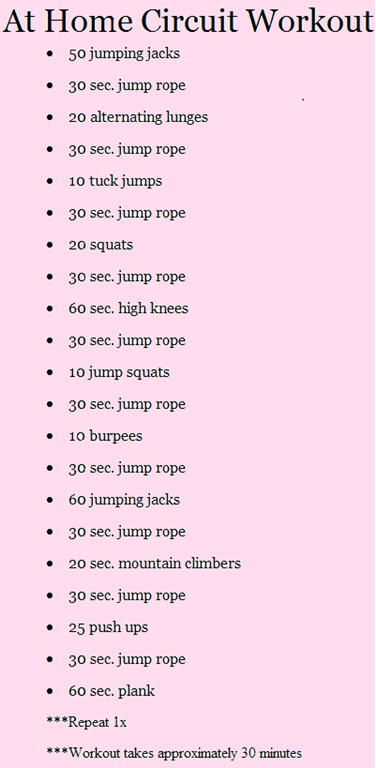
Circuit training workouts at home offer flexibility and efficiency. These workouts combine cardio and strength exercises, providing a full-body workout. You don’t need fancy equipment or a gym membership. Just some space, dedication, and a routine to follow. Below, you’ll find sample workouts tailored for different fitness levels. Whether you’re just starting or seeking a challenge, there’s something for you.
Beginner Routine
Start with a simple circuit to build your foundation. This workout focuses on basic movements. It helps improve strength and endurance. Perform each exercise for 30 seconds. Rest for 15 seconds between exercises.
- Jumping Jacks
- Bodyweight Squats
- Push-ups (on knees if needed)
- Plank Hold
- High Knees
Complete the circuit two times. Take a one-minute break between rounds. This routine keeps your heart rate up and muscles engaged.
Advanced Routine
Challenge yourself with this advanced circuit workout. It incorporates more complex exercises for a higher intensity. Perform each move for 45 seconds. Rest for 15 seconds between exercises.
- Burpees
- Plyometric Lunges
- Diamond Push-ups
- Side Plank Rotations
- Mountain Climbers
Complete the circuit three times. Rest for two minutes between rounds. This routine pushes your limits and improves overall fitness.
Incorporating Cardio
Cardio is the heartbeat of any effective circuit training workout, bringing the energy and intensity to your routine right from your living room. Whether you’re aiming to torch calories, boost your stamina, or simply break a sweat, adding cardio can make all the difference. But how do you add cardio to your home workouts without feeling overwhelmed?
High-intensity Intervals
High-Intensity Interval Training (HIIT) is a powerful way to elevate your heart rate quickly. It’s all about short bursts of intense activity followed by brief rest periods. Imagine sprinting in place for 30 seconds, then catching your breath for 15 seconds. Repeat this cycle a few times, and you’re on your way to a heart-pumping workout.
These intervals challenge your body to push through fatigue, enhancing cardiovascular health and burning calories efficiently. Plus, they’re perfect for those days when you’re short on time but still want maximum results.
Low-impact Alternatives
If jumping and sprinting don’t appeal to you, low-impact cardio options are your friend. Think about marching in place, stepping side-to-side, or doing gentle knee lifts. These activities still get your heart rate up, but they are kinder to your joints.
Low-impact exercises are especially beneficial for beginners or anyone dealing with injuries. They offer a sustainable way to stay active while minimizing strain. Ever tried dancing to your favorite tunes? It’s a fun, low-impact way to get your cardio in without even realizing you’re exercising!
Whether you choose high-intensity intervals or low-impact alternatives, the key is consistency. How will you keep your cardio routine exciting and effective at home?
Tracking Progress
Keep track of progress with circuit training workouts at home. Monitor reps and sets to see improvements. Stay consistent and adjust routines for better results over time.
Tracking your progress is essential when doing circuit training workouts at home. It helps you understand where you started, what you’ve accomplished, and where you’re heading. By keeping track, you can adjust your workouts to make them more effective and stay motivated.Using Fitness Apps
Fitness apps are a fantastic way to track your circuit training progress. They offer a variety of features, like setting goals, tracking exercises, and even providing workout reminders. Many fitness apps allow you to input the details of your workouts, such as reps, sets, and duration. Over time, you can see your progress through graphs and charts. This visual representation is a powerful motivator, showing you how far you’ve come. Have you ever tried using an app to log your workouts? If not, consider starting with a free one to see how it can enhance your routine. You might find it’s easier to stay on track when you see your progress in real-time.Keeping A Workout Journal
A workout journal is a more personal and tangible way to track your progress. Writing down your exercises, feelings, and results can be incredibly rewarding. Unlike apps, a journal allows for a more reflective process. You can jot down thoughts about what went well or what was challenging. This practice not only tracks your physical progress but also your mental journey. Why not try writing a few sentences about each workout session? You might discover patterns or preferences in your training that you hadn’t noticed before. Plus, flipping through pages of accomplishments can be a great morale booster. Tracking your progress doesn’t have to be a chore. Whether you choose a fitness app or a journal, the key is to find what works best for you. How do you keep track of your progress?Safety Tips
Staying safe during circuit training at home is crucial. Proper safety measures prevent injuries and enhance workout effectiveness. Understanding your body’s limits and using correct techniques ensures a rewarding exercise session.
Proper Form
Maintaining proper form is essential in circuit training. Incorrect postures can lead to strains. Always align your body correctly during exercises. This reduces the risk of injury. Keep your back straight and engage your core. Watch tutorial videos for guidance. Practice in front of a mirror. This helps in self-correction.
Preventing Injuries
Warm up before starting your circuit training. This prepares your muscles and joints. Include dynamic stretches. These improve flexibility and reduce tension. Listen to your body closely. Stop if you feel any pain. Rest days are important. They allow your body to recover. Use supportive footwear to protect your feet. Ensure your workout area is clear of obstacles. This minimizes the risk of accidents.

Credit: www.pinterest.com
Frequently Asked Questions
Can You Do Circuit Training At Home?
Yes, you can do circuit training at home. Use bodyweight exercises like push-ups, squats, and lunges. Incorporate cardio moves like jumping jacks and burpees. Create a routine with minimal equipment, such as resistance bands or dumbbells. Stay consistent to see results and improve fitness levels.
What Is The 4-2-1 Workout Method?
The 4-2-1 workout method involves four seconds of eccentric movement, two seconds of pause, and one second of concentric action. This technique enhances muscle growth and strength by focusing on controlled movements. It’s popular among fitness enthusiasts for maximizing workout efficiency and improving overall performance.
Is 20 Minutes Of Circuit Training Enough?
Twenty minutes of circuit training can be effective for fitness and calorie burning. It boosts metabolism and enhances cardiovascular health. Consistency and intensity are key to maximizing benefits. Adjust exercises and intensity based on personal fitness goals.
What Are 5 Disadvantages Of Circuit Training?
Circuit training can be tough for beginners due to its intensity. It might lead to muscle fatigue quickly. Limited rest periods can impact performance. Access to varied equipment can be challenging. Incorrect form risks injury.
Conclusion
Circuit training at home offers flexibility and convenience. You can stay fit without leaving your house. These workouts need minimal equipment, saving money and space. They combine strength and cardio, boosting your fitness levels quickly. Consistent practice leads to better endurance and muscle tone.
Plus, you can easily adjust exercises to match your fitness level. No need for a gym membership or travel time. Just dedication and a bit of space. Start today and enjoy the benefits of a healthier lifestyle right at home.








