Affiliate Disclosure: This post may contain affiliate links. If you purchase through links on our site, we may earn an affiliate commission at no extra cost to you.
Are you tired of spending hours at the gym without seeing the muscle gains you desire? You’re not alone.
Many people struggle to find the perfect balance in their workout routines. The key to unlocking your muscle-building potential might just lie in understanding how many sets per exercise you should be doing. This seemingly simple question can be the game-changer in your fitness journey.
Imagine having a clear roadmap to maximize your results and finally seeing the progress you’ve been working so hard for. Ready to discover the secret that could transform your workouts? Let’s dive in and uncover how adjusting your sets can lead to the muscle growth you’ve always dreamed of.
Credit: levelsprotein.com
Basics Of Muscle Building
Building muscle requires understanding some basic principles. It’s not just about lifting weights. You need to know how your muscles grow. Consistent effort and the right approach matter. Let’s dive into the essentials of muscle building.
Role Of Sets And Reps
Sets and reps play a key role in muscle growth. A rep is one complete movement of an exercise. A set is a group of consecutive reps. For muscle building, aim for 3 to 4 sets per exercise. Each set can have 8 to 12 reps. This range helps maximize muscle tension. It also promotes muscle growth effectively.
Importance Of Progressive Overload
Progressive overload is crucial for muscle building. It involves gradually increasing workout intensity. This can be through more weight or more reps. Your muscles need new challenges to grow. Without progressive overload, growth will stall. Keep track of your progress. Aim to lift a bit more each week. This will ensure continuous muscle development.
Determining Optimal Sets
Building muscle requires choosing the right number of sets per exercise. Studies suggest three to five sets for best results. Adjust based on fitness level and goals.
Determining the optimal number of sets per exercise is essential for building muscle effectively. The right balance can accelerate muscle growth while the wrong approach may hinder progress. Let’s break down the factors that influence the number of sets and how to balance volume and intensity for maximum gains.
Factors Influencing Set Numbers
Several elements dictate how many sets you should perform. Your fitness level plays a significant role. Beginners might start with fewer sets to avoid overtraining. Advanced lifters can push their limits with more sets, harnessing their experience. Goals are another key factor. If your aim is muscle endurance, you may focus on higher repetitions with fewer sets. For hypertrophy, increasing sets with moderate reps tends to be more effective. Recovery time is crucial. Listen to your body. If you’re feeling fatigued after a few sets, it might be a signal to stop. Prioritize quality over quantity. Are you pushing yourself too hard or too little?
Balancing Volume And Intensity
Finding the right balance between volume and intensity is vital. Volume refers to the total amount of weight lifted, while intensity is about how hard you push in each set. Higher volume generally means more sets with lighter weights. This approach can enhance muscle endurance and growth. But, don’t forget intensity. Lifting heavier weights with fewer reps can build strength and muscle mass. Think about this: Are you mixing up your workouts to keep your muscles guessing? Variety prevents plateauing and keeps your progress steady. Consider practical examples. If you’re doing squats, try three sets with moderate weight and eight reps. Adjust as needed based on your energy levels and muscle response. Personalize your approach. Remember, your progress is unique. Experiment to discover what works best for you. Are you ready to find your optimal set numbers and achieve your muscle-building goals?
Training Experience Levels
Understanding the number of sets per exercise is crucial for muscle growth. Training experience levels play a significant role in determining how many sets you should perform. Each level requires a different approach to maximize results and prevent injury.
Beginner Guidelines
Beginners should focus on mastering form and technique. Start with 2-3 sets per exercise. This helps build a strong foundation. Keep repetitions between 8 to 12. This range supports muscle endurance and strength. Rest 60 to 90 seconds between sets. Consistent practice improves confidence and skill.
Intermediate Strategies
Intermediate lifters can increase sets to 3-4 per exercise. This level benefits from more volume. Aim for 6 to 10 repetitions per set. This range enhances muscle hypertrophy. Rest periods can be shorter, around 60 seconds. Mixing exercises boosts growth and prevents plateaus.
Advanced Techniques
Advanced lifters require higher intensity and volume. Perform 4-5 sets per exercise. Repetitions can vary from 5 to 8 per set. This supports maximal strength and muscle definition. Rest 30 to 60 seconds between sets. Varying exercises challenges muscles further. Advanced training demands focus and precision.
Different Muscle Groups
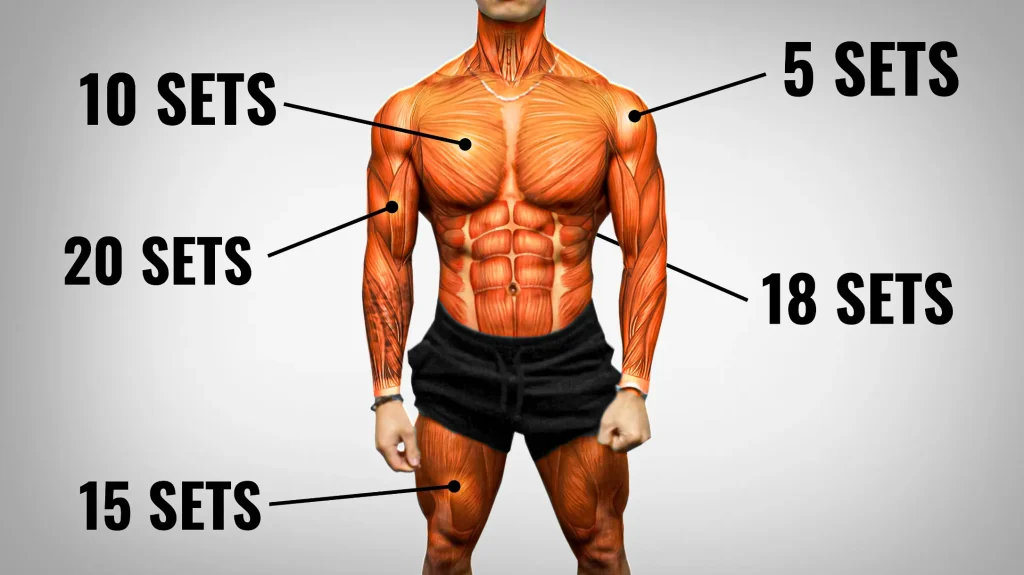
Building muscle effectively depends on the number of sets per exercise. Generally, 3-4 sets target major muscle groups efficiently. This approach aids in stimulating muscle growth and enhancing strength. Tailor the set count based on individual fitness levels and goals.
Understanding the number of sets needed per exercise to build muscle often depends on the muscle group you’re targeting. The body is a complex network of large and small muscle groups, each requiring a tailored approach for optimal growth. Knowing how to adjust your workout accordingly can be the key to faster, more efficient muscle gains.
Large Muscle Groups
Large muscle groups, like the chest, back, and legs, have a significant impact on your overall strength and physique. These muscles typically require more sets per exercise because they can handle heavier loads and longer sessions. Aim for 3 to 5 sets per exercise to effectively challenge these muscles. In my experience, when I first increased my set count for squats from 2 to 4, I noticed a marked improvement in both strength and muscle size. It was a game changer. Have you considered how increasing your set count might change your results?
Small Muscle Groups
Small muscle groups, such as the biceps, triceps, and calves, generally need fewer sets per exercise. These muscles fatigue faster and recover quicker, so 2 to 3 sets are usually sufficient. Focusing on quality over quantity can yield better results. Once, I experimented by reducing my bicep curl sets from 4 to 2 while increasing the intensity. Surprisingly, my arms responded better to the reduced workload. Have you ever tried changing your set strategy for smaller muscles to see what works best? Understanding the needs of different muscle groups can transform your workout routine. By tailoring the number of sets to match each muscle group’s characteristics, you can maximize your muscle-building efforts.
Scientific Research On Sets
Researchers explore ideal sets per exercise for muscle growth. Studies suggest 3 to 5 sets can boost muscle gains. Consistency and proper form also play key roles in effective workouts.
Building muscle is not just about lifting weights; it’s about understanding the science behind your workout routine. When you think about how many sets per exercise you should be doing, it’s crucial to look at what scientific research says. The number of sets can significantly impact your muscle growth. Let’s dive into the findings from scientific studies and expert recommendations.
Studies And Findings
Scientific studies have tried to decode the perfect number of sets for muscle growth. Researchers often conduct experiments with different groups performing varying numbers of sets. One study found that doing multiple sets, typically three to five, leads to better muscle hypertrophy compared to a single set. The participants who engaged in more sets showed noticeable gains in muscle size and strength. Interestingly, another research suggested that while more sets can be beneficial, the quality of your workout and your consistency also play a pivotal role. So, if you’re hitting the gym regularly, you might want to consider upping your sets for maximum results. But remember, quality should never be compromised for quantity.
Expert Recommendations
Experts in the fitness world often weigh in with their recommendations based on scientific insights. Many suggest a range of three to five sets per exercise as optimal for building muscle. Fitness trainers emphasize that your goals should guide the number of sets. If your aim is to increase muscle size, more sets might be beneficial, but if you’re looking for endurance, fewer sets might suffice. Experts also highlight the importance of listening to your body. Are you feeling fatigued or energized? Adjust your sets accordingly to maintain a balance that keeps you motivated and injury-free. Consider asking yourself: Are you pushing your limits, or just going through the motions? This simple question can help you decide if you need to tweak your routine for better results. Ultimately, the best approach is to mix scientific understanding with personal experience. As you experiment with different set numbers, keep track of your progress and adjust as needed. This way, you create a tailored workout that suits your body and goals perfectly.
Common Mistakes To Avoid
Choosing too few sets can limit muscle growth. On the other hand, doing too many sets may lead to fatigue and poor form. Balancing sets according to your fitness level is crucial for effective muscle building.
Building muscle is a journey filled with enthusiasm, but it’s easy to make mistakes along the way. Knowing how many sets per exercise is just part of the equation. Avoiding common pitfalls can save you time and effort, ensuring you reach your fitness goals effectively. This section will highlight some common mistakes to avoid, with a focus on overtraining risks and underestimating recovery.
Overtraining Risks
Many people believe that more is better when it comes to working out. It’s tempting to think that doing extra sets will lead to faster muscle growth. However, overtraining can do more harm than good. Your muscles need time to repair and grow. Pushing them too hard without adequate rest can lead to fatigue and increase the risk of injury. Once, I ignored signs of overtraining and ended up sidelined with a strained muscle for weeks. It taught me the value of balance. Ask yourself, are you giving your body enough time to recover?
Underestimating Recovery
Recovery is as crucial as the workout itself. Without proper recovery, your body can’t build the muscle you worked so hard for. Many people underestimate the importance of rest days and sleep. A consistent lack of recovery can stall your progress and even lead to muscle loss. Schedule rest days into your routine, and make sure you’re getting enough sleep each night. After all, your muscles do most of their growing when you’re resting. Could your fitness plateau be due to not valuing recovery enough? Taking the time to recognize these common mistakes can significantly enhance your muscle-building journey. Are you ready to make these changes for better results?
Personalized Training Plans
Creating personalized training plans is essential for effective muscle building. Everyone’s body responds differently to exercise. A one-size-fits-all approach often falls short. Personalization considers individual needs and goals. Tailoring your sets per exercise can lead to better results. This approach ensures your workout is efficient and effective.
Assessing Individual Needs
Start by assessing your fitness level and goals. Are you a beginner or experienced? Different levels require different set numbers. Beginners might benefit from fewer sets, focusing on form. Advanced lifters may need more sets for muscle growth. Consider your lifestyle and recovery ability. Busy schedules might limit workout frequency. Ensure your plan suits your life and energy levels. Personalized plans should align with these factors.
Adapting To Progress
Muscle growth requires adapting to progress. As you get stronger, your plan should evolve. Gradually increase sets to challenge your muscles. Monitor your progress closely. Are you feeling stronger or hitting a plateau? Adjust your sets to match your development. This keeps your muscles engaged and growing. A static plan can hinder progress, so be flexible. Regularly update your plan to reflect your improvements.
Frequently Asked Questions
Is 3 Exercises Of 4 Sets Enough?
Three exercises with four sets each can be effective. Focus on compound movements for overall fitness. Adjust based on your goals and fitness level. Always listen to your body and ensure proper form. Consult a fitness professional for personalized advice.
What Is The 6 12 25 Rule?
The 6 12 25 rule is a budgeting guideline. Allocate 6% of your income for essentials, 12% for savings, and 25% for discretionary spending. This method helps manage finances effectively and encourages a balanced lifestyle.
What Is The 2 2 2 Rule In The Gym?
The 2 2 2 rule involves adding two reps, increasing weight by two pounds, every two weeks. This method helps in gradual strength gains and prevents plateaus. It’s an effective way to consistently progress in your workout routine while minimizing injury risks.
Is 4 Sets Of 12 Reps Too Much?
4 sets of 12 reps can be effective for muscle growth. It depends on your fitness level and goals. Listen to your body and adjust intensity as needed. Consulting a fitness professional can provide personalized guidance.
Conclusion
Building muscle requires consistency and the right number of sets. Experiment with different set ranges to find what works best for you. Balance between too few and too many sets is crucial. Listen to your body and track progress regularly.
Adjust your routine based on results. Remember, muscle growth takes time and dedication. Stay patient and committed to your workouts. Always prioritize proper form and technique over the number of sets. This approach ensures effective and safe muscle building. Keep pushing forward and stay focused on your fitness goals.
Results will come with perseverance.








