Affiliate Disclosure: This post may contain affiliate links. If you purchase through links on our site, we may earn an affiliate commission at no extra cost to you.
Do you ever wonder if taking rest days might actually help you build more muscle? It might sound counterintuitive, but giving your body a break is just as important as the time you spend lifting weights.
If you’re determined to maximize your gains, understanding how many rest days you need each week is crucial. Imagine achieving your fitness goals faster while feeling less worn out. Doesn’t that sound appealing? By diving into this article, you’ll uncover the secrets of rest days that could transform your workout routine and boost your muscle growth.
Stick around, and let’s unlock the power of rest together.
Importance Of Rest Days
Building muscle is not just about lifting weights. Rest days are crucial. They allow muscles to recover and grow. Many people overlook the importance of rest. This can lead to fatigue and injury.
Why Rest Days Matter
Muscle growth occurs during rest. Exercise breaks down muscle fibers. Rest repairs and strengthens them. Without rest, muscles do not grow properly.
Preventing Overtraining
Overtraining is harmful. It leads to burnout and injuries. Rest days help prevent overtraining. They give the body time to heal.
Improving Workout Performance
Rest days enhance performance. Muscles feel refreshed. Energy levels improve. Workouts become more effective.
Mental Health Benefits
Rest days benefit mental health. They reduce stress. They provide a break from routine. They help maintain motivation.
Finding The Right Balance
Balance is key. Too many rest days hinder progress. Too few increase risk of injury. Listening to your body is essential.
Factors Influencing Rest Days
Building muscle requires a balance between intense workouts and adequate rest. The number of rest days needed depends on several factors. Everyone’s body responds differently to exercise. Understanding these factors can help optimize muscle growth.
Training Intensity
High-intensity workouts demand more recovery time. Pushing muscles to their limits creates tiny tears. These tears need time to heal. Without sufficient rest, muscles may not grow effectively. Lower intensity workouts may require fewer rest days.
Individual Fitness Levels
Fitness levels vary from person to person. Beginners may need more rest days. Their bodies are still adapting to new routines. Experienced athletes might recover faster. Tailoring rest days to your fitness level can enhance muscle growth.
Age And Recovery
Age affects recovery speed. Younger individuals often recover quicker. Older adults might need more rest. As we age, our bodies take longer to repair. Adjust rest days according to age for optimal results.
Diet And Nutrition
Diet plays a crucial role in recovery. Proper nutrition aids muscle repair. Proteins and vitamins boost healing. Hydration is essential too. A balanced diet can reduce the need for extra rest days. Eating well supports muscle growth.
Recommended Rest Days For Muscle Growth
Building muscle requires both training and rest. Rest days are crucial in muscle growth. Muscles need time to repair and grow stronger. But how many rest days are ideal? The answer varies. It depends on your fitness level and training intensity. Let’s explore the recommended rest days for muscle growth.
General Guidelines
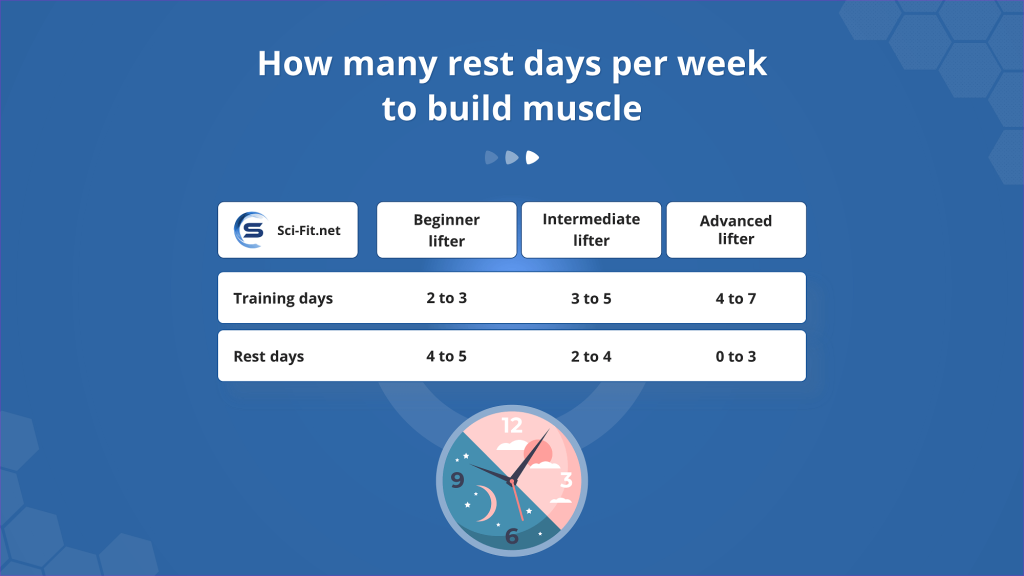
Most experts suggest resting 1-2 days a week. These rest days help muscles recover. They also prevent burnout and injuries. You can choose active rest. This means light activities like walking or stretching. It’s important to listen to your body. If you’re feeling tired, take another day off.
Adjustments For Beginners
Beginners should prioritize rest. Their bodies are not yet used to intense workouts. They should aim for 2-3 rest days weekly. These rest days allow the body to adjust. They also help in learning proper form. Rushing into daily workouts can cause injuries.
Adjustments For Advanced Trainers
Advanced trainers might need fewer rest days. They are more accustomed to intense routines. They can opt for 1-2 rest days weekly. But even advanced trainers must rest. Overtraining can lead to fatigue and injuries. They should also vary their routine. This keeps muscles challenged and prevents plateauing.
Signs You Need More Rest
Muscle fatigue and lack of progress can indicate the need for more rest days. Rest is crucial for muscle recovery and growth. Typically, two to three rest days a week help optimize muscle building.
Signs you need more rest are crucial for muscle building. Rest days are not just downtime; they are essential for growth. Understanding the signs your body gives can prevent burnout. It helps in achieving your fitness goals effectively. Listening to your body ensures optimal progress.
Physical Fatigue
Feeling unusually tired after workouts indicates a need for more rest. Muscles require time to recover and grow stronger. Persistent fatigue can lead to injuries. It hampers your ability to maintain consistent training. Resting allows your body to repair and replenish energy.
Mental Exhaustion
Mental tiredness can affect your motivation to train. It often leads to decreased focus and enthusiasm. Constant mental strain can make workouts feel overwhelming. Adequate rest restores mental clarity and drive. It ensures your mind is as ready as your body.
Plateau In Performance
Not seeing progress in strength can signal a need for rest. Muscles and performance can stagnate without proper recovery. Rest days help overcome these plateaus. They provide time for your body to adapt. Ensuring rest can boost performance and growth effectively.
Active Recovery Strategies
Building muscle requires a careful balance of workout and rest days. Rest doesn’t always mean inactivity. Active recovery strategies can help. These methods aid in muscle repair and growth. They also reduce fatigue and prevent injury. Engage in activities that promote blood flow and relaxation.
Light Cardio Activities
Light cardio supports muscle recovery. Walking, cycling, or swimming are great options. These activities increase blood circulation. They deliver nutrients to muscles. They also help in flushing out toxins. Keep the intensity low. Aim for a relaxed pace. This ensures muscles heal and grow efficiently.
Stretching And Mobility
Stretching improves flexibility. It also reduces muscle stiffness. Spend a few minutes each day stretching. Focus on major muscle groups. Use dynamic stretches before workouts. Static stretches are best post-exercise. Mobility exercises help too. They enhance joint range of motion. This lowers the risk of injury.
Yoga And Meditation
Yoga calms the mind and body. It combines stretching with deep breathing. This enhances muscle recovery. Try basic yoga poses for relaxation. They improve balance and core strength. Meditation reduces stress. It aids muscle recovery indirectly. A calm mind leads to better sleep. Quality sleep boosts muscle repair.
Balancing Workouts And Rest
Building muscle requires a balance of workouts and rest days. Experts recommend 2-3 rest days weekly for optimal muscle growth. Rest days allow muscles to recover, preventing overtraining and injury.
Finding the perfect balance between workouts and rest is crucial for muscle growth. Overtraining can lead to burnout or injuries, while too much rest may slow your progress. So, how do you strike the right balance to maximize your muscle gains? It’s all about strategic planning and being in tune with your body’s needs.
Scheduling Rest Days
Planning rest days is as important as planning your workouts. A common practice is to take at least one or two rest days a week. For example, you might work out on Monday, Wednesday, and Friday, and rest on the other days. This schedule allows your muscles to recover and grow. Some people find success with a 3-on, 1-off routine, which means working out for three consecutive days followed by a rest day. Try different schedules and see what works best for you. Remember, consistency is key, but so is recovery.
Listening To Your Body
Your body often knows what it needs better than any pre-set schedule. Are you feeling unusually fatigued or sore? It might be time for an additional rest day. Ignoring these signs can lead to overtraining, which ultimately hinders progress. On the flip side, if you feel energetic and strong, you might consider a light workout or active recovery day. Pay attention to your sleep, nutrition, and stress levels as they can affect your recovery needs. Are you getting enough sleep? Is your diet supporting your workout goals? Each factor plays a role in how your body recovers and builds muscle. Balancing workouts and rest is a personal journey. How do you ensure your body is getting the rest it needs while still pushing towards your muscle-building goals? Share your thoughts and experiences in the comments below.
Common Rest Day Myths
Rest days are crucial for muscle growth. Yet, myths about rest days persist. Some think more workout days mean faster muscle gain. Others believe rest leads to muscle loss. These myths can confuse and mislead fitness enthusiasts. Let’s debunk these common misconceptions.
Muscle Loss Concerns
Many fear rest days cause muscle loss. This is not true. Muscles grow during rest, not workouts. Recovery allows muscle fibers to repair and strengthen. Missing rest days can harm your progress. Your body needs time to rebuild and grow stronger.
Overtraining Benefits
Some believe overtraining helps build muscle faster. This is a myth. Overtraining can lead to injuries and burnout. It stresses your body without giving time to recover. Your muscles need rest to perform their best. Balance is key for effective muscle growth.
Frequently Asked Questions
Is 2 Rest Days A Week Too Much?
Two rest days a week are ideal for recovery and preventing injury. Listen to your body’s needs. Rest days enhance performance, muscle growth, and mental well-being. Balance workouts with rest for optimal health and fitness. Ensure proper nutrition and hydration for best results.
How Often Should I Take Rest Days To Build Muscle?
Take rest days 2-3 times weekly for muscle recovery and growth. Listen to your body’s needs. Rest allows muscles to repair and strengthen, enhancing performance. Balance workouts with rest for optimal results. Proper rest prevents overtraining and injury, supporting consistent progress in muscle building.
What Is The 2 2 2 Rule In The Gym?
The 2 2 2 rule suggests increasing weights after completing 2 extra reps for 2 sets over 2 workouts. This method helps optimize strength gains by gradually increasing the challenge as your body adapts. It encourages consistent progress and maintains workout intensity effectively.
Can I Workout 5 Days In A Row And Rest 2 Days?
Yes, you can workout 5 days in a row and rest for 2 days. This schedule helps balance exercise and recovery. Tailor your workouts to avoid overtraining. Listen to your body’s signals and adjust as necessary. Always consult a fitness professional for personalized advice.
Conclusion
Rest days are crucial for muscle growth. Your body needs time to heal. Muscles repair and grow stronger during rest. Balance workouts with adequate rest for best results. Listen to your body. It signals when rest is needed. Rest days prevent burnout and reduce injury risk.
Aim for one to three rest days weekly. Adjust based on your fitness level and goals. Consistency is key. Keep a steady routine for muscle gains. Enjoy the process and stay patient. Building muscle takes time, rest, and dedication.








