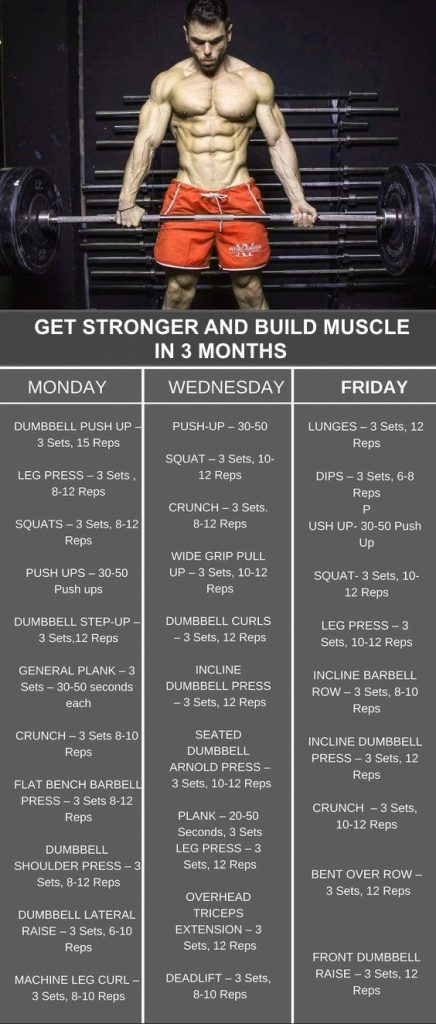
Are you ready to transform your physique and build muscle in just three months? If you’ve been dreaming of a stronger, more defined body, the perfect workout plan is just a read away.
Imagine the confidence and energy you’ll gain as you start seeing real results. This isn’t just another fitness plan; it’s your personal blueprint to success. With clear steps and achievable goals, you’ll know exactly what to do every day to maximize your gains.
Dive into the details and discover how this plan can revolutionize your workout routine and set you on the path to the muscular build you’ve always wanted. Don’t just dream about change—make it happen!

Credit: ar.pinterest.com
Benefits Of A Structured Workout Plan
Embracing a structured workout plan brings numerous benefits to your fitness journey. It provides clear direction, preventing guesswork in your training sessions. This systematic approach ensures consistency, which is crucial for muscle growth.
Consistent Progress Tracking
A structured plan allows you to track your progress effectively. You can see improvements in strength and endurance. Regular tracking helps identify areas needing more focus.
Reduced Risk Of Injury
Structured workouts minimize the risk of injury. Following a planned routine ensures balanced muscle development. It also teaches proper exercise techniques, reducing strain.
Enhanced Motivation
Having a plan boosts motivation. It gives a sense of purpose and direction. Completing planned workouts offers a feeling of achievement, encouraging continued effort.
Efficient Use Of Time
Structured plans ensure efficient time management. You know exactly what exercises to perform. This reduces wasted time and maximizes workout effectiveness.
Improved Muscle Gains
Following a structured routine optimizes muscle gains. It ensures progressive overload, which is essential for muscle growth. Each session builds on the last, fostering continuous improvement.
Setting Realistic Goals
Embarking on a 3-month workout plan to build muscle can be exciting. But setting realistic goals is crucial to your success. Without clear objectives, it’s easy to lose motivation. Realistic goals help you track progress effectively. They ensure you stay committed and focused. Let’s dive into how you can set these goals for your muscle-building journey.
Understanding Your Starting Point
Evaluate your current fitness level. Are you a beginner or experienced? This helps determine how intense your workouts should be. Knowing where you stand allows for tailored goals. Measure your current muscle mass. Use a tape measure or body composition scale. This gives a baseline to compare future progress.
Setting Achievable Targets
Set achievable targets to maintain motivation. Aim for gradual muscle gain. Avoid unrealistic expectations like gaining 20 pounds of muscle in three months. Small, steady gains are healthier and sustainable. Break down larger goals into smaller milestones. This approach makes the process more manageable.
Monitoring Progress Regularly
Track your progress weekly. Record changes in muscle size and strength. Use a journal or app to keep notes. Frequent monitoring helps adjust your plan as needed. Celebrate small victories to boost morale. Recognizing progress fuels determination to continue your workout plan.
Essential Equipment
A successful three-month workout plan requires essential equipment like dumbbells, resistance bands, and a sturdy workout bench. These tools help perform a variety of exercises to build muscle effectively. Consistent use ensures progress and aids in achieving fitness goals.
Embarking on a 3-month workout plan to build muscle is an exciting journey. Your determination is key, but having the right equipment can make all the difference. Whether you’re setting up a home gym or enhancing your current setup, knowing which tools are essential can streamline your path to success. Let’s dive into the must-have equipment that will maximize your muscle-building efforts.Free Weights
Free weights are the cornerstone of any muscle-building routine. Dumbbells and barbells offer versatility and are ideal for various exercises. With free weights, you can target every muscle group. Imagine performing deadlifts, bench presses, or bicep curls with ease. They’re great for progressive overload, allowing you to gradually increase the weight as your strength improves. Don’t underestimate the power of a simple set of weights.Resistance Bands
Resistance bands are compact and highly effective. They provide tension that challenges your muscles differently than free weights. These bands are perfect for warming up, adding resistance to bodyweight exercises, or targeting specific muscle groups. They’re also travel-friendly, making them an excellent choice for those who want to maintain their workouts while on the move. Have you ever felt the burn in your glutes after a band workout? It’s real!Adjustable Bench
An adjustable bench is another versatile piece of equipment. It allows you to perform a variety of exercises at different angles. Think of incline bench presses or seated shoulder presses. Adjustability means you can target different parts of your muscles with precision. Investing in a sturdy bench adds stability and options to your workout plan. Picture yourself comfortably executing a challenging set of chest presses.Pull-up Bar
A pull-up bar is essential for building upper body strength. It challenges your back, shoulders, and arms. If pull-ups seem daunting, consider starting with assisted versions using resistance bands. Gradually, you’ll notice improvements in your strength. A pull-up bar can be mounted in a doorway or as part of a larger home gym setup. Imagine the satisfaction of completing your first unassisted pull-up!Foam Roller
Recovery is just as important as the workout itself. A foam roller helps in muscle recovery by relieving tension and promoting blood flow. It’s perfect for post-workout stretching and releasing tight muscles. Ever tried rolling out those sore quads after an intense leg day? It’s a game-changer. Incorporate foam rolling into your routine to enhance recovery and prevent injuries.Jump Rope
Cardio plays a vital role in any muscle-building plan, and a jump rope is a fantastic tool for that. It’s affordable, portable, and highly effective for quick cardio sessions. Jumping rope improves your cardiovascular health and helps with coordination. Have you considered the benefits of a quick jump rope session as a warm-up before lifting? It gets your heart rate up and primes your muscles for action. Choosing the right equipment is about enhancing your workout experience. What tools will you choose to power your 3-month muscle-building journey? Consider these essentials and let them be the foundation of your success.Nutrition Basics For Muscle Growth
Building muscle requires more than just lifting weights. Nutrition plays a crucial role. Fuel your body with the right nutrients. This ensures effective muscle growth. Understanding nutrition basics helps in maximizing your workout results.
Protein Intake
Protein is essential for muscle repair. It helps in building new muscle tissues. Include lean meats, eggs, and dairy in your diet. Plant-based options like beans and lentils are also good. Aim for a balanced intake across meals. This supports consistent muscle development.
Carbohydrates And Fats
Carbs provide energy for workouts. Whole grains, fruits, and vegetables are excellent sources. They keep energy levels steady. Fats are vital for hormone production. Healthy fats like avocados and nuts are beneficial. Balance is key. Too much or too little can affect muscle growth.
Hydration Importance
Water is vital for overall health. It aids in nutrient transport. Hydration supports muscle recovery and growth. Drink water throughout the day. Thirst can slow down muscle repair. Include hydrating foods like cucumbers and watermelons. Staying hydrated enhances workout performance.
Pre-workout Preparation
Preparing for a workout is as important as the workout itself. It sets the tone for an effective session. A well-planned pre-workout routine can improve performance. It also reduces the risk of injury. This section outlines key steps in pre-workout preparation. Focus on both physical and mental readiness. Both are crucial for building muscle efficiently.
Warm-up Exercises
Warming up prepares the body for intense activity. It increases blood flow to muscles. This helps in reducing stiffness. Start with five minutes of light cardio. Jogging or brisk walking works well. Follow this with dynamic stretches. Arm circles, leg swings, and torso twists are great choices. These exercises enhance flexibility. They also increase joint range of motion. Gradually, the heart rate rises. This readies the body for more demanding exercises.
Mental Focus Techniques
Mental readiness is as vital as physical preparation. Begin with deep breathing exercises. They calm the mind and reduce stress. Visualize the workout routine. Picture each exercise clearly. This mental rehearsal boosts confidence. Set specific goals for the session. Aim to improve in small, measurable ways. Positive self-talk can enhance motivation. Remind yourself of past successes. This builds a strong mental focus. Enter the workout with a clear and determined mindset.

Credit: muscleandbrawn.com
Month 1: Building A Foundation
Starting a 3-month workout plan requires a solid foundation. Month 1 focuses on building strength and preparing your body for more intense workouts in the coming months. It sets the stage for muscle growth and helps prevent injuries. Establishing a routine now is key to long-term success. Let’s break down the essentials of this first month.
Workout Schedule
A consistent workout schedule is crucial in Month 1. Aim for three to four sessions per week. Allow at least one rest day between workouts to aid recovery. Each session should last about 45 minutes to an hour. Focus on full-body workouts to engage multiple muscle groups.
Key Exercises
Incorporate compound exercises to maximize muscle engagement. Start with squats, deadlifts, and bench presses. Add rows and pull-ups to target your back and arms. Use lighter weights initially to perfect your form. Gradually increase weight as you become more comfortable.
Tracking Progress
Tracking your progress helps maintain motivation. Keep a workout journal. Note the exercises, sets, and reps completed each session. Record any increases in weight or reps. This helps identify patterns and areas needing improvement. Celebrate small victories to stay encouraged.
Month 2: Increasing Intensity
Month 2 of your muscle-building journey focuses on increasing intensity. This stage is crucial for continued growth and strength. As your body adapts, it requires more challenging workouts. By pushing limits, you stimulate muscle fibers in new ways. This month introduces advanced exercises and techniques. Each element aims to maximize gains and prevent plateaus.
Advanced Exercises
Advanced exercises target different muscle groups. They challenge your strength and endurance. Incorporate moves like deadlifts and squats. These compound exercises engage multiple muscles at once. Try adding bench presses and barbell rows. They increase upper body strength effectively. Use machines for controlled movements. They help maintain proper form and reduce injury risk. Don’t forget about bodyweight exercises. Pull-ups and push-ups are excellent for building muscle.
Incorporating Supersets
Supersets are a great way to boost intensity. They involve performing two exercises back-to-back. This method saves time and increases heart rate. You can pair exercises for opposing muscle groups. For example, do bicep curls followed by tricep dips. This technique improves muscle endurance. It also enhances workout efficiency. Plan supersets with minimal rest between sets. This keeps your heart rate elevated and muscles engaged.
Recovery Strategies
Recovery is crucial during intense training. It helps prevent injuries and fatigue. Ensure adequate rest between workouts. Aim for at least one rest day per week. Nutrition plays a key role in recovery. Consume protein-rich foods to repair muscles. Hydrate regularly to support bodily functions. Stretching and foam rolling aid in muscle relaxation. They reduce tension and improve flexibility. Consider incorporating yoga or meditation. They promote mental relaxation and stress relief.
Month 3: Achieving Peak Performance
Month 3 focuses on reaching peak performance in your workout routine. This phase helps build muscle with intense exercises and increased weights. Consistent dedication and proper nutrition are key to maximizing results during this crucial month.
As you enter Month 3 of your workout plan, you are on the brink of achieving peak performance. The past two months have laid a solid foundation for muscle growth and strength. Now, it’s time to push your limits and witness the transformation. This month is all about fine-tuning your regime, improving endurance, and assessing your progress. Are you ready to see what your body is truly capable of?Maximizing Workouts
Your workouts now demand intensity and focus. Increase the weights and challenge your muscles with compound exercises. Aim for a mix of heavy lifting and higher reps to stimulate muscle growth. Add variety to your routine to keep your muscles guessing. Experiment with new exercises or change the order of your routine. This not only beats boredom but also prevents plateaus. Think about your rest periods. Shortening them can enhance your stamina and keep your heart rate up. How does your body respond to these changes?Endurance And Stamina
Your endurance levels are critical for achieving peak performance. Incorporate cardio sessions to boost your stamina. These can be as simple as a brisk walk or a short run. Try high-intensity interval training (HIIT) to improve your cardiovascular fitness. It’s effective and time-efficient. You’ll find that your strength sessions become easier as your stamina grows. Monitor your energy levels. Proper nutrition and hydration are key. Are you fueling your body with what it needs to sustain these intense workouts?Final Progress Assessment
Now, let’s see the results of your hard work. Reassess your initial goals and compare them with your current progress. Are you hitting the targets you set for yourself? Take measurements and photos to visualize your transformation. The scale might not always reflect muscle gain, so consider how you feel and look. Reflect on your journey. What have you learned about your body and its capabilities? Your final assessment isn’t just numbers; it’s about recognizing your dedication and growth. What’s your next goal?Common Mistakes To Avoid
Embarking on a 3-month workout plan is a commitment to muscle growth. Many people make mistakes that hinder their progress. Avoiding these errors can maximize gains and maintain motivation. This section highlights common mistakes in muscle-building plans.
Improper Form
Proper form is crucial in weightlifting. Many beginners focus on lifting heavier weights. This leads to poor form and potential injuries. Always prioritize technique over weight. Correct form targets the muscles effectively.
Ignoring Rest Days
Rest days are essential for muscle recovery. Overtraining can lead to fatigue and injury. Muscles grow during rest periods. Schedule at least one rest day per week. Listen to your body and allow it to recover.
Neglecting Nutrition
Nutrition fuels muscle growth. Some people overlook diet in their workout plans. Proteins, carbs, and fats are vital for building muscles. Include a balanced diet with adequate calories. Hydration is equally important for performance.
Skipping Warm-ups
Warm-ups prepare your body for intense workouts. Skipping them increases the risk of injuries. Warm up for at least 5-10 minutes. Simple exercises like jogging or stretching are effective. They increase blood flow and flexibility.
Not Tracking Progress
Tracking progress helps in assessing improvements. Some individuals fail to document their workouts. Use a journal or app to record weights and reps. Tracking aids motivation and reveals what adjustments are needed.
Expecting Instant Results
Building muscle takes time and consistency. Many expect rapid changes in three months. It leads to frustration and quitting. Set realistic goals and be patient. Celebrate small achievements and keep pushing forward.

Credit: www.amazon.com
Staying Motivated
Staying motivated during a 3-month workout plan can be challenging. Motivation often wanes after the initial excitement. Yet, maintaining enthusiasm is crucial for muscle growth. This section explores practical methods to keep motivation high. From setting clear goals to tracking progress, these strategies will help you stay committed.
Goal Setting Techniques
Set specific and realistic goals. Big goals can overwhelm. Break them into smaller, manageable tasks. For instance, aim to increase your bench press by five pounds each month. This approach makes goals achievable. Write down your goals. Seeing them daily reinforces commitment. Keep them visible on your fridge or mirror.
Tracking Improvements
Tracking progress boosts motivation. It highlights your hard work. Use a journal or an app to record workouts. Note the weights, reps, and sets. Review your progress weekly. Celebrate small victories. They fuel your desire to continue. Graphs or charts can visualize your improvements. They provide a clear picture of growth over time.
Adapting The Plan For Personal Needs
Adapting a workout plan to fit personal needs is essential for success. Each person’s body responds differently to exercise routines. A tailored approach maximizes results, ensuring muscle growth and strength improvement. Understanding your own fitness level helps in making necessary adjustments to the workout plan.
Understanding Your Fitness Level
Start by assessing your current fitness level. Consider factors like strength, endurance, and flexibility. This will guide you in setting realistic goals for muscle building. It prevents injury and promotes steady progress.
Choosing The Right Exercises
Select exercises that suit your body’s needs. Focus on movements that target muscle groups effectively. Be mindful of your body’s limitations to avoid strain. Adjust the intensity and volume based on your fitness level.
Monitoring Progress
Track your progress regularly. Use a journal to note improvements in strength and muscle size. This helps in identifying what works best for you. Make necessary changes to your plan based on these observations.
Listening To Your Body
Your body signals when adjustments are needed. Pay attention to signs of fatigue or discomfort. Rest and recovery are crucial for muscle growth. Modify your routine to ensure adequate rest periods.
Set goals that are achievable within three months. Break them into smaller milestones. Celebrate small victories to stay motivated. This approach keeps you focused and committed.
Seeking Professional Guidance
Consider consulting a fitness professional. They provide valuable insights and recommendations. Personalized guidance enhances your workout plan’s effectiveness. A professional can help tailor the plan to your specific needs.
Frequently Asked Questions
Can I Build Muscle Mass In 3 Months?
Yes, you can build muscle mass in 3 months with consistent training, proper nutrition, and adequate rest. Focus on strength training exercises, consume protein-rich foods, and ensure proper recovery. Track progress and adjust your routine for optimal results. Stay dedicated and maintain a healthy lifestyle for best outcomes.
What Is The 5 4 3 2 1 Workout Method?
The 5 4 3 2 1 workout method involves five exercises performed in descending order of repetitions. Start with five reps of the first exercise, then four of the second, and so on. This method enhances endurance and strength by incorporating a mix of movements, ensuring a full-body workout.
Can You Get Really Fit In 3 Months?
Yes, you can get fit in 3 months. Consistent exercise, balanced nutrition, and proper rest are key. Tailor workouts to your goals, whether strength or endurance. Track progress for motivation. Consult a fitness expert for a personalized plan. Stay committed and focused for best results.
What Is The 6 12 25 Rule?
The 6 12 25 rule is a guideline for homeownership affordability. Spend 6% of your monthly income on maintenance, have 12 months of living expenses saved, and make a 25% down payment on the house. This helps ensure financial stability and affordability when purchasing a home.
Conclusion
This workout plan can help you build muscle over three months. Stick to the routine consistently for best results. Adjust weights as your strength grows. Remember, rest and nutrition are crucial. Your body needs protein and sleep. Listen to your body, avoid injuries.
Track your progress weekly. Celebrate small achievements. Stay motivated and focused. Engage with a support group if possible. Building muscle takes time and patience. Keep pushing yourself but stay safe. You’ll see changes in your body and confidence. Ready to start your fitness journey?
Let’s build muscle together!








