Imagine sculpting a powerful chest without stepping foot in a gym. Sounds amazing, right?
You have the potential to unlock your body’s strength from the comfort of your living room. Whether you’re a fitness newbie or a seasoned enthusiast, at-home chest workouts offer a convenient and effective way to achieve your goals. No fancy equipment required—just you, your determination, and a bit of space.
Ready to discover how simple exercises can transform your chest muscles? Stay with us to explore techniques that can elevate your fitness routine and confidence. Your dream physique is just a workout away.
Benefits Of Chest Workouts At Home
Exercising at home offers convenience and flexibility. Chest workouts at home are no exception. They provide numerous benefits without the need for a gym membership.
Enhanced Convenience
At home, you can work out anytime. No need to commute or wait for machines. This saves time and effort, making it easier to stick to your routine.
Cost-effective
Home workouts save money. No gym fees or travel expenses. All you need is a basic set of equipment or even just your body weight.
Personalized Environment
Home workouts offer privacy. You can exercise in a comfortable setting. No need to feel self-conscious about others watching.
Improved Consistency
Staying consistent is easier at home. With no travel needed, workouts fit into your daily schedule. This helps maintain regular exercise habits.
Flexibility In Routine
Home workouts allow variety. You can switch exercises easily. Adapt routines to suit your fitness level and goals.
Focus On Form
In a calm environment, you can concentrate on technique. Proper form reduces injury risk and enhances effectiveness.
Stress Relief
Exercise releases endorphins. Working out at home can boost mood and reduce stress. It provides a healthy outlet for tension.

Credit: www.pinterest.com
Essential Equipment
At-home workouts for chest can be effective with the right equipment. Essential tools enhance your workout experience and provide versatility. Investing in key items ensures a comprehensive routine. Below are crucial pieces of equipment for chest workouts.
Dumbbells And Resistance Bands
Dumbbells offer flexibility in your chest exercises. They help in building strength and muscle definition. Choose weights that challenge you but allow proper form. Resistance bands are compact and easy to store. They provide variable resistance levels for different exercises. Use them for chest flies and presses to target various muscle groups. Both tools are perfect for any home gym setup.
Stability Ball And Mat
A stability ball adds an element of balance to your workouts. It engages core muscles while focusing on chest exercises. Incorporate it into push-ups or chest presses for added difficulty. A mat provides comfort and grip during floor exercises. It ensures safety and prevents slipping during intense sessions. Both are essential for a comfortable and effective workout experience.
Bodyweight Exercises
Bodyweight exercises offer a practical way to build chest muscles. No need for expensive equipment or gym memberships. You can perform these exercises anywhere. They rely on your body weight for resistance. This makes them ideal for home workouts. Let’s explore some effective bodyweight exercises for chest.
Push-up Variations
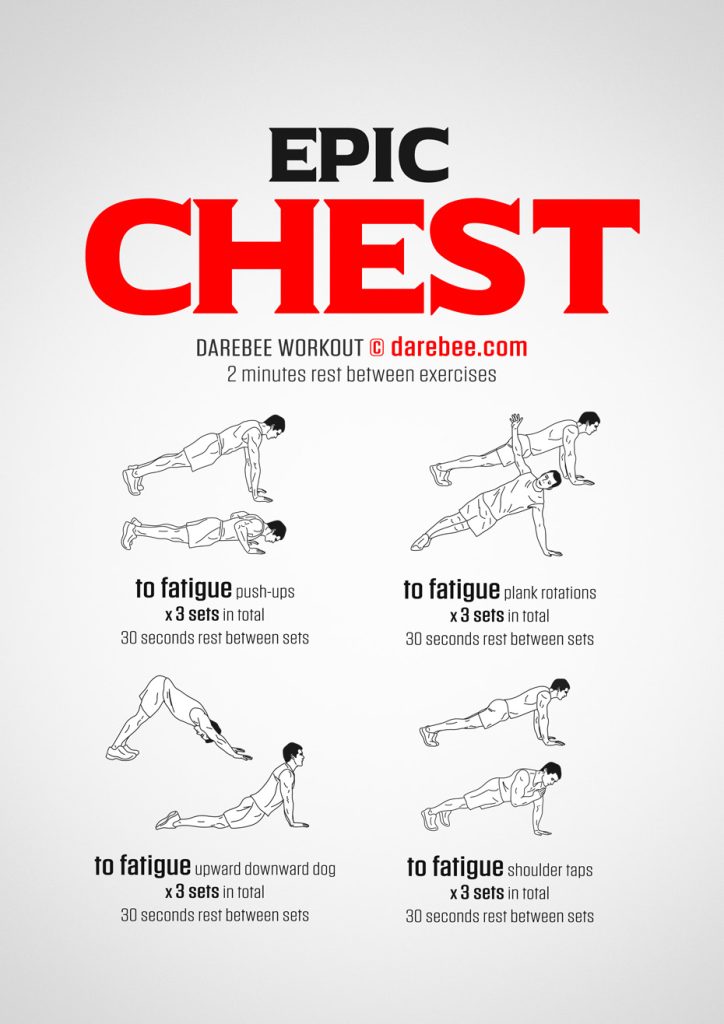
Push-ups are a classic chest exercise. They target chest, shoulders, and triceps. Start with standard push-ups. Place hands shoulder-width apart. Lower your body until your chest nearly touches the floor. Then, push back up. For added challenge, try different variations. Wide push-ups focus more on the chest. Diamond push-ups engage triceps. Decline push-ups increase difficulty. Elevate your feet on a chair or step. This variation enhances upper chest development. Experiment with these variations for a balanced workout.
Dips And Planks
Dips are excellent for chest and triceps. Use parallel bars or sturdy chairs. Support your body with your hands. Lower yourself until your elbows form right angles. Push back up to starting position. Dips require strength and control. They effectively target the lower chest.
Planks are more than core exercises. They engage the chest, too. Start in a push-up position. Maintain a straight line from head to heels. Hold this position as long as possible. Planks build endurance and stability. They strengthen the chest and core simultaneously. Incorporate dips and planks for a comprehensive chest workout.
Dumbbell Exercises
When you think of building a strong chest at home, dumbbell exercises are your best friend. They offer versatility and effectiveness without needing a bulky bench press machine. Imagine transforming your living room into a mini gym, focusing on your chest with simple, yet powerful moves. Dumbbells allow you to target your chest muscles with precision, helping you achieve the results you crave. Whether you’re a beginner or seasoned fitness enthusiast, these exercises can be tailored to fit your level. Let’s explore how you can make the most of them.
Dumbbell Bench Press
The dumbbell bench press is a staple for chest workouts. Unlike a barbell, dumbbells let each arm work independently, ensuring balanced muscle development. This means your stronger arm can’t cheat by doing most of the lifting.
Set up a bench or use the floor. Lie back with your feet flat. Hold a dumbbell in each hand, arms extended above your chest. Lower them until your elbows are at a 90-degree angle, then press back up. This exercise mimics the traditional bench press but adds the challenge of stability.
Want to add intensity? Try pausing for a second when you lower the weights. This engages your chest muscles even more. What if you don’t have a bench? No worries. Laying on the floor works well too, just with a limited range of motion. How much can you lift today?
Dumbbell Flyes
Dumbbell flyes target the inner chest muscles, giving your chest that full, defined look. They require a gentle touch and control, making them perfect for honing your technique.
Lie on a bench or floor, just like with the bench press. Hold the dumbbells with your palms facing each other. Keep a slight bend in your elbows. Slowly open your arms to the sides, creating a ‘fly’ motion. Bring them back together above your chest. Feel the stretch as your chest opens up.
Avoid swinging your arms. Focus on controlled, smooth movements. Think about squeezing your chest as you bring the weights back. It’s not about the weight; it’s about the form. Can you keep your elbows slightly bent throughout? Give it a try and see the difference.
Both exercises can be done in sets of 8-12 reps. Adjust the weight according to your strength level. Don’t rush. Feel the burn and embrace the challenge. What changes will you notice in a month if you stay consistent?
Resistance Band Routines
Discover effective chest workouts using resistance bands at home. Target and strengthen your chest muscles with versatile exercises. Perfect for compact spaces and easy to integrate into daily routines.
Resistance Band Routines offer a versatile way to build a strong chest without needing bulky equipment. Imagine transforming your living room into a mini-gym with just a simple band. This approach is not only convenient but also effective for targeting your chest muscles. Adding resistance bands to your workout routine can intensify your exercises and provide the challenge your muscles crave.Chest Press With Bands
The chest press with bands is a dynamic exercise that mimics the traditional bench press. It’s perfect for engaging your pecs without needing a bench. Secure the band behind you, either around a sturdy piece of furniture or directly under your back if you’re lying down. Hold the ends of the band and press forward, extending your arms fully while keeping your core tight. You’ll feel the resistance throughout the movement, which helps in activating your chest muscles effectively. Adjust the tension by shortening the band or using a band with higher resistance. This variation will keep the workout challenging and help you progress over time.Resistance Band Flyes
Resistance Band Flyes are excellent for sculpting your chest and increasing your range of motion. Stand or lie down, and hold the band with both hands. Extend your arms straight in front of you, then slowly open them outwards, maintaining a slight bend in the elbows. Feel the stretch across your chest and focus on squeezing your muscles as you bring your arms back together. This exercise mimics the flyes you’d do in the gym but with the added benefit of adjustable resistance. As your strength improves, consider using a thicker band or increasing the reps to continue challenging your chest muscles. Resistance band routines are practical and efficient. Have you considered how easy it is to get a great workout from the comfort of your home? These exercises prove that you don’t need a gym membership to achieve your fitness goals.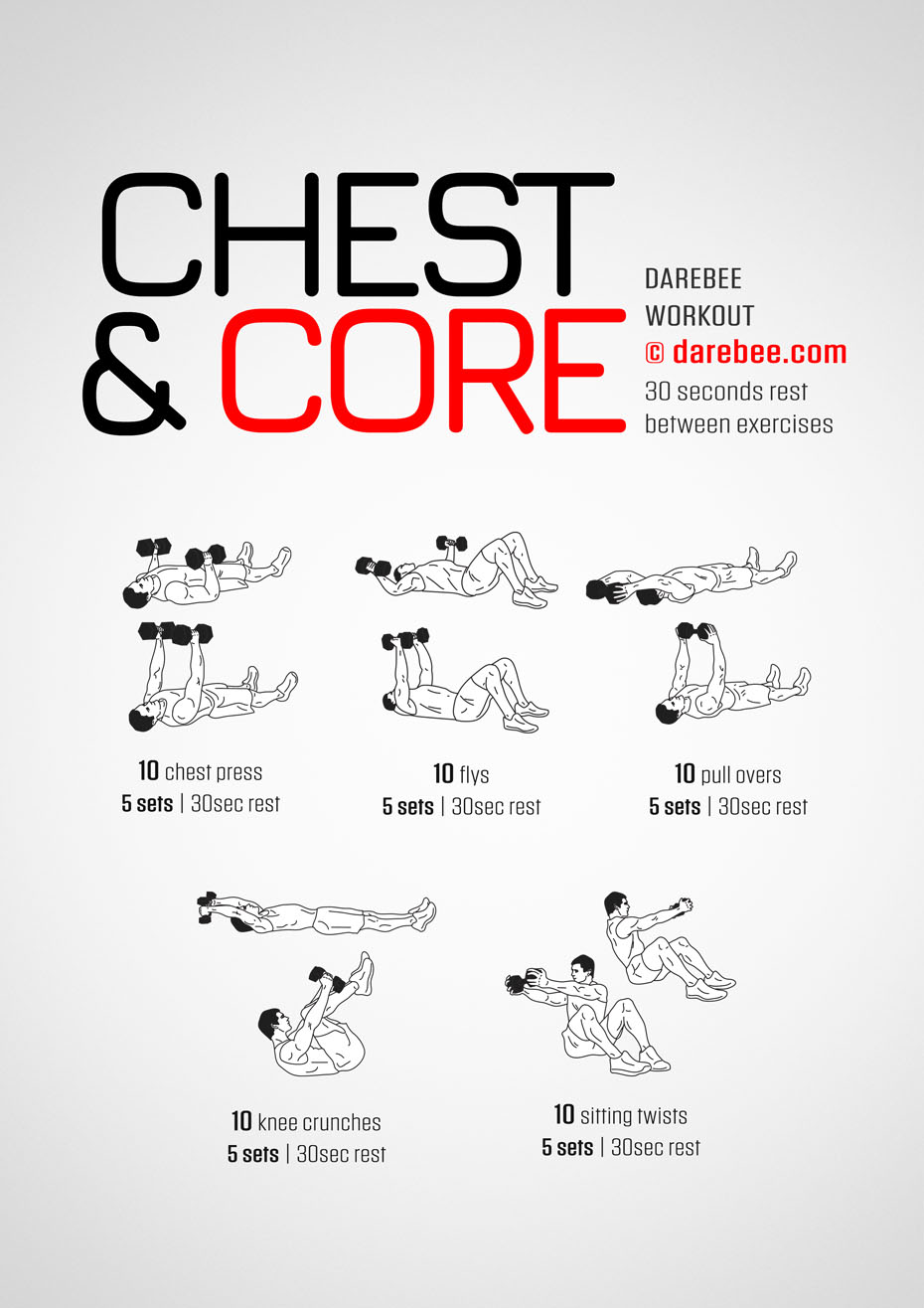
Credit: darebee.com
Creating A Balanced Workout Plan
Transform your living room into a workout space with effective chest exercises. Push-ups and chest presses target muscles without equipment. Regular practice boosts strength and enhances overall fitness.
Creating a balanced workout plan for your chest at home is crucial. It ensures muscle growth and prevents imbalances. A well-rounded routine targets different parts of the chest. This approach helps in achieving a symmetrical physique. You also avoid overworking one area, reducing injury risk. Let’s dive into some key components.Combining Exercises
Mix various exercises to work the entire chest. Push-ups are a classic choice. They target the chest, shoulders, and triceps. Incline push-ups focus on the upper chest. Use a sturdy chair or table. Decline push-ups work the lower part. Place your feet on a raised surface. Remember to include chest fly variations. Use dumbbells or resistance bands. They isolate and stretch the chest muscles.Setting Reps And Sets
Define your workout intensity with reps and sets. Beginners can start with 2-3 sets. Each set should have 8-12 reps. This range builds strength and endurance. As strength improves, increase the reps or sets. For advanced levels, aim for 3-4 sets. Adjust based on your comfort and goals. Rest between sets for 60-90 seconds. This allows muscle recovery. Keep a steady pace to maintain form.Tips For Maximizing Results
Maximizing results in at-home chest workouts requires focus and strategy. Simple adjustments can lead to significant improvements. Consistency is key, but so is technique. Below are essential tips to enhance your workout results.
Maintaining Proper Form
Proper form prevents injuries and boosts effectiveness. Keep your back straight during exercises. Engage your core for stability. This ensures your chest muscles do the work. Use a mirror to check your posture. Correct positioning makes a big difference.
Progressive Overload Techniques
Progressive overload is about gradually increasing workout intensity. Start with manageable weights or resistance. Increase them over time for better gains. Add more reps or sets weekly. This encourages muscle growth. Track your progress to stay motivated.

Credit: www.serasi.tech
Common Mistakes To Avoid
Working out at home offers convenience and flexibility, but it can also lead to common mistakes. These errors might seem minor but can hinder your progress. Understanding and avoiding these pitfalls can make your chest workouts more effective.
Ignoring Warm-ups
Skipping warm-ups is a frequent mistake that can lead to injury. Warm-ups prepare your muscles for the intense effort ahead. They increase blood flow and improve flexibility. Neglecting them is like running a marathon without stretching your legs.
Consider doing dynamic stretches or light cardio for five minutes. This simple routine can reduce the risk of strains and sprains. Remember, your chest muscles need this preparation just as much as your legs do.
Overtraining Risks
More isn’t always better when it comes to chest workouts. Overtraining can lead to fatigue and decreased performance. Your muscles grow during rest, not during constant exercise.
Limit your chest workouts to two or three times a week. Pay attention to how your body feels. Are you often sore or tired? That’s a sign you might be overdoing it. Balance is crucial for progress.
Have you ever pushed too hard and regretted it? You’re not alone. Keep your workouts sustainable and enjoyable. What’s your strategy for maintaining energy and enthusiasm?
Tracking Progress
Keep track of your chest workout progress at home with simple routines. Regular assessments help you see improvements. Adjust exercises as needed to maintain growth and strength.
Tracking your progress in at-home chest workouts is crucial for achieving your fitness goals. It helps you understand where you started, how far you’ve come, and where you need to go next. Without tracking, it’s easy to feel stuck or lose motivation. Tracking progress is not just about numbers; it’s about celebrating small victories. Imagine the satisfaction of lifting heavier weights or completing more reps than you did last week. This sense of achievement boosts your confidence and keeps you committed.Measuring Strength Gains
To measure strength gains, start by keeping a workout journal. Note down the weights you use, the number of sets, and reps. Over time, this log will show your improvements. Consider setting specific goals, like increasing your bench press by 10 pounds in a month. This makes progress measurable and motivates you to push harder. Another effective method is to track your endurance. If you can do more push-ups or hold a plank longer than before, it’s a clear sign of increased strength.Adjusting The Routine
As you track your progress, you might notice certain exercises become easier. This is your cue to adjust the routine and keep challenging your muscles. Increase the weight or resistance in your workouts. You might add an extra set or try a different variation of an exercise to target your chest more effectively. Experiment with different workout tempos. Slowing down or speeding up can engage your muscles differently, providing a fresh challenge. Are you pushing yourself enough, or are you sticking to what’s comfortable? Adjusting your routine ensures continuous improvement and keeps your workout exciting. Tracking progress is a dynamic process. It’s about adapting and evolving as you grow stronger. How will you measure your progress today?Frequently Asked Questions
How Do I Build My Chest At Home?
Build chest muscles at home with push-ups, chest dips, and dumbbell presses. Use resistance bands for added intensity. Perform three sets of 8-12 reps. Focus on proper form and gradually increase resistance. Maintain consistency and integrate rest days for recovery.
Is It Possible To Build Chest Without Weights?
Yes, you can build chest muscles without weights. Perform push-ups, dips, and chest squeezes regularly. Use variations like incline or decline push-ups for added challenge. Consistency and proper form are key to effective results.
Can I Do 5 Exercises For Chest?
Yes, you can do 5 exercises for your chest. Include push-ups, bench press, incline dumbbell press, chest flyes, and cable crossovers for a balanced workout. These exercises target different parts of the chest, ensuring comprehensive development. Always maintain proper form to avoid injury and maximize results.
What Is The 6 12 25 Method Chest?
The 6 12 25 method targets chest muscles through three sets: 6 reps heavy, 12 reps moderate, and 25 reps light. This technique combines strength, hypertrophy, and endurance training for balanced muscle growth and improved chest definition.
Conclusion
Chest workouts at home can be effective and simple. No gym needed. You save time and money. Push-ups and chair dips build strength. Consistency is key for results. Mix up exercises to avoid boredom. Listen to your body. Rest when needed.
Regular workouts improve overall fitness. Stay motivated and track progress. Share your journey with friends. Celebrate small victories. Keep pushing your limits. Enjoy the benefits of a strong chest. Your home is your gym. Embrace the journey. Stay committed. Fitness is a lifestyle.








