Are you curious about how mental health professionals understand and support individuals facing psychological challenges? Assessments in mental health are powerful tools that unlock insights into your mind, helping experts create personalized care plans tailored just for you.
Imagine having a clearer picture of your emotional well-being, guiding you toward better mental health. You’ll discover how these assessments work, why they’re essential, and how they can benefit you or your loved ones. Stay with us as we delve into the fascinating world of mental health assessments, ensuring you don’t miss out on the valuable information that could make a difference in your life.
Importance Of Mental Health Assessments
Mental health assessments are crucial in understanding a person’s psychological state. They provide insight into mental health issues, enabling effective treatment. Regular assessments can identify problems early, preventing more serious conditions. This proactive approach ensures individuals receive the care they need. It also reduces the stigma surrounding mental health by normalizing regular check-ups.
Identifying Mental Health Disorders
Mental health assessments help identify disorders like anxiety and depression. Professionals use various tools to diagnose conditions accurately. Early identification leads to better treatment outcomes. It can improve a person’s quality of life significantly.
Personalized Treatment Plans
Assessments allow for creating tailored treatment plans. Every individual is unique, so their treatment should be too. Personalized plans consider the specific needs of each person. This increases the effectiveness of therapy and medication.
Monitoring Progress Over Time
Regular assessments help track a patient’s progress. They reveal if a treatment plan is working or needs adjustments. This ongoing evaluation ensures the best possible outcomes. It keeps the treatment process flexible and responsive.
Reducing Stigma And Encouraging Openness
Assessments promote openness about mental health issues. They help reduce stigma by normalizing discussions about mental health. More people seek help when they see mental health as a regular health concern. This leads to a healthier society overall.

Credit: www.banyantreatmentcenter.com
Types Of Mental Health Assessments
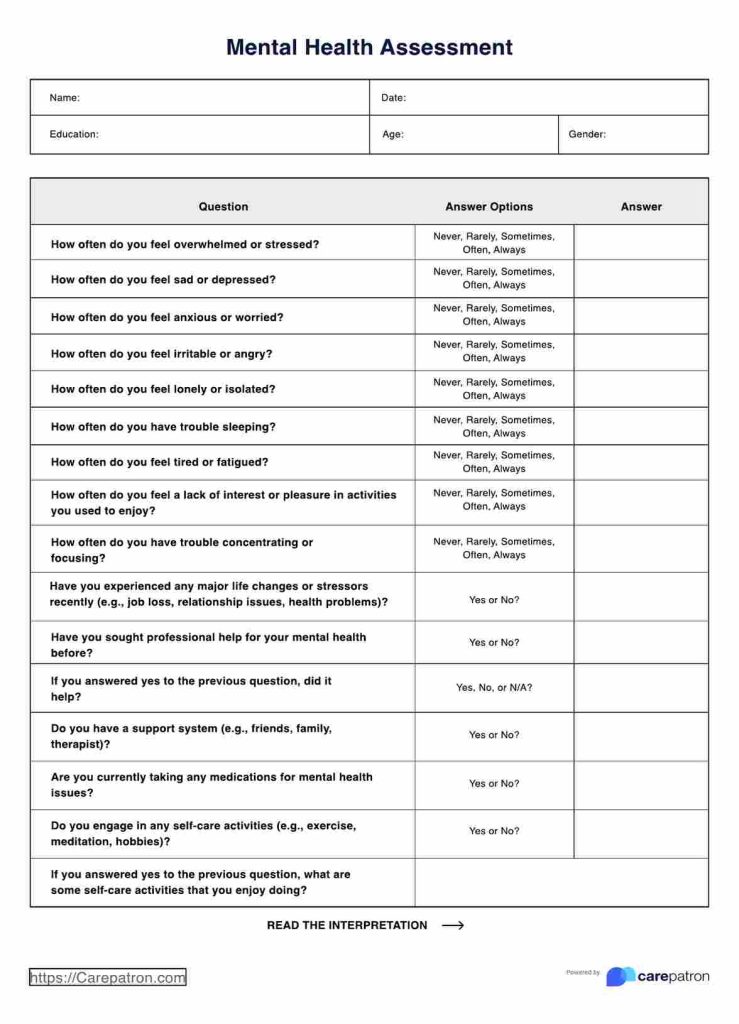
Mental health assessments help identify various conditions through interviews, questionnaires, and tests. Professionals use these methods to understand emotional and psychological well-being. Tailored evaluations provide insights into specific needs for effective treatment plans.
Mental health assessments are crucial in understanding an individual’s psychological state. They help professionals determine the best treatment plan. Different types of assessments provide unique insights. Each type serves a specific purpose in evaluating mental health.Self-report Questionnaires
Self-report questionnaires are widely used in mental health assessments. Individuals answer questions about their thoughts and feelings. These questionnaires are easy to administer and provide valuable insights. They help identify symptoms of anxiety, depression, and stress. Responses can indicate the severity of mental health issues. Professionals use them to track changes over time.Clinical Interviews
Clinical interviews involve direct interaction with a mental health professional. Professionals ask detailed questions about the individual’s experiences. This type of assessment allows for deeper exploration. It provides a comprehensive view of the person’s mental health. Interviews can reveal underlying issues that questionnaires might miss. They help create tailored treatment plans.Behavioral Observations
Behavioral observations focus on the individual’s actions and reactions. Professionals watch for patterns in behavior that indicate mental health issues. Observations can occur in various settings, such as schools or hospitals. They provide real-world insights into how a person copes. Behavioral observations complement other assessment methods. They help validate findings from interviews and questionnaires.Role Of Technology In Assessments
Technology is transforming how mental health assessments are conducted. From digital tools to telehealth, you’re experiencing a shift toward more accessible and efficient options. But how does this affect you or your loved ones seeking mental health support?
Digital Tools And Applications
Imagine accessing mental health assessments directly from your smartphone. Digital tools and applications are making this a reality. Apps such as Talkspace or BetterHelp offer initial assessments that can guide your therapy journey. They provide self-assessment quizzes that help you understand your mental state. These tools are user-friendly, often guiding you step-by-step, making the process less intimidating.
Moreover, digital platforms allow for a personalized experience. You can track your mood and symptoms over time, giving you insights into patterns and triggers. This data is invaluable for your therapist, offering deeper understanding without relying solely on in-person sessions. Have you ever noticed how easy it is to record daily entries on your phone compared to remembering details during a therapy session?
Telehealth And Remote Assessments
Telehealth has made it possible to receive mental health assessments from the comfort of your home. This is a game-changer for those who find it challenging to attend in-person sessions due to distance or anxiety. Remote assessments are conducted over video calls, ensuring you receive professional guidance without geographical constraints.
The flexibility of telehealth allows for more frequent check-ins, providing you with timely support. This can be particularly beneficial in crisis situations, where immediate assessment can lead to quicker interventions. Would you prefer the convenience of discussing your mental health concerns from your own living room?
While technology offers these benefits, it’s crucial to consider privacy and data security. Always verify the credibility of the digital tools and telehealth services you choose. How comfortable are you with sharing your mental health information online?
Embracing technology in mental health assessments can open doors to new possibilities, making support more accessible. It’s worth exploring how these advancements can fit into your mental health journey. Are you ready to try these technological solutions and see the difference they can make?
Challenges In Mental Health Assessments
Mental health assessments face many challenges. These challenges affect diagnosis and treatment. Many factors contribute to these difficulties. Cultural differences, language barriers, and stigma are key issues. Understanding these challenges is vital. It helps in improving mental health assessments.
Cultural And Language Barriers
Cultural barriers can hinder mental health assessments. Different cultures have unique views on mental health. These views affect how symptoms are expressed. Language differences add to the challenge. Misunderstandings can occur if there is no common language. This affects the accuracy of assessments.
Sometimes, there are no words for certain feelings in some languages. This makes it hard to describe mental health symptoms. It leads to incomplete or incorrect assessments.
Stigma And Misdiagnosis
Stigma is a big issue in mental health. Many people hide their symptoms due to fear. They worry about how society will see them. This can lead to misdiagnosis. Symptoms may be underreported or misinterpreted.
Misdiagnosis can have serious effects. It can lead to wrong treatments. This can worsen the mental health condition. Understanding and addressing stigma is essential. It helps in achieving accurate assessments.
Improving Assessment Accuracy
Enhancing the accuracy of mental health assessments is crucial. Precise evaluations lead to better treatment plans and outcomes. Utilizing standardized tools and clear communication aids in achieving this goal.
Improving the accuracy of mental health assessments is crucial. Accurate assessments ensure that individuals receive the right diagnosis and treatment. They also help mental health professionals understand the unique needs of each patient. But how can we make assessments more accurate?Training And Standardization
Training and standardization play a vital role in enhancing assessment accuracy. Consistent training ensures all mental health professionals use the same criteria and methods. This reduces variations and improves reliability. Imagine going to two different therapists and getting two different diagnoses. Confusing, right? Standardized training helps prevent this inconsistency. It ensures that no matter who you see, you’ll get the same level of care. Regular workshops and updated training materials keep professionals informed about the latest assessment techniques. This ongoing education is essential. Without it, assessments could become outdated and less effective.Incorporating Patient Feedback
Patient feedback can greatly enhance assessment accuracy. After all, who knows more about their mental health than the patients themselves? Encourage patients to share their thoughts about the assessment process. Was there something they felt wasn’t addressed? Did they feel comfortable and understood? These insights can help tailor assessments to be more comprehensive and empathetic. Patient feedback also fosters a sense of collaboration. It makes patients feel valued and respected, which can lead to more honest and open communication. This ultimately results in more accurate and helpful assessments. By combining training, standardization, and patient feedback, mental health assessments can become more precise and effective. What changes can you make today to ensure your assessments are as accurate as possible?
Credit: www.researchgate.net
Ethical Considerations
Mental health assessments require careful ethical considerations. Respecting privacy and ensuring informed consent are vital. Proper training in cultural sensitivity helps maintain trust and accuracy in evaluations.
When assessing mental health, ethical considerations play a pivotal role. These are not just guidelines but are essential to ensuring the dignity and rights of individuals are respected. Understanding these aspects helps you engage with mental health assessments more responsibly.Confidentiality And Privacy
Confidentiality is the cornerstone of mental health assessments. It’s crucial to keep personal information safe and secure. Imagine sharing your deepest fears and worries, only to find out they’ve been disclosed without your consent. Privacy ensures that sensitive information stays between you and your mental health professional. It’s about creating a safe space where you can freely express yourself. Remember, without trust, the assessment process can be hindered.Informed Consent
Informed consent is about giving you control over your mental health journey. Before any assessment begins, you should know what to expect and how the information will be used. Think of it as signing a contract where you’re fully aware of the terms. It’s not just a formality; it’s your right to understand the purpose and implications of the assessment. Ask questions if anything is unclear. Your mental health professional should provide clear and straightforward explanations. Ethical considerations are not just rules; they’re about respecting your rights and fostering trust. Have you ever thought about how these principles impact your experience with mental health services?Future Trends In Mental Health Assessments
The future of mental health assessments is evolving rapidly, driven by technological advancements and a growing understanding of individual needs. These assessments are becoming more precise, personalized, and accessible. As we look ahead, several trends are emerging that promise to change how mental health is evaluated and treated.
Ai And Machine Learning
AI and machine learning are transforming mental health assessments by analyzing vast amounts of data quickly and accurately. These technologies can identify patterns and predict outcomes, helping professionals make informed decisions. Imagine a scenario where your smartphone app could assess your mental health by analyzing your speech patterns, facial expressions, and even your text messages.
AI tools can also offer real-time feedback and support, providing a new layer of intervention. For example, an AI-based chatbot might detect signs of depression and suggest coping strategies or alert a therapist. The potential for AI in mental health is both exciting and vast, opening doors to more timely and effective care.
Personalized Assessment Approaches
Traditional assessments often follow a one-size-fits-all model, but the future is leaning towards personalization. Personalized assessment approaches consider your unique circumstances, preferences, and history. This means assessments can be tailored to better meet your specific mental health needs.
Think about how your favorite music streaming service curates playlists based on your listening habits. Similarly, mental health assessments can be customized, offering recommendations and insights that are highly relevant to you. This approach not only enhances the accuracy of assessments but also empowers you to take an active role in your mental health journey.
As these trends continue to develop, they pose an intriguing question: How can you leverage these advancements to better understand and manage your mental health? Staying informed and open to new technologies can lead to more effective and personalized mental health care.

Credit: mindrxgroup.com
Frequently Asked Questions
What Are Some Mental Health Assessments?
Mental health assessments include psychological tests, interviews, and questionnaires like the Beck Depression Inventory and the Generalized Anxiety Disorder scale. These tools help professionals evaluate mental health conditions and symptoms. Regular assessments can guide treatment plans and monitor progress effectively.
What Is The 5 P’s Mental Health Assessment?
The 5 P’s mental health assessment includes Presenting problem, Predisposing factors, Precipitating factors, Perpetuating factors, and Protective factors. This framework helps in understanding and addressing mental health issues comprehensively, guiding effective treatment planning.
What Are The 4 P’s Of Mental Health Assessment?
The 4 P’s of mental health assessment are Predisposing, Precipitating, Perpetuating, and Protective factors. Predisposing factors increase vulnerability. Precipitating factors trigger symptoms. Perpetuating factors maintain issues. Protective factors offer resilience and coping. Understanding these helps diagnose and create effective treatment plans.
What Are The 10 Areas Assessed With The Mental Status Examination?
The mental status examination assesses these 10 areas: appearance, behavior, speech, mood, affect, thought process, thought content, cognition, insight, and judgment. Each area provides insights into a patient’s psychological functioning and mental health.
Conclusion
Assessments in mental health play a crucial role. They help identify issues early. Early identification leads to better treatment outcomes. Understanding mental health assessments improves awareness. It empowers individuals to seek help. These assessments offer valuable insights. They guide professionals in providing tailored care.
This ensures effective support for individuals. Remember, mental health is essential. Taking assessments seriously can make a difference. Stay informed and proactive about mental health. Encourage open discussions with loved ones. Promote a supportive environment for everyone. Mental health matters for all.








