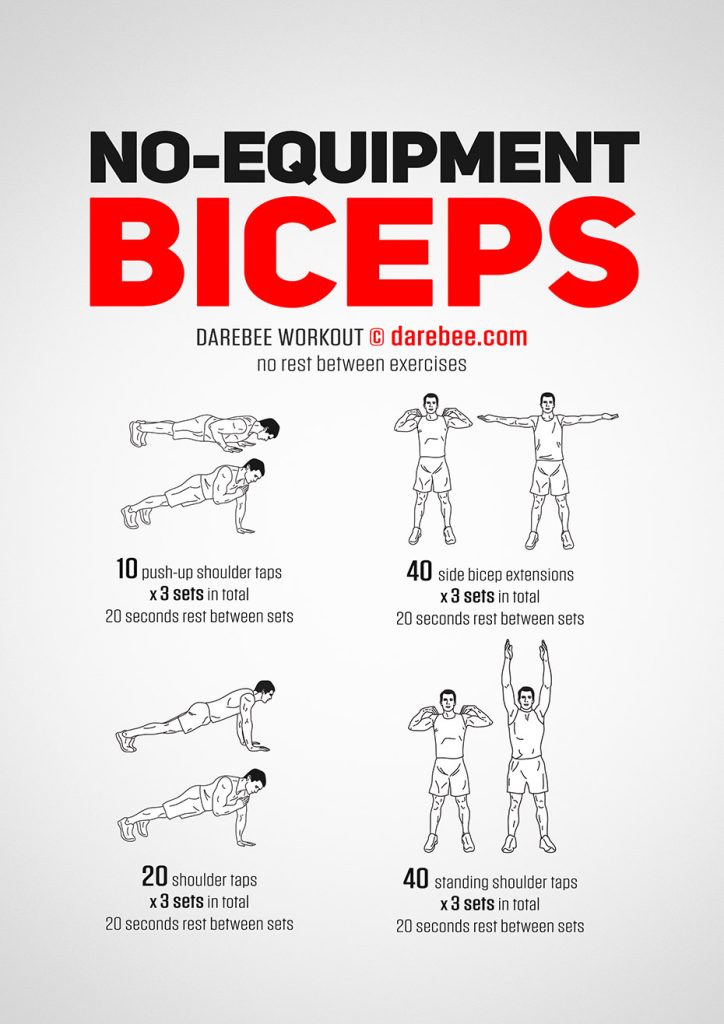
Are you looking to build impressive biceps without stepping foot in a gym or using any weights? You’re not alone.
Many people want to strengthen their arms but lack the equipment or just want a more convenient way to exercise at home. Imagine flexing your biceps with pride, knowing you achieved those results with nothing but your body weight and determination.
This isn’t just a dream; it’s entirely possible, and we’re here to show you how. You’ll discover simple yet effective home bicep workouts that require no weights, and you’ll see how easy it can be to incorporate them into your routine. Ready to transform your arms and boost your confidence? Let’s dive into the world of weight-free bicep workouts that are perfect for your home fitness journey.
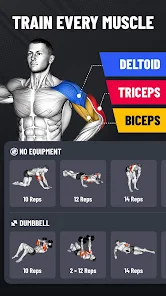
Credit: play.google.com
Benefits Of No-weight Bicep Workouts
Discovering the benefits of no-weight bicep workouts can be a game changer. These exercises are versatile and accessible. They allow you to work on your biceps at home. No gym membership is needed. You don’t need fancy equipment. This approach not only strengthens your muscles but also promotes overall fitness. Let’s delve into the key advantages.
Enhanced Muscle Endurance
No-weight bicep workouts focus on muscle endurance. Repeated movements build stamina over time. Your biceps work hard, improving their ability to sustain activity. This endurance is essential for daily tasks.
Improved Flexibility
Exercises without weights often involve a full range of motion. This practice enhances flexibility. Your arms move freely, reducing stiffness. Increased flexibility lowers the risk of injuries.
Core Stability
Many no-weight bicep exercises engage your core. Planks and push-ups target your arms and core muscles. A strong core stabilizes your body. It supports better posture and balance.
Cost-effective Fitness
No need to buy weights or gym equipment. Save money with bodyweight exercises. You can perform them in any space. This makes fitness more accessible and affordable.
Convenience And Accessibility
No-weight workouts are convenient. You can do them anytime. No need to travel to a gym. They fit easily into a busy schedule.
Increased Functional Strength
These workouts mimic real-life movements. They enhance functional strength. This strength aids in lifting, carrying, and other tasks. Your daily life becomes easier.

Credit: www.pinterest.com
Anatomy Of The Biceps
The biceps are a key muscle group in the upper arm. They are visible and play a vital role in arm movements. Understanding their anatomy helps in targeting them effectively during workouts. This knowledge is crucial for achieving stronger arms.
The biceps brachii is a two-headed muscle. It consists of the long head and the short head. Both heads originate from the shoulder blade. They insert into the forearm bones.
Long Head
The long head of the biceps starts from the scapula. It travels down the arm and forms the outer part of the biceps. This head helps in shoulder stabilization and arm movement.
Short Head
The short head begins at the coracoid process. It lies closer to the body. It works with the long head to flex the elbow and supinate the forearm.
Functionality
The biceps allow elbow flexion and forearm rotation. They help lift and rotate objects with ease. These functions are essential for daily activities and specific exercises.
Importance In Workouts
Understanding biceps anatomy aids in effective workouts. It allows targeting each head individually or together. This ensures balanced muscle growth and strength.
Warm-up Routine
Before diving into your home bicep workout, it’s crucial to prime your muscles with a solid warm-up routine. Preparing your body not only enhances your performance but also reduces the risk of injury. Consider it a way to wake up your muscles and joints, getting them ready for action.
Dynamic Stretches
Dynamic stretches are essential for activating your muscles. They involve active movements that increase your heart rate and improve flexibility. Imagine your body as a rubber band; the more you stretch it, the better it performs.
Start with arm circles. Extend your arms out to the sides and make circular motions. Feel the stretch in your shoulders and upper arms. Add leg swings to loosen up your hips and legs, providing a balanced warm-up.
Quick tip: Keep your movements controlled and avoid rushing. It’s not about speed, but about getting your muscles warmed up effectively.
Joint Mobilization
Joint mobilization is all about preparing your joints for the workout ahead. Many people overlook this step, but it’s critical. Think of it like oiling the gears of a machine; smoother movement means better performance.
Focus on your wrists and elbows, as they will be under significant strain during your bicep exercises. Rotate your wrists in circular motions and flex and extend your elbows gently.
Have you ever noticed how a well-prepared joint feels during exercise? It’s like everything just clicks into place. Give it a try and observe the difference.
These simple steps can transform your workout experience. Are you ready to feel the power in your biceps without weights?
Bodyweight Exercises
Bodyweight exercises are excellent for building muscle without equipment. These exercises focus on using your body’s resistance to strengthen and define your muscles. Biceps, often associated with curls, can be effectively worked with bodyweight movements. They are accessible, versatile, and can be done anywhere. Let’s explore some effective exercises for bicep growth.
Push-ups Variations
Push-ups target various muscle groups, including biceps. Different push-up styles can intensify the workout. Try close-grip push-ups. Place hands closer than usual. This engages the biceps more than the chest. Dive bomber push-ups also help. They require sliding your body forward and backward. This movement activates biceps while strengthening shoulders.
Isometric Holds
Isometric holds are powerful for muscle engagement. They involve holding a position without movement. The plank is a good example. To engage biceps, try a plank with bent elbows. Hold this position for maximum tension. Another option is the wall sit with arms raised. Maintain arm position to focus the biceps. These holds build endurance and strength effectively.
Resistance Band Techniques
Achieve effective bicep workouts at home with resistance bands. These versatile tools offer dynamic tension, targeting muscles efficiently without weights. Perfect for enhancing strength and flexibility in your arms, resistance bands provide a practical and compact alternative for exercising in limited spaces.
Resistance bands are perfect for a home bicep workout. They are versatile and easy to use. Plus, you can adjust the resistance level. This makes them ideal for beginners and experts alike. These bands help to build strength and tone muscles. Let’s explore some effective techniques using resistance bands.Band Curls
Band curls target the biceps directly. Begin by standing on the band with feet shoulder-width apart. Hold the band handles firmly. Keep your elbows close to your body. Slowly curl the bands upwards. Pause at the top for a second. Lower the band with control. Repeat for 12-15 reps. This exercise enhances muscle growth and definition.Band Hammer Curls
Hammer curls focus on the bicep’s brachialis muscle. Stand on the band with feet shoulder-width apart. Grip the handles with palms facing each other. Keep elbows tucked in. Curl the band upwards while maintaining grip position. Hold at the top briefly. Lower slowly and repeat. Aim for 12-15 reps. This helps in improving arm strength and size.Utilizing Household Items
Working out at home doesn’t mean you need expensive equipment. Many household items can help build strong biceps. Simple tools found around the house can become effective workout gear. These items are often overlooked but can be very useful. Let’s explore how everyday objects can enhance your bicep workouts.
Towel Curls
Grab a sturdy towel from your bathroom or kitchen. Fold it lengthwise to make it thicker. Stand with your feet shoulder-width apart. Hold the towel with both hands, palms facing up. Pretend it’s a barbell. Slowly curl the towel towards your chest. Squeeze your biceps at the top of the movement. Lower it back down in a controlled motion. Repeat this for 10-15 reps.
Backpack Bicep Curls
Find a backpack and fill it with books or canned goods. Adjust the weight to your comfort level. Hold the backpack by its top handle with one hand. Stand straight with your feet shoulder-width apart. Curl the backpack towards your shoulder. Focus on engaging your bicep. Lower it back down slowly. Do 10-15 reps for each arm. This exercise mimics the dumbbell curl effectively.
Creating A Balanced Routine
Building a balanced routine at home strengthens biceps without weights. Focus on bodyweight exercises like push-ups and plank variations. Keep consistency to achieve effective results.
Creating a balanced routine for a home bicep workout without weights is essential. It ensures you get the best results. A balanced routine includes the right mix of exercises, reps, and rest periods. This approach helps maintain muscle growth and prevent injury. Understanding how to structure your workout will make a significant difference.Reps And Sets
Choosing the right number of reps and sets is crucial. For bicep exercises without weights, aim for 12 to 15 reps per set. This range helps build endurance and strength. Perform three to four sets for each exercise. This ensures your muscles get enough work. Consistency in reps and sets helps track progress. It also keeps your routine challenging.Rest Periods
Rest periods are important for muscle recovery. For bicep workouts, rest for 30 to 60 seconds between sets. This short rest keeps your muscles engaged. It also prevents fatigue. Longer rest periods can decrease workout intensity. Balancing rest and workout time optimizes muscle growth. Always listen to your body. Rest when needed to avoid overtraining.
Credit: ca.pinterest.com
Incorporating Progressive Overload
Incorporating progressive overload in your home bicep workouts can lead to significant muscle growth. By gradually increasing the demand on your muscles, you stimulate them to adapt and grow stronger. Progressive overload is a key principle in strength training, and it can be applied even without weights.
Increasing Repetition
One way to apply progressive overload is by increasing repetitions. Start with a manageable number of reps. Gradually add more as your strength improves. Focus on maintaining proper form throughout. More repetitions challenge your muscles and enhance endurance. Aim for slow, controlled movements to maximize tension.
Adding Resistance
Another method is adding resistance. Use household items like water bottles or books. These can provide extra challenge. Alternatively, use resistance bands for versatility. Bands offer adjustable tension and can target different muscle groups. Experiment with the level of resistance to find what suits your needs.
Common Mistakes To Avoid
Working out at home can be convenient and effective. No need for weights. Just focus on proper technique and form. Avoid common mistakes that can hinder your progress. Let’s dive into these mistakes.
1. Neglecting Proper FormForm is crucial in any exercise. Incorrect form can lead to injuries. It also reduces effectiveness. Keep elbows close to your body. Engage your core. Avoid swinging or jerking movements.
2. OvertrainingTraining too much can strain your muscles. Your biceps need rest to grow. Limit workouts to two or three times a week. Listen to your body. Allow time for recovery.
3. Ignoring Warm-upWarm-ups prepare your muscles for exercise. They increase blood flow. Start with light arm circles or stretches. This reduces injury risk. Never skip this step.
4. Using Only One ExerciseVariety is key for muscle development. Mix different exercises for best results. Try push-ups, arm circles, or resistance bands. Each targets your biceps differently.
5. Rushing Through RepsSpeed can affect your workout quality. Slow, controlled movements are best. Focus on the muscle contraction. This increases strength and endurance.
6. Ignoring Breathing TechniqueBreathing affects your performance. Exhale when lifting. Inhale when lowering. Proper breathing helps muscle efficiency. Practice this with every rep.
7. Skipping Cool DownCooling down helps your muscles relax. Stretching improves flexibility. It also prevents stiffness. Spend a few minutes to cool down. Your body will thank you.
Tracking Progress
Track your progress with effective home bicep workouts that require no weights. Use body resistance exercises to build strength and muscle. Stay consistent and monitor improvements over time.
Tracking progress in your home bicep workouts without weights is essential for maintaining motivation and seeing tangible results. It’s easy to overlook the importance of monitoring your progress, especially when you don’t have gym equipment to gauge your improvement. However, with a few simple methods, you can keep track of your growth and ensure you’re moving in the right direction.Measurement Methods
Tracking your progress starts with choosing the right measurement methods. Consider using a tape measure to monitor the size of your biceps. Measure around the widest part of your arm and note the changes weekly. Another simple method is taking photos. A visual record can be incredibly motivating, showing how your muscles are developing over time. Keep a journal detailing your reps and sets. Tracking this lets you see improvements in your workout endurance and strength. Regular assessments help you stay on course.Setting Milestones
Setting milestones is crucial for achieving your fitness goals. Break down your ultimate objective into smaller, more manageable targets. Celebrate each achievement to keep your motivation high. Start by setting short-term goals, such as increasing your reps by 5 every week. Once you hit your short-term goals, aim for bigger milestones like completing a challenging workout routine. What small victory can you celebrate today? Having clear milestones gives your workout purpose. By tracking these milestones, you can see how far you’ve come and stay inspired to push further. Remember, progress isn’t always linear. Embrace each step forward and keep your eyes on the prize.Frequently Asked Questions
Is It Possible To Build Biceps Without Weights?
Yes, you can build biceps without weights. Use bodyweight exercises like push-ups, pull-ups, and chin-ups. Resistance bands and isometric holds also help. Consistency and proper form are key to seeing results. Mix different exercises for balanced bicep growth.
What Is 7 7 7 Bicep Exercise?
The 7 7 7 bicep exercise, also known as 21s, involves three sets of seven reps. Perform seven reps in the lower half, seven in the upper half, and seven full-range curls. This technique targets different bicep parts, enhancing muscle growth and strength.
Are 4 Exercises Enough For Biceps?
Four exercises can effectively target biceps if varied in intensity and technique. Focus on different angles and grips to maximize growth. Ensure proper form and adequate rest between workouts for optimal results. Customize routines based on individual goals and fitness levels for best outcomes.
Is It Possible To Build Biceps At Home?
Yes, you can build biceps at home. Use bodyweight exercises like push-ups and pull-ups. Incorporate resistance bands or dumbbells for added challenge. Consistency and proper form are key for muscle growth. Ensure a balanced diet rich in protein to support your training efforts.
Conclusion
You can strengthen your biceps without weights. These exercises are simple and effective. Fit them into your routine for noticeable results. Consistency is key. Regular practice improves strength and endurance. Remember to maintain proper form. This prevents injury and boosts efficiency.
Listen to your body. Rest when needed. Progress takes time, but dedication pays off. Enjoy the journey to stronger arms. Stay motivated and keep pushing forward. Your biceps will thank you. Happy exercising!








