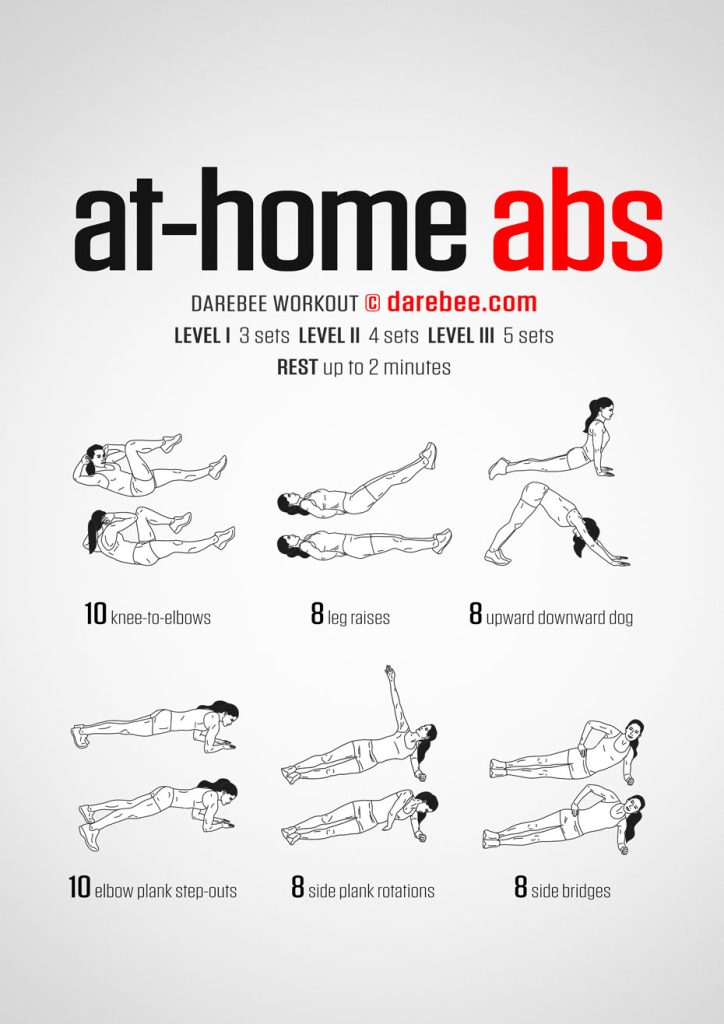
Imagine having a toned and strong core without ever stepping foot in a gym. You can achieve this with an ab workout routine that fits right into your home schedule.
Whether you’re squeezing in a quick exercise during your lunch break or winding down after a long day, your living room can become your personal fitness studio. You don’t need fancy equipment or a lot of space. You just need a few minutes and the right moves to start seeing results.
This article will guide you through effective exercises that can transform your core. Ready to redefine your fitness journey? Keep reading to discover how you can start sculpting those abs today!
Benefits Of Home Ab Workouts
Home ab workouts offer convenience and flexibility. No need for gym equipment or travel. You can exercise anytime. Strengthen your core and improve posture with simple exercises. Ideal for busy schedules. Stay fit without leaving your home.
Working out at home can be incredibly rewarding, especially when it comes to targeting your abs. Home ab workouts offer a unique set of benefits that you might not find at a gym. They provide flexibility, cost-effectiveness, and a personal space to focus on your fitness goals.Save Time And Money
One of the biggest advantages of working out at home is saving both time and money. You eliminate the need for a gym membership and the commute time. I remember when I first started doing ab workouts at home, I realized I could invest those extra minutes into perfecting my form. Consider how much you could save simply by using a mat and your own body weight.Flexibility And Convenience
Home workouts offer the flexibility to exercise on your schedule. There’s no need to adhere to gym hours or class times. Have you ever felt the urge to squeeze in a quick session during your lunch break or right before bed? At home, you can do just that without any hassle.Personalized Workout Environment
Creating a personalized workout environment can significantly boost your motivation. Choose your favorite music, adjust the room temperature, and set up a space that inspires you. I found that having a dedicated workout corner in my living room made a huge difference in my consistency. How could you personalize your space to make workouts more enjoyable?Focus On Form And Technique
Without the distractions of a busy gym, you can focus more on your form and technique. This focus can lead to better results and reduce the risk of injury. You can pause, rewind, and replay online workout videos to ensure you’re getting it right. Have you noticed improvements in your form when working out alone?Tailored To Your Fitness Level
Home workouts allow you to tailor exercises to your specific fitness level. You can start with basic moves and gradually increase the intensity as you get stronger. When I started, I could barely hold a plank for 30 seconds, but over time, I built up my strength and endurance. What’s your current fitness level, and how can you modify your routine to meet your needs? Incorporating home ab workouts into your routine can be a game-changer for your fitness journey. Embrace the opportunity to make your workouts as effective and enjoyable as possible.
Credit: www.pinterest.com
Essential Equipment
Working out your abs at home is convenient and effective, especially when you have the right equipment. While you might think fancy gym machines are necessary, a few essential tools can greatly enhance your workout routine. Let’s explore both affordable equipment and innovative household alternatives that will keep your ab workouts challenging and exciting.
Affordable Tools
Investing in a few affordable tools can make a big difference in your ab workouts. A yoga mat is essential to provide comfort and support during exercises. It also prevents slipping and injury.
Consider adding a stability ball to your arsenal. It’s excellent for core exercises like planks and crunches. You’ll work more muscles and boost your balance.
Resistance bands are another cost-effective option. They’re versatile and can be used for various ab exercises, adding intensity and resistance to your routine.
Think about using an ab wheel. This small tool offers a challenging way to work your entire core. Once you master it, you’ll notice the difference in your strength and endurance.
Household Alternatives
Don’t worry if you’re not ready to invest in equipment. Your home is full of alternatives. Grab a towel to use as a slider on smooth surfaces for dynamic ab exercises.
Use a chair for stability exercises like seated leg lifts or incline planks. It’s an excellent way to engage your core without needing a gym bench.
Consider using a backpack filled with books for added weight during Russian twists or seated leg raises. It’s a simple way to increase the difficulty without buying weights.
Even a pillow can be a handy tool. Use it for seated twists or as a cushion under your hips during leg raises. You’ll find comfort and challenge in unexpected places.
Have you ever tried these alternatives at home? If not, give them a shot and discover how resourceful you can be. What other household items could double as workout equipment?
Core Anatomy Basics
Understanding core anatomy is essential for an effective ab workout routine at home. The core is not just the abs. It’s a complex system of muscles that play a vital role in stability, balance, and posture. Knowing the basics can help target the right muscles and improve your workout results.
Muscle Groups
The core includes several muscle groups. The most known are the rectus abdominis, the “six-pack” muscles. These muscles run vertically along the front of the abdomen. Next, the obliques, which are on the sides of the abdomen. There are internal and external obliques. They help in twisting and side bending motions. The transverse abdominis is another key player. It wraps around the torso like a corset. Deep core muscles like the multifidus and pelvic floor also add support. Together, these muscles create a strong core foundation.
Functionality
The core muscles do more than just look good. They stabilize the spine and pelvis. This helps maintain balance and posture. A strong core reduces the risk of injury. It supports daily activities like lifting and bending. The core assists in breathing and protects internal organs. It plays a role in nearly every movement. Understanding core functionality can optimize your workouts. Focus on exercises that engage these muscles effectively.
Warm-up Exercises
Before diving into your ab workout, warm-up exercises are essential. They prepare your body for the movements ahead and reduce injury risk. Warming up increases blood flow to muscles, improves flexibility, and sets the stage for a productive session.
Dynamic Stretches
Dynamic stretches get your muscles ready for action. Begin with arm circles, moving your arms in big circles. This loosens your shoulders and upper back. Next, perform leg swings to open up your hips and legs. Stand on one leg and swing the other forward and backward. Repeat this motion several times. Follow with torso twists. Stand with your feet shoulder-width apart. Rotate your torso side to side, engaging your core with each twist.
Activation Drills
Activation drills wake up your core muscles. Start with the dead bug exercise. Lie on your back and lift your arms and legs in the air. Lower your opposite arm and leg to the ground slowly. Bring them back up and switch sides. Then try the plank hold. Position yourself on your forearms and toes. Keep your body straight and hold for 20 seconds. Finish with glute bridges. Lie on your back with knees bent. Lift your hips towards the sky, squeeze your glutes, then lower. Repeat this drill to feel your core engage.
Beginner Ab Exercises
Starting an ab workout routine at home is a great choice. You can strengthen your core without fancy equipment. Focus on simple exercises first. This helps build a strong foundation. Consistency is key to seeing results. It’s essential to keep your form correct. This prevents injuries and maximizes your workout.
Crunch Variations
Crunches are classic ab exercises. They target the upper abs effectively. Begin with the basic crunch. Lie flat with knees bent. Hands behind your head. Lift shoulders off the ground. Keep your neck relaxed. Exhale as you crunch up. Inhale as you lower down.
Try reverse crunches next. They work the lower abs. Lie on your back. Lift your legs to a 90-degree angle. Bring knees towards your chest. Focus on engaging your core.
Bicycle crunches add a twist. Lie on your back. Lift legs off the ground. Alternate elbow to opposite knee. This targets obliques. It also improves balance and coordination.
Plank Techniques
Planks strengthen the entire core. Start with a basic plank. Lie face down. Place forearms on the ground. Lift your body. Keep your body straight. Hold for 20 seconds. Increase time as you get stronger.
Side planks target obliques. Lie on your side. Support your body with one forearm. Lift hips off the ground. Keep your body in a straight line. Switch sides after holding for 20 seconds.
Try plank with leg lifts. Start in a basic plank. Lift one leg off the ground. Hold for a few seconds. Switch legs. This adds challenge and engages glutes.
These exercises are simple yet effective. Gradually increase intensity and duration. Enjoy building a strong core at home!

Credit: darebee.com
Intermediate Ab Challenges
Intermediate ab challenges elevate your home workout routine. They bridge the gap between basic and advanced exercises. With consistent practice, these moves enhance your core strength and endurance. They require more focus and control. Perfect for those ready to progress from beginner exercises. These challenges test your limits and build a stronger core.
Leg Raises
Leg raises target the lower abs effectively. Lie flat on your back. Keep your legs straight. Slowly lift them towards the ceiling. Engage your core as you lift. Lower your legs back down with control. Avoid touching the ground. This keeps tension on the abs. Aim for 10 to 15 repetitions. Rest briefly between sets. Gradually increase the number of sets as you improve. Leg raises also benefit hip flexors and thighs.
Russian Twists
Russian twists enhance oblique strength. Sit on the floor with knees bent. Lean back slightly, keeping your back straight. Clasp your hands together. Twist your torso to the right. Then twist to the left. Engage your core with each twist. Perform this exercise slowly. Focus on the movement. Try to complete 15 to 20 repetitions. For added difficulty, hold a weight or a ball. This increases the intensity of the exercise. Russian twists improve balance and core stability.
Advanced Core Moves
Strengthen your core at home with advanced moves that target every muscle. Planks, Russian twists, and bicycle crunches enhance your ab workout. Simple equipment like a mat or towel ensures convenience and effectiveness.
Are you ready to take your core workout to the next level? Advanced core moves are designed to challenge your strength and stability, pushing your abs beyond the basics. These exercises not only sculpt your midsection but also improve your overall athletic performance. So, grab your mat and let’s dive into some exciting moves that will transform your ab routine at home.Dragon Flags
Dragon Flags are a staple in any advanced core routine. They require immense control and strength. To perform this move, lie on your back and grip a sturdy object behind your head. Lift your legs and torso off the ground in one smooth motion. Your body should form a straight line from shoulders to toes. Lower your body slowly, maintaining control, until you hover just above the ground. This exercise works your entire core, especially the lower abs. It’s not easy, but the results are worth the effort. Have you tried holding a dragon flag for a longer duration each time?Hanging Windshield Wipers
Hanging Windshield Wipers are another challenging exercise for your core. They require a pull-up bar or similar structure. Begin by hanging from the bar with a firm grip and engage your core. Raise your legs to a 90-degree angle and start moving them side to side, like windshield wipers. Keep your torso stable and focus on controlled movements. This exercise targets your obliques and improves your grip strength. It’s a true test of core endurance. Have you noticed how this move can also improve your rotational strength? These advanced core moves are not just about aesthetics; they enhance your functional fitness. They may seem daunting at first, but with practice, you’ll see significant improvements. Are you ready to challenge yourself and redefine your core workout routine at home?Creating A Balanced Routine
Designing a home ab workout routine ensures convenience and flexibility. Start with basic exercises like crunches and planks. Gradually increase intensity for better results. Consistency is key.
Creating a balanced ab workout routine at home is essential for achieving effective results. A well-structured plan targets all muscles of the core. It ensures progress while preventing strain or injury. Consistency is key. With a balanced approach, your core strength will improve. You will see more defined abdominal muscles.Frequency And Duration
Consistency is crucial for any workout routine. Aim for 3 to 4 days a week. Each session should last 20 to 30 minutes. This frequency allows your muscles to build strength over time. It prevents burnout and keeps you motivated. Short sessions fit easily into daily schedules. They maintain focus and energy levels.Rest And Recovery
Rest is as important as exercise itself. Allow at least one full rest day between workouts. Recovery days help muscles repair and grow. They reduce the risk of overtraining. Incorporate stretching or light yoga on rest days. This promotes flexibility and relaxation. Listen to your body. Adjust rest periods if needed.Nutrition And Recovery
Achieving toned abs requires more than just exercise. Nutrition and recovery play vital roles in an effective ab workout routine. Focusing on the right diet and proper hydration can enhance your results and speed up recovery. Let’s dive into key aspects of nutrition and recovery for your ab workout routine at home.
Diet Tips
Eating the right foods is crucial for visible abs. Include lean proteins like chicken and fish in your meals. These help in muscle repair and growth. Add complex carbs such as brown rice and oats. They provide energy for your workouts. Don’t forget healthy fats. Avocados and nuts boost metabolism and support muscle health.
Keep sugar and processed foods to a minimum. They can hinder muscle definition and cause bloating. Opt for fresh fruits and vegetables. They are rich in vitamins and minerals. These nutrients support overall health and aid recovery.
Hydration Importance
Water is essential for muscle function and recovery. Staying hydrated reduces muscle soreness and prevents cramps. Drink plenty of water before, during, and after workouts. Hydration helps in nutrient transport, enhancing muscle repair.
Consider adding electrolyte-rich drinks if you sweat a lot. These replenish lost minerals and maintain fluid balance. Avoid sugary beverages as they can lead to dehydration. Focus on drinking pure water for best results.

Credit: www.reddit.com
Tracking Progress
Track your progress with an at-home ab workout routine. Notice changes in strength and endurance over time. Stay motivated by recording daily exercises and improvements.
Tracking your progress in an ab workout routine at home can be as rewarding as the exercise itself. It keeps you motivated and shows you how far you’ve come. By monitoring your journey, you can identify what works best for you, adjust your routine, and set new goals. Understanding your progress involves two key aspects: measuring strength and noticing visual changes. Both are crucial in keeping your workout effective and engaging. Let’s dive into how you can track your journey.Measuring Strength
Measuring your strength is more than just counting crunches. It’s about the quality and intensity of your workouts. You can start by timing how long you can hold a plank. Track your progress weekly to see improvements. You’ll be surprised at how quickly your endurance builds. Keep a journal or use a fitness app to record your reps and sets. Look back every month and take pride in your progress. Seeing those numbers go up can be incredibly motivating. Are you lifting weights? Note the weight and reps. Gradually, you’ll find yourself lifting more, which is a clear sign of growing strength.Visual Changes
Tracking visual changes can be exciting and rewarding. While abs may not appear overnight, consistent effort will show results. Consider taking photos once a month. Use the same lighting and pose for accuracy. Comparing these photos over time can reveal changes that might not be visible day-to-day. Measure your waist using a tape measure. This simple tool provides a tangible way to see your progress. Notice how your clothes fit. A looser waistband or a more defined silhouette can be a great indicator of progress. As you track these changes, remember that everyone’s body responds differently. Celebrate the small victories and focus on what makes you feel confident and strong. How do you track your progress? Share your methods and inspire others on their fitness journey.Staying Motivated
Stay motivated with an ab workout routine at home. Create a schedule that fits your lifestyle and goals. Mix exercises to keep it exciting and focus on progress, not perfection.
Staying motivated in your ab workout routine at home can be challenging. You might start with enthusiasm, but keeping that momentum can be tough. It’s important to remind yourself why you started and set clear goals to stay on track. Let’s dive into some strategies that can help keep your motivation high.Setting Goals
Setting goals is crucial in maintaining motivation. You need clear, attainable objectives to aim for. Start with something simple, like doing a plank for 30 seconds, and gradually increase the time each week. Write down your goals and track your progress. Seeing improvement, even small changes, can be incredibly rewarding and motivating. Why not add a time frame to your goals? This gives you a deadline to work towards, creating urgency and focus.Overcoming Plateaus
Everyone hits a plateau at some point. It’s frustrating when you feel stuck and progress seems slow. But remember, this is part of the journey. Try switching up your routine. Add new exercises or change the order to keep things fresh. Your muscles adapt over time, so challenge them differently. Reflect on your progress so far. Celebrate small victories and remind yourself of how far you’ve come. This can reignite your motivation and push you past the plateau. Staying motivated is key to achieving your fitness goals. What strategies will you try today to keep your momentum going?Frequently Asked Questions
What Is The Best Workout Routine For Abs?
A great abs workout includes planks, bicycle crunches, and hanging leg raises. Combine them with cardio and a balanced diet for best results. Aim for consistency and gradually increase intensity to build core strength effectively. Always maintain proper form to prevent injuries and achieve optimal results.
Will 100 Crunches A Day Give You Abs?
100 crunches daily won’t guarantee abs. Body fat must be reduced through diet and overall exercise. Crunches strengthen the core but don’t spot-reduce fat. Combine them with cardio and proper nutrition for best results. Consistency and a balanced approach are key for visible abs.
Can I Get Abs In 30 Days?
Achieving visible abs in 30 days is challenging but possible with intense workouts and strict diet control. Focus on reducing body fat and strengthening core muscles. Consistency and dedication are crucial for results. Consult a fitness professional for personalized guidance to maximize your efforts efficiently.
Does A 10 Minute Abs Workout Really Work?
A 10-minute abs workout can be effective with consistency and proper form. It helps strengthen core muscles and improve endurance. Combine it with a balanced diet and other exercises for optimal results. Short, intense sessions can fit into busy schedules, making it easier to maintain a regular fitness routine.
Conclusion
An ab workout routine at home can be very effective. It saves time and money. You build core strength without gym equipment. It’s convenient. You work out anytime that suits you. Consistency is key for results. Stick to your routine.
Balance exercises with rest and nutrition. Listen to your body. Adjust exercises as needed. Enjoy the journey to a stronger core. Celebrate small wins. Stay motivated and focused. Share your progress with friends or family. Encourage each other. You can achieve your fitness goals.
With dedication, your abs will thank you. Keep moving forward.








