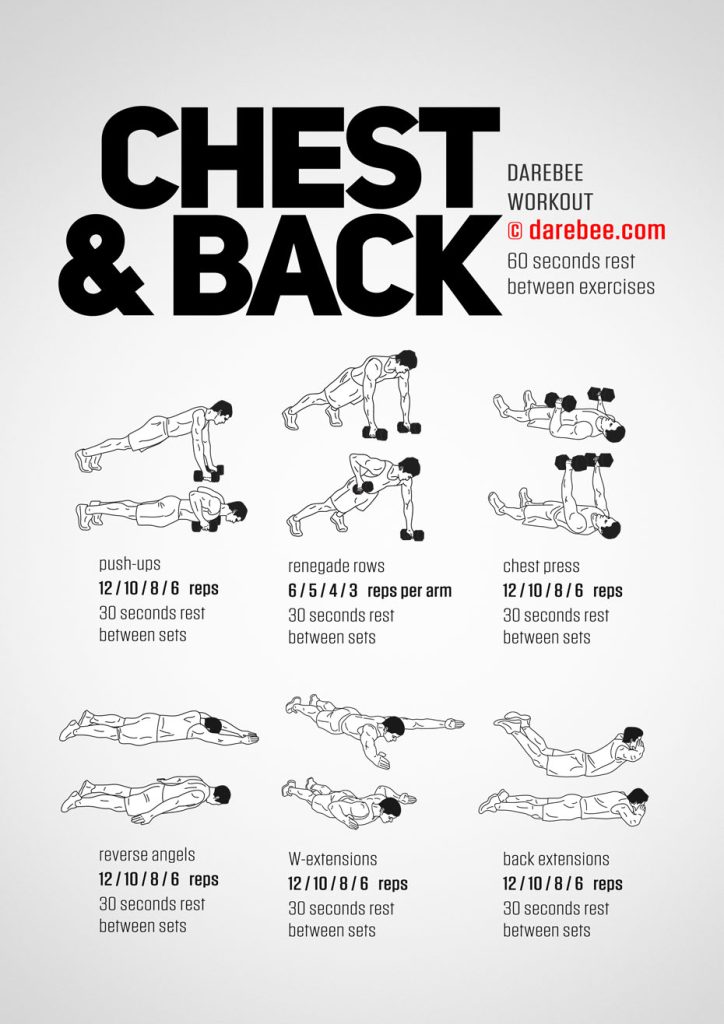
Are you tired of crowded gyms and hefty membership fees? Imagine sculpting your back and chest muscles right from the comfort of your own home.
Yes, you can achieve that toned and strong upper body without stepping outside your front door. Discover how just a few simple exercises can transform your workout routine, save you time, and keep you motivated. This article will guide you through an effective back and chest home workout that fits seamlessly into your daily life.
Ready to unlock the secrets of a powerful upper body? Keep reading to learn how to make the most of your home workout and see real results.
Benefits Of Home Workouts
Home workouts offer many benefits for those aiming to stay fit. They provide a practical way to exercise without leaving the house. Especially for those focusing on back and chest workouts. These exercises can be both effective and enjoyable. Let’s explore the advantages of home workouts.
Cost-effectiveness
Home workouts save money. There’s no need for a gym membership. You can use what you have at home. Chairs, walls, and even the floor can be your equipment. This makes exercising budget-friendly. Plus, you avoid travel costs to a gym.
Convenience And Flexibility
Working out at home offers great convenience. You choose your schedule. No need to match gym hours. This flexibility suits busy lifestyles. It allows you to fit exercise into your day easily. This means you can maintain consistency in your routine.
Privacy And Comfort
Home workouts provide privacy. You exercise without an audience. This boosts confidence and comfort. You can focus on your form and progress. Plus, home is a comfortable space. You can wear what you like and play your music. This makes workouts more enjoyable.

Credit: www.pinterest.com
Essential Equipment
Setting up a home gym for your back and chest workout doesn’t require a fortune. With a few essential pieces of equipment, you can effectively target these muscle groups and see real results. Let’s dive into the key tools you’ll need to get started on your fitness journey.
Dumbbells
Dumbbells are versatile and great for building strength. You can perform a variety of exercises like chest presses and bent-over rows. Start with a weight you can handle comfortably. Increase it as you grow stronger. Think about how having a set of dumbbells can transform your living room into a dynamic workout zone.
Resistance Bands
Resistance bands are compact and affordable. They offer different resistance levels suitable for various exercises. Use them for chest flies or seated rows. They are perfect for those who travel or have limited space. Have you ever tried to maintain your fitness routine while on vacation? Bands make it possible.
Pull-up Bar
A pull-up bar might be a simple tool, but it’s powerful. It helps you build back strength and improve your grip. Install it in a doorway and it’s ready for action. It’s amazing how a small piece of equipment can challenge your upper body in ways you never imagined. What’s your current pull-up record?
Exercise Mat
An exercise mat provides comfort and safety during workouts. It cushions your joints during exercises like push-ups or yoga stretches. No more slipping or discomfort on hard floors. Investing in a quality mat is investing in your workout experience. Have you ever noticed how a good mat can keep you motivated?
Consider how each piece of equipment can fit into your lifestyle. Choosing the right gear can make working out at home both effective and enjoyable. What will you add to your home gym setup next?
Warm-up Routine
Embarking on a back and chest workout at home requires more than just a set of exercises. A proper warm-up routine is vital to prepare your muscles and joints for action, ensuring you maximize your workout while minimizing the risk of injury. Ever tried skipping the warm-up and felt a twinge later? It’s a lesson learned the hard way. Let’s dive into the essentials of a warm-up that sets the stage for a successful workout.
Dynamic Stretching
Dynamic stretching is your first step. It involves movements that mimic the exercises you’ll perform later. Think of arm circles, torso twists, and leg swings. These actions increase blood flow and flexibility, easing your body into the workout.
Consider starting with arm circles for your shoulders. Do 10 circles forward and then backward. Feel the tension melt away and your range of motion expand. Torso twists can follow, helping your spine and midsection loosen up.
Leg swings, both front-to-back and side-to-side, prep your hips and legs. Try 10 reps each. These stretches are active, meaning you’re moving as you stretch, which primes your muscles for the workout ahead.
Cardio Activation
Cardio activation further gears up your body for exercise. It’s about getting your heart rate up and your blood pumping. This doesn’t mean running a mile before lifting weights, but a few minutes of light cardio can work wonders.
Jumping jacks are a simple yet effective choice. Start with 30 seconds, focusing on smooth, controlled movements. Feel your heart rate increase and your energy levels rise. If jumping jacks aren’t your thing, consider high knees or marching in place.
The goal is to break a light sweat, signaling your body that it’s time to get active. This activation ensures your muscles are ready for the challenge ahead and keeps your workout efficient and safe.
Are you ready to transform your workout routine with a solid warm-up? Avoid the pitfalls of skipping this crucial step. Your body will thank you, and your performance will improve. What’s your favorite warm-up move, and how does it help you?

Credit: us.humankinetics.com
Back Exercises
Back exercises are essential for a balanced upper body workout. They improve posture, build strength, and enhance overall fitness. You might think you need a gym, but effective back exercises can be done right at home. Let’s dive into some powerful moves you can add to your routine.
Pull-ups
Pull-ups are a classic back exercise that targets multiple muscles. If you have a pull-up bar at home, it’s your best friend for sculpting a strong back. Start by gripping the bar with palms facing forward. Pull your body up until your chin is above the bar. Lower yourself slowly and repeat.
If traditional pull-ups seem daunting, try assisted pull-ups using a resistance band. You’ll build strength progressively, making it easier over time. Isn’t it exciting to watch your progress?
Bent-over Rows
Bent-over rows are perfect for home workouts, and you only need a pair of dumbbells. Stand with feet shoulder-width apart and bend at your hips, keeping your back straight. Hold the dumbbells with palms facing each other, and pull them towards your waist. Keep elbows close to your body. Lower and repeat.
This exercise engages your upper and mid-back muscles effectively. You’ll feel like you’re powering through each rep as you build strength. What’s stopping you from trying it today?
Superman Lifts
Superman lifts are a no-equipment exercise that targets your lower back. Lie face down on the floor with arms extended in front of you. Lift your arms, chest, and legs off the ground simultaneously, hold for a few seconds, then lower.
This exercise not only strengthens your back but also improves your core stability. It’s amazing how something so simple can be so effective. Wouldn’t it be great to feel that superhero power in your workout?
Incorporating these exercises into your routine can make a significant difference. They are easy, accessible, and effective. So why wait? Start building that strong back today!
Chest Exercises
Building chest muscles doesn’t require fancy gym equipment. You can effectively work your chest at home. Chest exercises help improve strength and tone. They engage multiple muscle groups, giving you a balanced workout.
Incorporating chest exercises into your routine boosts your upper body strength. It also enhances posture and core stability. Let’s explore three simple yet effective exercises.
Push-ups
Push-ups are classic and effective. They target the chest, shoulders, and triceps. Start in a plank position. Keep your hands shoulder-width apart. Lower your body until your chest touches the floor. Push back up to the starting position. Keep your core tight throughout. Perform sets of 10-15 reps for best results.
Chest Press
The chest press can be done with dumbbells or resistance bands. Lie on your back on a mat. Hold weights in each hand above your chest. Lower the weights until your elbows are at a 90-degree angle. Push the weights back up to the starting position. This exercise strengthens the chest and enhances muscle definition.
Chest Fly
The chest fly focuses on the pectoral muscles. It helps widen the chest. Lie on your back, holding dumbbells. Extend your arms above your chest with a slight bend in the elbows. Slowly open your arms out to the sides, keeping the same bend in your elbows. Bring the weights back together above your chest. Aim for 10-12 reps per set.
Combining Back And Chest Workouts
Boost your strength and flexibility with back and chest workouts at home. Use simple exercises like push-ups and rows. Balance your routine for better posture and muscle growth.
Combining back and chest workouts is a smart strategy to maximize your workout efficiency and achieve a balanced physique. By working on these opposing muscle groups together, you can save time and energy, making your fitness routine more effective. This combination also promotes muscle balance and helps prevent injuries by strengthening both the front and back of your upper body.Superset Techniques
Supersetting involves performing two exercises back-to-back with no rest in between. For back and chest workouts, this means pairing exercises like push-ups and pull-ups. You engage both muscle groups in quick succession, boosting your heart rate and burning more calories. A superset example: Start with a set of push-ups, immediately followed by a set of bent-over rows. This keeps your muscles constantly engaged. Over time, you’ll notice improved endurance and strength. Supersets also break the monotony of traditional workouts. They keep you motivated by adding a dynamic challenge to your routine. Are you ready to test your limits and see faster results?Alternating Sets Strategy
Alternating sets allow you to switch between back and chest exercises with short rest periods. This approach is perfect if you want to focus on form and technique. It gives you a brief moment to recover while still maintaining workout intensity. For an effective alternating set, try bench presses paired with dumbbell rows. Complete a set of bench presses, rest for 30 seconds, then proceed to the dumbbell rows. Repeat this sequence to maintain a steady workout pace. This strategy enhances muscle engagement and reduces workout time. It offers a balanced muscle workout without overstraining one area. Have you tried alternating sets before, and how did they change your workout game?Cool Down And Stretch
Ending your back and chest workout with a cool down and stretch is essential. It helps relax muscles and improve flexibility. Focusing on these exercises can reduce soreness and promote recovery.
After a challenging back and chest workout at home, it’s crucial to give your muscles the care they deserve through a proper cool down and stretch. Cooling down helps lower your heart rate gradually, reducing the risk of dizziness or injury. Stretching enhances flexibility and prevents the stiffness you might feel the next day. Whether you’re a newbie or a seasoned fitness enthusiast, dedicating a few minutes to cool down can make a significant difference in your recovery.Static Stretching
Static stretching involves holding a stretch in a comfortable position for a period, usually 15-30 seconds. It helps lengthen the muscles you’ve just worked, such as your lats, pecs, and deltoids. Start with a gentle chest stretch by clasping your hands behind your back and pushing your chest forward. Feel the tension ease as you hold the position. For your back, try a seated spinal twist. Sit on the floor, cross one leg over the other, and twist your torso gently. These stretches not only improve flexibility but also enhance your posture.Breathing Exercises
Breathing exercises are often overlooked but can significantly enhance your cool down. Deep breathing helps oxygenate your muscles, aiding in recovery and reducing stress. Try a simple breathing exercise: Inhale deeply through your nose for four counts, hold for four counts, and exhale slowly through your mouth for another four counts. Repeat this cycle a few times. You’ll notice a calming effect, allowing your body to transition smoothly from a high-intensity workout to a state of rest. Have you ever felt more relaxed after a few deep breaths? Incorporating these elements into your routine can transform your post-workout experience. So, the next time you finish your back and chest session, remember to pause, breathe, and stretch. Your body will thank you for it.Tracking Progress
Track your progress with back and chest home workouts. Measure strength gains and endurance improvements regularly. Adjust your routine based on results for better fitness outcomes.
Tracking your progress is crucial when you’re focusing on your back and chest home workout. It not only helps you stay motivated but also ensures that you’re moving in the right direction. You wouldn’t want to spend months working out without knowing if you’re truly improving, right? Let’s dive into how you can effectively track your workout progress.Workout Journal
Keeping a workout journal can be a game changer. It’s simple—grab a notebook or use a digital app to record each workout session. Write down the exercises, sets, reps, and the weight used if applicable. This habit allows you to see trends in your fitness journey. Are you lifting heavier weights or doing more reps over time? Celebrate these victories! Reflecting on your journal can highlight areas needing more attention. Perhaps your chest workouts are progressing faster than your back, giving you a cue to adjust your routine.Setting Realistic Goals
Setting goals is vital, but they need to be achievable. It’s easy to aim high, like wanting to bench press double your body weight. However, setting smaller milestones can be more effective. Consider starting with a goal to increase your push-ups by five each week. Achieving these smaller targets fuels your motivation and keeps you on track. Ask yourself: Are my goals challenging yet attainable? Adjust them as necessary. Realistic goals create a positive feedback loop, encouraging you to push further with each success. Tracking progress isn’t just about numbers; it’s about understanding your journey. How do you feel after each workout? Are you more energetic or less stressed? Your feelings can be as telling as any journal entry or goal met. Engage with your workout and let it be a source of joy and personal growth. Are you ready to track your progress more effectively?Safety Tips
Embarking on a back and chest home workout routine offers great benefits. Safety is crucial to prevent injuries and maximize results. Following simple safety tips can make your workout effective and enjoyable.
Proper Form
Maintaining the correct form is essential in any exercise. Incorrect form can lead to strain and injury. Keep your back straight during exercises like push-ups and rows. Engage your core muscles for stability. Avoid locking your joints. This ensures proper movement and reduces injury risks. Watch online tutorials for guidance on form.
Listening To Your Body
Your body sends signals during workouts. These signals are vital. If you feel sharp pain, stop immediately. Rest if you feel exhausted. Pushing beyond limits can cause harm. Hydrate well and rest between sets. Adjust your routine if you feel discomfort. Always prioritize your body’s health and safety.

Credit: www.pinterest.com
Frequently Asked Questions
How To Train Chest And Back At Home?
Train chest and back at home using push-ups, pull-ups, and dumbbell rows. Use resistance bands for added intensity. Include incline push-ups and superman exercises for variation. Ensure proper form and gradually increase repetitions for best results. Regular workouts enhance strength and muscle growth efficiently.
Can I Do A Chest And Back Workout Together?
Yes, you can combine chest and back workouts. This approach balances muscle groups and saves time. Focus on compound exercises for efficient results. Ensure proper form and rest between sets to maximize gains. Always listen to your body to prevent overtraining or injury.
What Is The 250% Method?
The 250% method involves using a multiplier of 2. 5 to calculate a percentage increase or markup. This is often used in pricing or financial calculations to determine profits or set prices that cover costs and desired profit margins efficiently.
Is Chest And Back Day A Good Split?
A chest and back day split can be effective. It targets opposing muscle groups, promoting balance and strength. This split also allows for efficient workouts by maximizing recovery time between sessions. Suitable for both beginners and advanced lifters, it ensures comprehensive upper body development.
Conclusion
Achieving a strong back and chest at home is possible. Use the right exercises and techniques. Consistency is key for progress. Remember to listen to your body. Avoid pushing too hard. Modify exercises if needed. Stay motivated by tracking your progress.
Celebrate small victories. This workout fits any schedule. No gym required. Just dedication and some space. Enjoy your fitness journey at home. Your efforts will pay off. Embrace the challenge, and keep moving forward. A healthier, stronger you is within reach.
Keep up the great work. Stay focused and committed.








