Are you curious about tracking your weight loss progress effectively? Understanding how to calculate the percentage of weight loss can be a game-changer on your health journey.
Imagine stepping on the scale and not just seeing a number, but truly understanding what it means for your body and goals. This simple calculation can provide you with a clearer picture of your success, boosting your motivation and keeping you on track.
You’ll discover an easy method to calculate the percentage of weight loss, transforming those numbers into insights that empower your health decisions. Ready to unlock the secret to measuring your success? Let’s dive in!
Basics Of Weight Loss Percentage
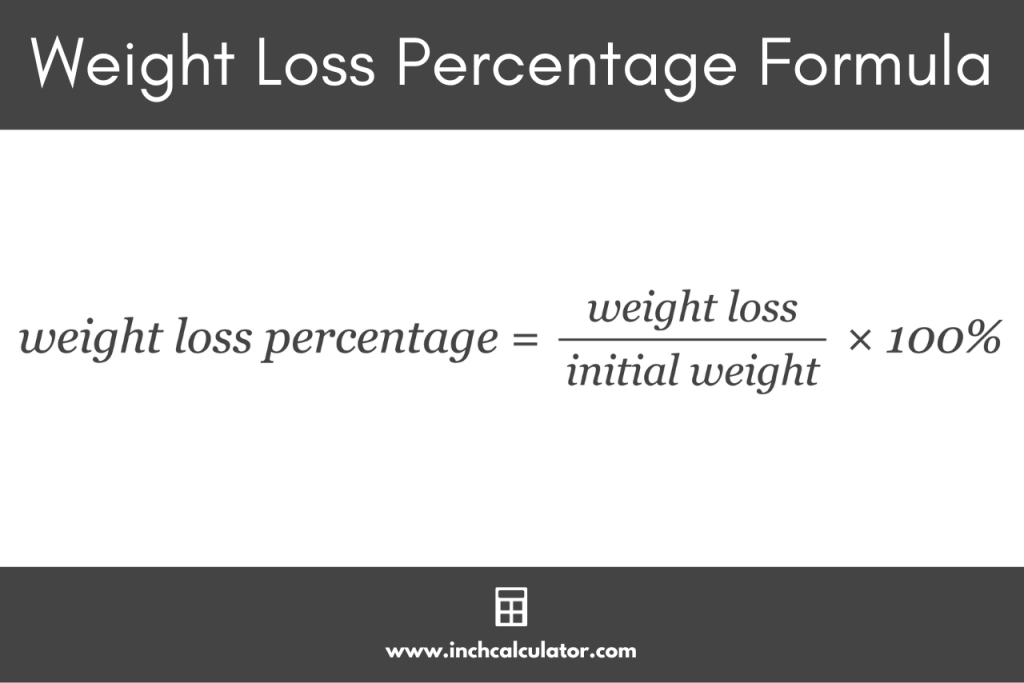
Calculating weight loss percentage is straightforward. Subtract your current weight from your starting weight. Then, divide the difference by your starting weight. Multiply the result by 100 to get the percentage. This simple formula helps track progress effectively.
Understanding the Basics of Weight Loss Percentage can be a game-changer on your fitness journey. Calculating the percentage of weight loss helps you see the bigger picture beyond the numbers on the scale. It provides a clearer view of how much progress you’ve truly made.What Is Weight Loss Percentage?
Weight loss percentage is a simple yet powerful metric. It reflects the portion of your starting weight that you have shed. This calculation allows you to gauge your progress in a way that is both motivating and realistic.Why Use Weight Loss Percentage?
Tracking your weight loss percentage can keep you motivated. Seeing a tangible number can reinforce your efforts and commitment. It also provides a fair comparison if you’re working with others, as it accounts for different starting weights.How To Calculate Weight Loss Percentage
You only need a calculator and two numbers: your starting weight and your current weight. Subtract your current weight from your starting weight to find the amount lost. Then, divide the weight lost by your starting weight and multiply by 100 to get the percentage.Example Calculation
Imagine you started at 200 pounds and now weigh 180 pounds. You’ve lost 20 pounds. Divide 20 by 200, which equals 0.1. Multiply by 100, and you have a 10% weight loss.Personal Insights On Using Weight Loss Percentage
When I first started my weight loss journey, numbers on the scale felt daunting. By focusing on weight loss percentage, I could celebrate every small victory. This simple shift in perspective made the process more encouraging and less stressful.How Often Should You Calculate?
Consider calculating your weight loss percentage every few weeks. This frequency provides enough time for meaningful change. It also helps you avoid the pitfalls of daily fluctuations.Potential Pitfalls To Avoid
Don’t obsess over small daily changes. Weight can naturally fluctuate due to various factors. Focus on the overall trend rather than the day-to-day numbers.Engage With Your Progress
Are you finding your progress motivating or frustrating? Reflect on why that might be. Understanding your emotional responses can help maintain a healthy relationship with your weight loss journey.Importance Of Tracking Weight Loss
Tracking weight loss is not just about watching the numbers on the scale. It’s about understanding your progress, motivating yourself to continue, and making informed decisions about your health journey. Imagine celebrating small victories every time you notice a change. You get to see the fruits of your hard work, which can be incredibly rewarding.
When you track your weight loss, you set benchmarks. These benchmarks help you stay focused and determined. They show you that even small steps lead to big results over time. This way, you’re not just guessing whether you’re getting closer to your goal. You’re seeing it happen right before your eyes.
Tracking also helps you recognize patterns. Maybe you lose more weight when you sleep better or eat more vegetables. Knowing what works for you can help optimize your efforts and make healthier choices.
Visualizing Progress
Seeing is believing. When you visualize your progress, you can feel more motivated. Think about creating a chart that shows your weight loss over time. This makes your journey tangible and encourages you to keep going. It’s like watching your own success story unfold.
A chart or graph provides a snapshot of your journey. You can see the ups and downs but also the overall trend. This helps keep your spirits high and your determination strong.
Setting Realistic Goals
Tracking weight loss helps you set realistic goals. It’s easy to aim for losing a big number quickly, but healthier and sustainable weight loss often happens gradually. By monitoring your progress, you can adjust your goals based on real data. This prevents disappointment and boosts your confidence.
When you meet smaller, achievable goals, it builds momentum. Each victory fuels your journey, making the long-term goal seem more attainable. It’s like climbing a mountain, one step at a time.
Celebrating Milestones
Celebration is key in any journey. When you hit a milestone, take a moment to appreciate your hard work. This recognition boosts your morale and keeps your momentum going. You’re not just losing weight; you’re gaining confidence and strength.
Think about the joy of fitting into an old pair of jeans or running a longer distance without losing breath. These moments deserve a little celebration. They affirm your progress and inspire you to keep pushing forward.
Adjusting Your Strategy
Tracking allows you to adjust your strategy when needed. If you notice a plateau, it’s an opportunity to tweak your routine. Maybe you need to change your workout or diet. This flexibility ensures you’re always moving forward, even if it means changing direction.
Consider your weight loss journey as a dynamic process. Understanding your results helps you make informed decisions. You’re not stuck; you’re evolving and learning what works best for you.
So, why wait? Start tracking your weight loss today. You might be surprised by how empowering it is to see your progress in real-time. What’s your next small goal going to be? Make it happen!
Simple Formula For Calculation
Calculating weight loss percentage is simple. Divide pounds lost by initial weight, then multiply by 100. This gives the percentage of weight loss.
Calculating the percentage of weight loss is a straightforward process that anyone can master. The formula is simple, yet effective, allowing you to track your progress and stay motivated. Whether you’re embarking on a weight loss journey or just curious about your fitness level, understanding this calculation can be a game-changer. Here’s how you can easily calculate your weight loss percentage:Initial And Current Weight
Start by determining your initial weight. This is the weight you began with before your weight loss journey commenced. Next, record your current weight. This is your weight after shedding some pounds. Both these figures are crucial for calculating the percentage of weight loss.Percentage Calculation Steps
To calculate the percentage of weight loss, follow these simple steps: 1. Subtract your current weight from your initial weight. This gives you the total amount of weight lost. 2. Divide the total weight lost by your initial weight. This will give you the fraction of weight loss relative to your starting weight. 3. Multiply the result by 100. This transforms your fraction into a percentage, giving you your weight loss percentage. Consider this example: If you started at 200 pounds and now weigh 180 pounds, you’ve lost 20 pounds. Divide 20 by 200, and then multiply by 100. Your weight loss percentage is 10%. The simplicity of this formula means you can keep tabs on your progress without any hassle. Isn’t it satisfying to see your hard work quantified in such a clear way? Knowing your weight loss percentage can be incredibly motivating. It shows you how far you’ve come and can inspire you to keep pushing forward. What will your percentage reveal about your journey?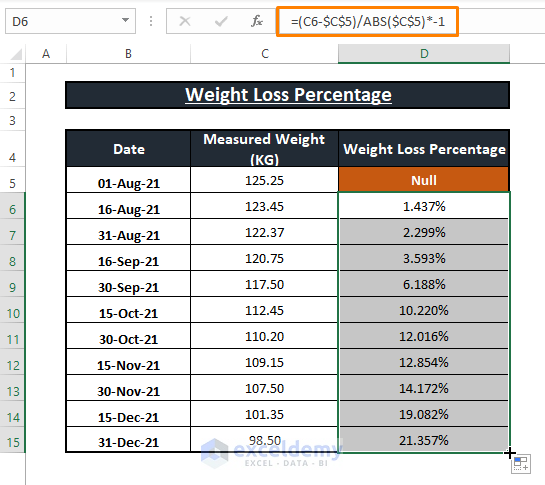
Credit: www.exceldemy.com
Practical Examples
Calculating percentage of weight loss involves comparing initial and current weights. Subtract the current weight from the starting weight, then divide the result by the starting weight. Multiply by 100 to find the percentage. This simple formula helps track progress and set achievable goals.
Calculating the percentage of weight loss is a straightforward yet powerful tool for tracking your progress. It’s not just about the numbers; it’s about understanding how far you’ve come and motivating yourself to reach your goals. This section will walk you through practical examples to help you grasp the concept with ease. Let’s delve into real-life scenarios where calculating weight loss percentages can be insightful and empowering.Case Study 1: Small Weight Loss
Imagine you’ve started a new exercise routine and have lost 2 pounds over the past month. Your initial weight was 150 pounds. Calculating the percentage of weight loss can give you a clearer picture of your progress: – Initial Weight: 150 pounds – Current Weight: 148 pounds – Weight Loss: 2 pounds To find the percentage, divide the weight loss by the initial weight and multiply by 100: [ text{Percentage of Weight Loss} = left( frac{2}{150} right) times 100 = 1.33% ] So, you’ve lost 1.33% of your initial weight. It might seem small, but every step forward counts. Celebrate this achievement! How might this small progress motivate you to push further?Case Study 2: Significant Weight Loss
Let’s consider a scenario where you’ve made substantial changes to your lifestyle, losing 30 pounds. Your journey began at 200 pounds. Calculating the percentage here illustrates the impact of your dedication: – Initial Weight: 200 pounds – Current Weight: 170 pounds – Weight Loss: 30 pounds Again, divide the weight loss by the initial weight and multiply by 100: [ text{Percentage of Weight Loss} = left( frac{30}{200} right) times 100 = 15% ] You’ve achieved a 15% weight loss! This is a testament to your commitment and hard work. Reflecting on this percentage, think about how it influences your confidence and future goals. What new paths are now open to you because of this change? Both cases show how calculating weight loss percentage can be a powerful motivator. Whether your loss is small or significant, it’s about progress and perseverance. As you track your journey, how does understanding these numbers change your perspective on weight loss success?Tools And Apps
Understanding weight loss percentage can be tricky. Fortunately, modern tools make it easy. You can calculate weight loss effortlessly. Discover how digital calculators and mobile apps simplify this task.
Digital Calculators
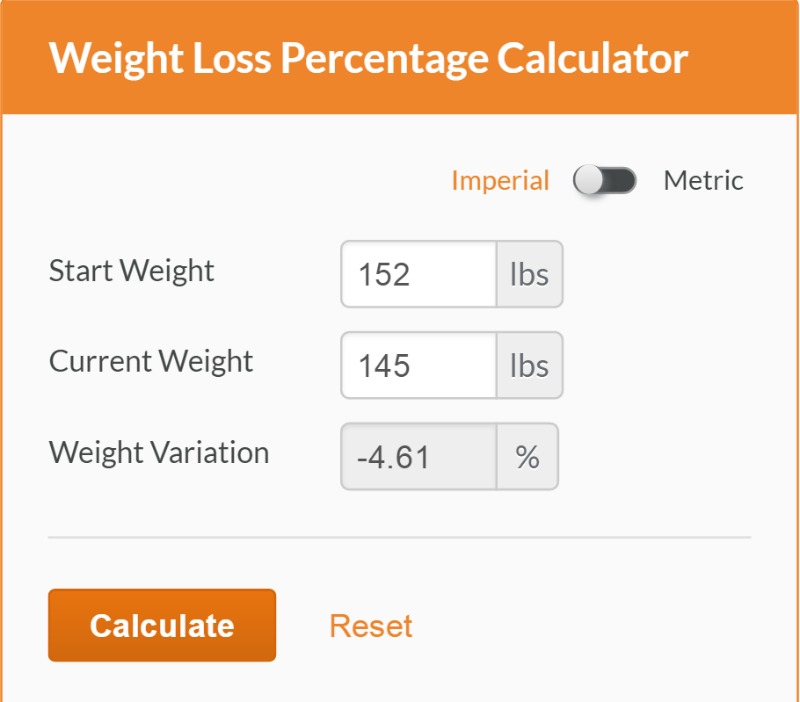
Digital calculators offer precise weight loss calculations. Input your starting and current weights. The calculator handles the rest. No need for manual math. Quick, accurate results with a few clicks.
Online calculators are user-friendly. Websites host them for free. Some even offer additional health insights. Perfect for those seeking a quick solution. Accessible from any device with internet.
Mobile Applications
Mobile applications provide weight loss tools on the go. Download apps on smartphones easily. Track your progress with daily updates. Apps often sync with health monitors. This offers a comprehensive view of your journey.
Many apps come with extra features. They include diet plans and fitness tips. Some offer community support. Ideal for motivation and accountability. Choose from a variety of apps for your needs.
Credit: www.fitwatch.com
Common Mistakes
Calculating the percentage of weight loss can be tricky. Common errors include incorrect division or using wrong initial weights. Always divide the amount lost by the original weight, then multiply by 100 for accuracy.
Calculating the percentage of weight loss can be a straightforward process, yet many people stumble due to common mistakes. These errors can skew results and mislead your understanding of your progress. By identifying these pitfalls, you can ensure a more accurate reflection of your weight loss journey.Misunderstanding Initial Weight
A frequent mistake is misinterpreting what your starting weight should be. Some people use their highest weight ever, while others might choose a weight from a particular point in time. This inconsistency can lead to confusion and inaccurate calculations. Imagine stepping on the scale at night after a big meal. That number might be significantly different from your morning weight. Using a consistent starting weight, preferably your morning weight after using the bathroom, can provide a more stable baseline. Have you ever wondered why your weight fluctuates so much? This brings us to another common error.Ignoring Fluctuations
Weight naturally fluctuates throughout the day and week. Ignoring these changes can lead to frustration and misconceptions about your progress. It’s not uncommon to see a few pounds difference from morning to night. Think about how your body retains water, especially after salty meals or during certain times of the month. These fluctuations aren’t true indicators of fat loss or gain. By averaging your weight over a week, you can get a more accurate picture of your actual progress. Consider keeping a simple log of your daily weights and calculate the average at the end of the week. This method can help you see trends and avoid the trap of daily fluctuations impacting your motivation. Have you made any of these mistakes in your weight loss journey? Recognizing these common errors can help you stay on track and accurately measure your success.Tips For Accurate Tracking
Tracking weight loss accurately is essential for achieving health goals. Precise measurements can motivate you. Inaccurate data may mislead and frustrate you. Follow these tips for better tracking. Start with consistent practices and reliable tools.
Consistent Weighing Practices
Weigh yourself at the same time daily. Morning is often best. Wear similar clothing or none at all. This reduces variables. Use the same scale each time. Changes in scales can skew results. Record your weight in a journal. Keep track of your progress over time.
Using Reliable Scales
Choose a digital scale for best accuracy. Analog scales may vary. Place your scale on a hard, flat surface. Carpets can affect readings. Calibrate your scale regularly. Follow the manufacturer’s instructions. Check for battery life if readings seem off. Consistent readings require regular maintenance.
Credit: www.youtube.com
Interpreting Results
Calculating percentage of weight loss involves simple math. Subtract current weight from initial weight. Divide the result by the initial weight. Multiply by 100. This percentage helps track progress and adjust goals.
Interpreting your weight loss results can be both exciting and overwhelming. You might wonder if your progress is on track or if you need to tweak your approach. Understanding how to interpret these results can give you clarity and keep you motivated. Let’s dive into the essentials of setting realistic goals and understanding healthy weight loss.Setting Realistic Goals
When it comes to weight loss, setting realistic goals is crucial. Aim for progress, not perfection. Think about what you truly want to achieve. Is it just shedding pounds, or is it feeling more energetic and confident? Consider setting SMART goals. Specific, Measurable, Achievable, Relevant, and Time-bound. They help you focus and stay committed. Remember, it’s okay to adjust your goals. Life is unpredictable, and flexibility is your friend.Understanding Healthy Weight Loss
Healthy weight loss isn’t about quick fixes. It’s a journey of making sustainable changes. Experts suggest losing 1-2 pounds per week is ideal. It ensures you’re losing fat, not muscle. Focus on nourishing your body. Prioritize whole foods and balance. Hydration matters too. Sometimes, what feels like hunger is just your body asking for water. Ask yourself, are you feeling better? More energetic, less stressed? These are signs of healthy progress. Celebrate non-scale victories. Fitting into old jeans, improved sleep, or even a compliment can mean a lot. Healthy weight loss is about embracing a lifestyle that you enjoy, not endure. How do you feel about your current weight loss journey? Is it something you can maintain long-term? Remember, the numbers are just part of the story. Your health and happiness should always be the focus.Frequently Asked Questions
How Do You Calculate Weight Loss Percentage?
Calculate weight loss percentage by subtracting current weight from initial weight, divide by initial weight, then multiply by 100.
How Do You Calculate The Loss Percentage?
To calculate loss percentage, subtract the selling price from the cost price. Divide the result by the cost price. Multiply by 100 to get the percentage. This formula helps identify the percentage of loss in a transaction, aiding in better financial decisions and strategy adjustments.
How Many Lbs Is 5% Of Your Body Weight?
To find 5% of your body weight, multiply your weight by 0. 05. For example, if you weigh 150 lbs, 5% would be 7. 5 lbs.
How To Calculate Weight Percentage?
To calculate weight percentage, divide the component’s weight by the total weight. Multiply the result by 100. This gives the percentage of the component in the mixture. Use this formula: ((text{Component Weight} / text{Total Weight}) times 100). This method is simple and efficient for determining weight percentage.
Conclusion
Calculating weight loss percentage is simple and useful. It helps track progress effectively. First, know your starting weight. Then, subtract the current weight. Divide the difference by the starting weight. Finally, multiply by 100. This formula shows how much weight you’ve lost in percentage.
Keeping track motivates and helps set realistic goals. Regular monitoring also ensures you stay on the right path. Celebrate small victories. They add up to big changes. Understanding this calculation can boost confidence. Remember, every step counts in your weight loss journey.
Stay focused and committed for lasting success.