As an Amazon Associate FitMartPro earns from qualifying purchases. Visit our home page at FitMartPro.com for full strength training gear tests.
When you are descending into the hole of a heavy squat with 400+ pounds on your upper traps, the difference between a pristine lift and lower lumbar collapse comes down to one thing: intra-abdominal pressure. A proper powerlifting belt does not “support” your back passively; it gives your transverse abdominis and oblique wall a rigid cylinder to brace against, spiking core rigidity by up to 40%.
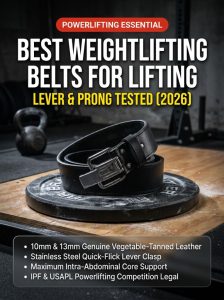
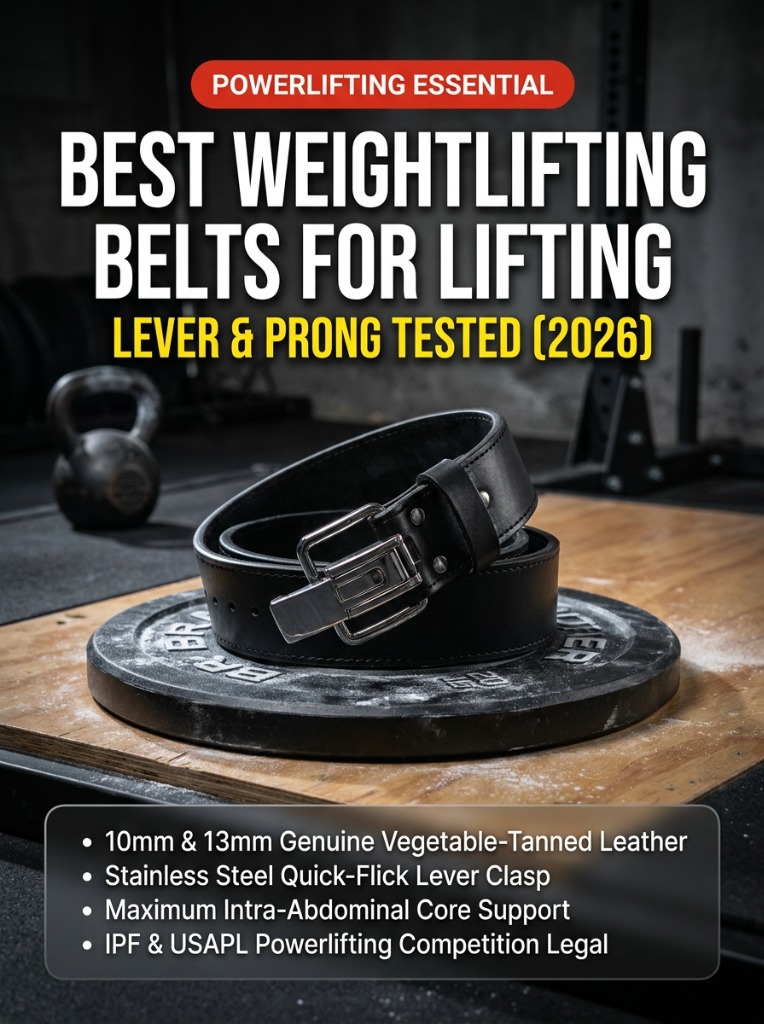
Over 8 weeks of heavy squats, deadlifts, and overhead presses, our strength team tested 7 top leather belts. Our top recommendation: The Inzer Forever Lever Belt 10mm remains the undeniable gold standard for competitive lifters, combining indestructible vegetable-tanned bullhide with a lifetime-guaranteed steel lever clamp. For lifters who frequently fluctuate in body weight or want easy micro-adjustments between squat and deadlift tightness, the Schiek Sports Model 2004 Contoured Belt provides unmatched hybrid flexibility.
🏆 Quick Summary: Best Lifting Belts
- Top Heavy-Duty Powerlifting Choice: Inzer Forever 10mm Lever Belt – Genuine stiff leather, instant flick-to-lock lever, IPF approved.
- Best Value Prong Belt: Iron Bull Strength 10mm Single Prong – Easy notch adjustments, soft suede lining, zero pinch points.
- Best Cross-Training & Olympic Lifting: 2POOD Straight Weightlifting Belt – Wreck-proof velcro lock, flexible nylon, permits deep hip flexion in clean & jerks.
Lever vs. Single Prong: Which Mechanism Should You Choose?
- Lever Belts: Give you the absolute tightest core brace possible. Once adjusted to your waist size, a single flick of your thumb locks the belt rigidly in place, and another flick immediately releases pressure between heavy sets.
- Single Prong Belts: Ideal if your waist measurement fluctuates throughout the week, or if you prefer wearing your belt one notch looser on deadlifts than on squats. Single prong is vastly superior to double prong, which can be frustratingly difficult to unbuckle when exhausted.
10mm vs. 13mm Thickness
For 95% of lifters, a 10mm thick belt hits the sweet spot. It provides massive stiffness without cutting painfully into your floating ribs or hip bones. 13mm belts are primarily designed for super-heavyweight powerlifters moving 600+ pounds who need maximum wall resistance.
How to Measure Your Belt Size Correctly
Never use your pants size! Use a soft measuring tape wrapped tightly around your navel (belly button) while bracing your core. Order the belt size where your measurement falls dead in the middle of the range.