Disclosure: As an Amazon Associate, I earn from qualifying purchases at no additional cost to you.
You cannot optimize what you do not measure, and when it comes to athletic recovery, cognitive focus, and longevity, sleep is the single greatest performance multiplier known to human biology. But if you hate wearing a glowing smartwatch to bed or constantly forget to charge your fitness band, tracking sleep stages has historically been a chore. Fortunately, modern sleep technology has bifurcated into two highly effective categories: zero-effort contact-free under-mattress mats and ultra-lightweight wearable rings. We tested the leading devices across 90 nights of sleep to find the best sleep trackers for recovery and HRV.
Top Sleep Trackers Ranked by Accuracy & Usability
| Model | Type | Wearable? | Key Advantage | Check Price |
|---|---|---|---|---|
| Withings Sleep Tracking Pad | Pneumatic Under-Mattress | No (100% Contact-Free) | Sleep Apnea Detection & Zero Charging | View on Amazon |
| Garmin Venu 3 | Wrist Smartwatch | Yes | Sleep Coach & Nap Detection | View on Amazon |
| Ultrahuman Ring AIR | Titanium Smart Ring | Yes (Finger) | Circadian Rhythm & Phase Response Curve | View on Amazon |
1. Best Overall Non-Wearable: Withings Sleep Tracking Pad
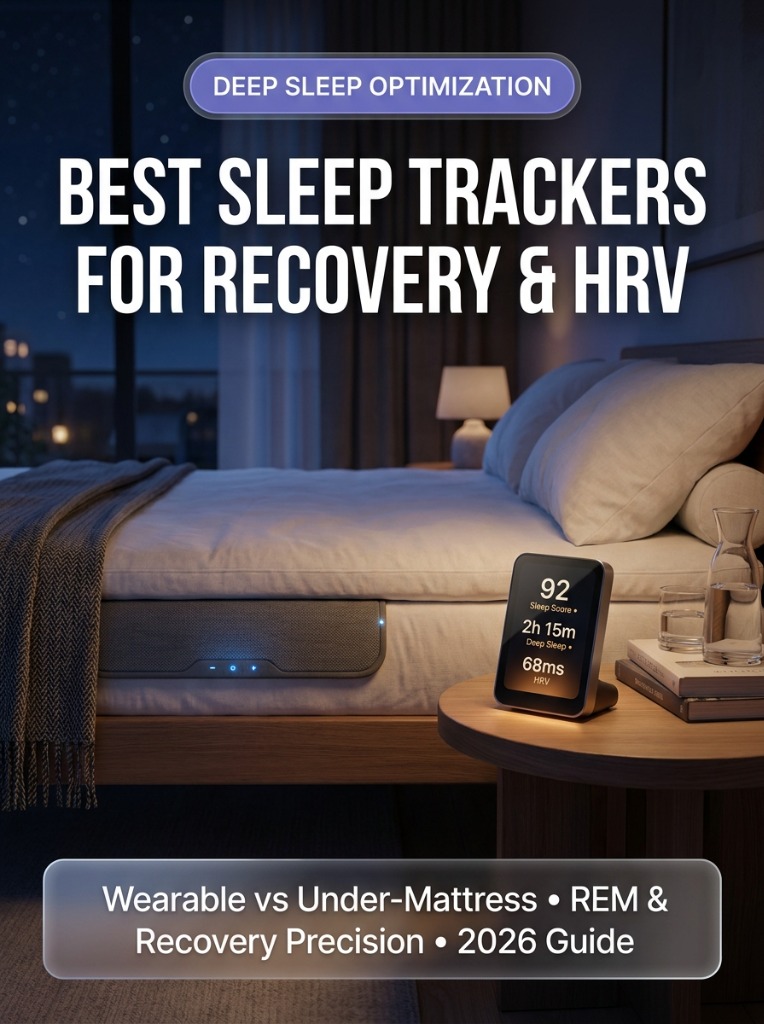
The Withings Sleep Tracking Pad is a masterclass in frictionless wellness technology. You slip the ultra-thin mat under your mattress once, plug it into wall power, and forget it exists. There is nothing to recharge, nothing strapped to your wrist, and zero buttons to press.
Using pneumatic pressure sensors that detect mechanical ballistocardiography (the subtle physical recoil of your body with every heartbeat and lung expansion), it delivers lab-validated sleep cycle analysis (Deep, Light, REM), continuous resting heart rate, and medically certified sleep apnea detection with snoring audio tracking.
Check Latest Price for Withings Sleep on Amazon →
Why Heart Rate Variability (HRV) is the Benchmark for Recovery
While total hours in bed matter, Heart Rate Variability (HRV)—the millisecond variations between consecutive heartbeats—is the gold standard reflection of your autonomic nervous system:
- High HRV: Indicates a dominant parasympathetic (‘rest and digest’) nervous system, proving your body has recovered from training stress, inflammation, and alcohol.
- Low HRV: Signals excessive sympathetic (‘fight or flight’) nervous system strain, alerting you to impending sickness, dehydration, or accumulated overtraining days before physical symptoms appear.
Save This Guide to Your Fitness Board!
Hover or tap the image below to pin this comprehensive review to Pinterest.