Disclosure: As an Amazon Associate, I earn from qualifying purchases at no additional cost to you.
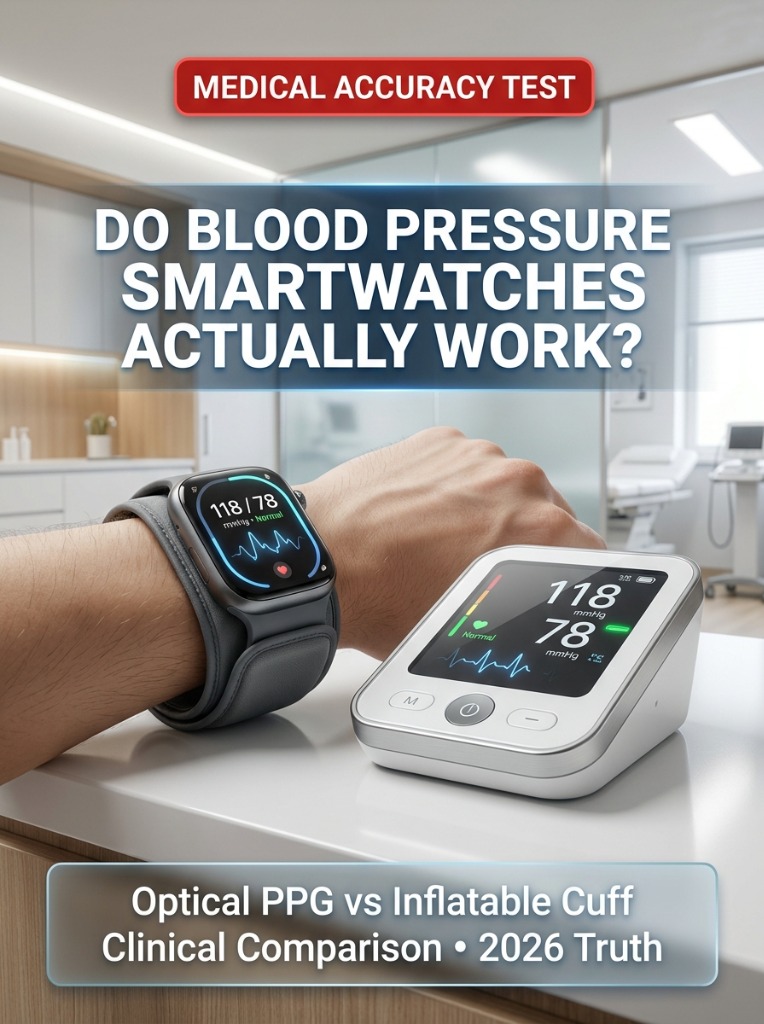
High blood pressure—often termed the ‘silent killer’—affects nearly half of all adults worldwide. Unsurprisingly, the promise of monitoring your systolic and diastolic pressure continuously from a sleek smartwatch has generated massive consumer interest. However, online marketplaces are flooded with cheap smartwatches claiming instant, cuffless blood pressure readings for $30. Do these devices actually provide medically actionable data, or are they dangerous novelty toys? We examined the clinical science behind Pulse Transit Time (PTT) and micro-airbag cuffs to separate truth from hype.
The Two Types of Blood Pressure Watches: Know the Difference
| Technology | How It Works | Clinical Accuracy | Examples |
|---|---|---|---|
| Micro-Airbag Inflatable Cuff (Oscillometric) | A motorized micro-pump physically inflates a dual-layer cuff inside the watch band against the radial artery. | High (FDA-Cleared / Medical Grade) | Omron HeartGuide, Huawei Watch D |
| Cuffless Optical Sensor (PPG / Pulse Wave) | Estimates pressure by analyzing optical reflection changes and pulse wave arrival time. | Moderate to Poor (Requires constant monthly cuff recalibration) | Samsung Galaxy Watch, generic smartwatches |
Why Cheap Optical Watches Are Not Medically Reliable
Dozens of generic smartwatches claim to measure blood pressure using standard green LED optical sensors. Here is why medical cardiologists caution against relying on them:
- They Don’t Measure Pressure—They Guess: Optical sensors measure blood volume pulse, not hydrostatic pressure. They feed pulse curves through algorithmic regression models that guess your pressure based on demographic averages.
- Arterial Stiffness Variations: As people age or develop atherosclerosis, arterial wall compliance changes drastically. Optical algorithms cannot account for vascular elasticity shifts without physical occlusion.
- Dangerous False Reassurance: A hypertensive patient relying on an uncalibrated optical watch might see a normal reading of 120/80 when their true arterial pressure is a dangerous 160/100 mmHg.
The Gold Standard: FDA-Cleared Inflatable Smartwatches
If you genuinely require wrist-based blood pressure monitoring for clinical health tracking, the only reliable models are those featuring integrated inflatable micro-cuffs like the Omron HeartGuide. The band physically tightens around your wrist to occlude the artery just like a physician’s sphygmomanometer, delivering clinically validated systolic and diastolic readings.
Check Verified Clinical Blood Pressure Monitors on Amazon →
Cardiologist Best Practices for Home BP Tracking
- Use an Upper Arm Cuff as Your Baseline: Upper arm monitors with D-ring cuffs remain the clinical gold standard recommended by the American Heart Association (AHA).
- Rest 5 Minutes Prior: Sit upright in a chair with back supported and feet flat on the floor before taking any measurement.
- Keep Wrist at Heart Level: If testing a wrist-based monitor, always hold your wrist directly level with your heart; holding your arm too low artificially raises the reading by 10 to 15 mmHg due to hydrostatic gravity pressure.
Save This Guide to Your Fitness Board!
Hover or tap the image below to pin this comprehensive review to Pinterest.