Disclosure: As an Amazon Associate, I earn from qualifying purchases at no additional cost to you.
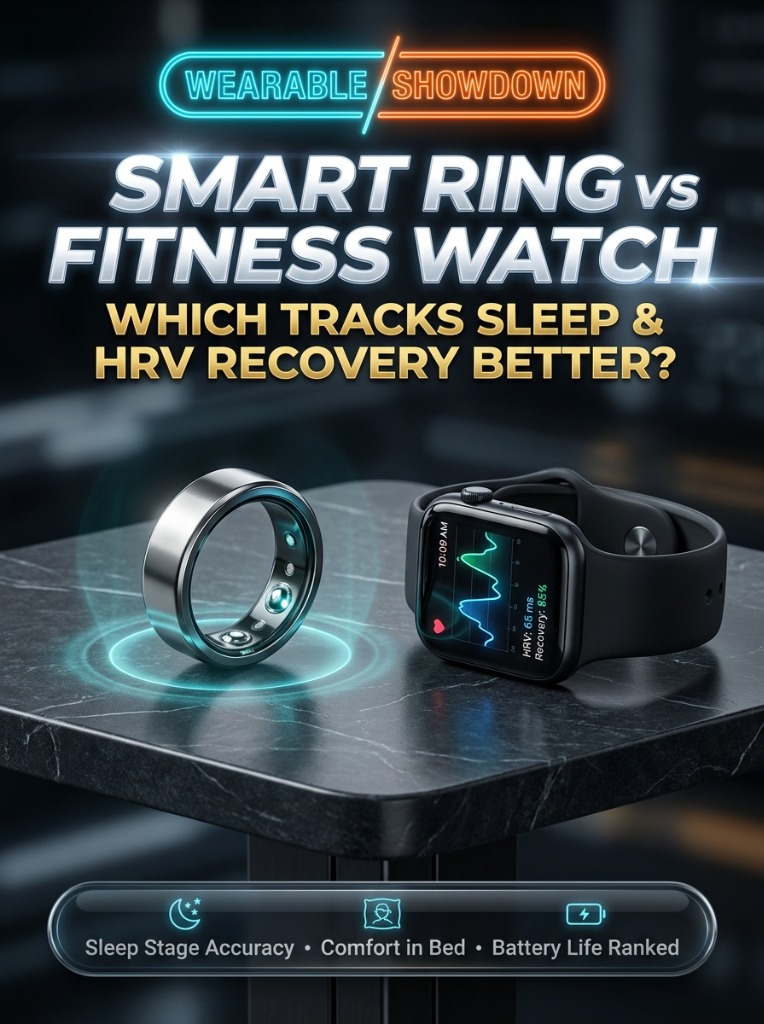
In the race to decode human recovery, a battle has erupted between the traditional wrist-worn smartwatch and the sleek, screenless smart health ring. Proponents of smart rings argue that the palm-side digital arteries of the finger offer far cleaner biometric data than the wrist. Meanwhile, smartwatch enthusiasts point out that rings cannot provide real-time pacing, workout screen metrics, or tactile interval timers. We wore both form factors simultaneously across 60 nights of sleep and intensive training to determine which device truly rules recovery tracking.
Head-to-Head: Smart Rings vs Fitness Smartwatches
| Metric / Feature | Smart Health Ring (e.g., Oura / Ultrahuman) | Fitness Watch (e.g., Garmin / Apple) |
|---|---|---|
| Sleep Comfort | Winner: Virtually unnoticeable | Bulky case can snag on sheets |
| Nocturnal HRV Signal | Winner: Direct digital artery access | Susceptible to wrist roll & lift-off |
| Real-Time Workout Feedback | None (No screen or vibration) | Winner: Real-time pace, HR zones, maps |
| Weightlifting & Gym Use | High risk of pinching/scratching barbells | Winner: Safe on wrist away from palms |
| Skin Temperature Sensing | Winner: Detects illness 24-48 hrs early | Often affected by room ambient drafts |
Why Smart Rings Win for Sleep & Overnight Recovery
Your fingers have an exceptionally dense network of blood vessels situated directly beneath thin epidermal skin. Because smart rings press against these palm-side digital arteries without the bone protrusion found at the wrist, nocturnal HRV tracking and pulse wave velocity measurements demonstrate medical-grade consistency.
Furthermore, many athletes hate sleeping with a 45mm sports watch strapped to their wrist. A lightweight titanium smart ring delivers effortless compliance—you simply put it on and forget it exists for 5 to 7 days on a single charge.
Check Latest Smart Health Rings on Amazon →
Why Fitness Watches Still Rule Active Training
If your athletic routine involves kettlebell snatches, heavy deadlifts, pull-ups, or gymnastics, wearing a rigid titanium ring is not only uncomfortable, but it also carries the danger of pinch injuries and barbell scratches. Moreover, runners need instant wrist feedback: seeing your current lap pace, cadence, and heart rate zone allows you to regulate effort on the fly rather than checking an app hours later.
Check Top Recovery Smartwatches on Amazon →
The Verdict: Which Wearable Should You Choose?
- Choose a Smart Ring if: Your primary goals are optimizing sleep architecture, monitoring baseline HRV recovery, tracking menstrual cycle variations, and detecting early signs of illness or overtraining without wearing a screen to bed.
- Choose a Fitness Watch if: You are an active runner, cyclist, or gym-goer who demands live workout stats, lap intervals, satellite GPS routes, and barbell-safe training tracking.
Save This Guide to Your Fitness Board!
Hover or tap the image below to pin this comprehensive review to Pinterest.